
After an apprentice reports an unguarded floor opening to the general contractor's safety manager, a subcontractor foreman threatens to cut the apprentice's overtime hours for making the crew look bad. As the site supervisor overseeing both, what is the most ethical action?
Select an answer to reveal the explanation.
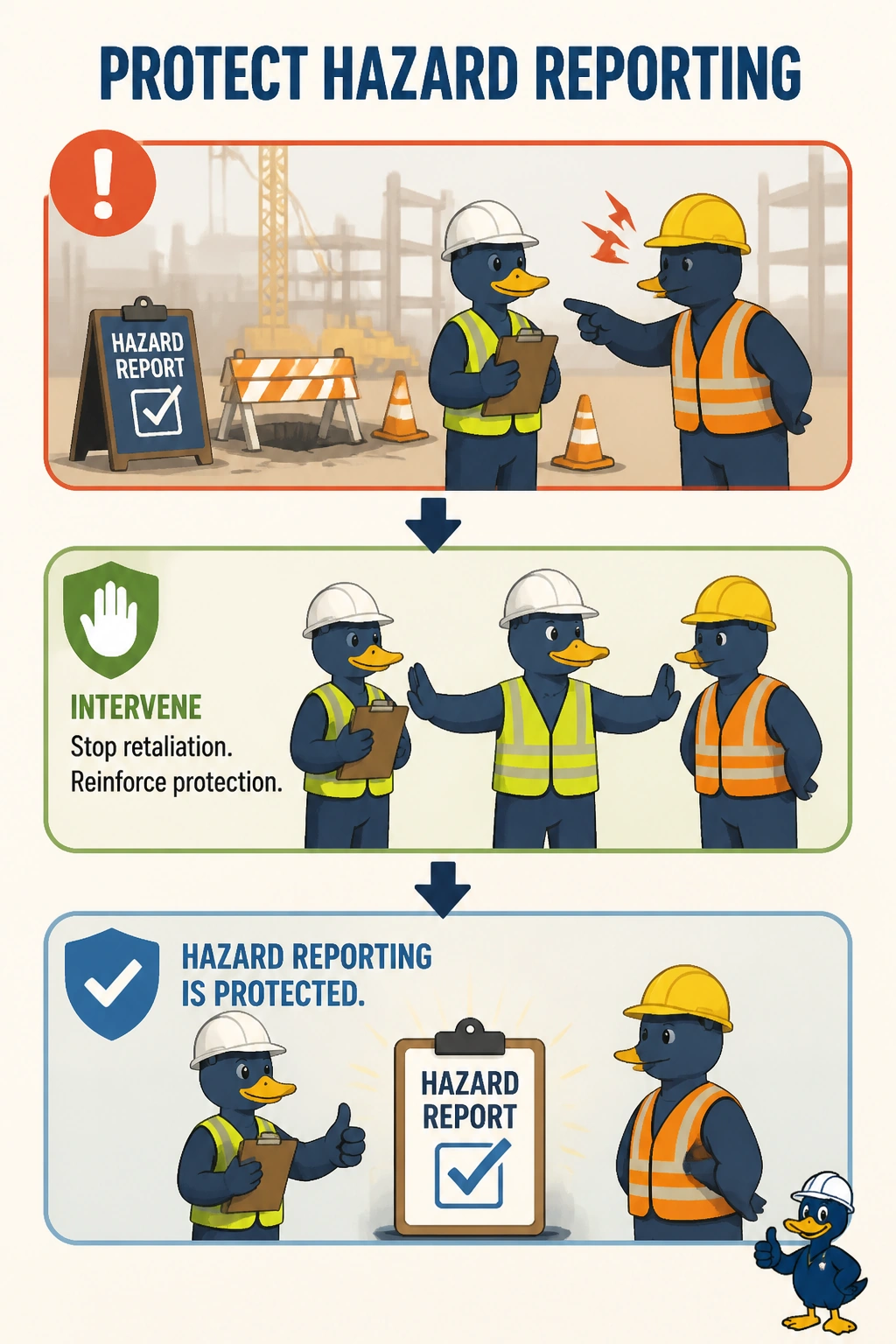
Short Explanation
When a foreman tries to punish a worker for speaking up, your whole safety culture is on the line. Don't fall into the trap of quietly moving the apprentice or telling them to keep it in-house—step in right now and protect good-faith reporting.
Full Explanation
Ethical safety leadership requires protecting workers who raise hazards in good faith, so the supervisor must Intervene to stop the retaliation and reinforce that hazard reporting is protected. Both the BCSP Code of Ethics and federal whistleblower principles under the OSH Act prohibit penalizing employees for reporting unsafe conditions; allowing threats to stand silences the entire crew before the next serious hazard occurs. Choosing to Transfer the apprentice to another crew quietly so the foreman avoids further friction still punishes the reporter by uprooting their assignment and signals that the foreman's threat worked. Choosing to Remind the apprentice to bring future safety concerns only to the foreman before speaking up discourages open escalation when a hazard is urgent or ignored. Choosing to Wait until the end of the project phase to address the overtime threat during performance reviews lets the retaliation happen immediately and destroys crew trust. Caveat: also verify that the unguarded floor opening itself was promptly covered and secured. As an operational check, document the intervention with project management and review overtime schedules to confirm no hours were cut.
Prefer to study offline? Printable PDF study book + test engine ($7.50, unofficial). These questions stay free here.