
A project superintendent asks a steel erection foreman to leave a minor crane near-miss off the daily safety log so the crew keeps its zero-incident bonus. What is the foreman's most ethical action?
Select an answer to reveal the explanation.
Short Explanation
Hiding a near-miss to protect a bonus is like unplugging the smoke alarm so you can sleep better. The trap is settling for a quiet verbal mention or a side deal, when your ethical duty is honest documentation and fixing the root cause.
Full Explanation
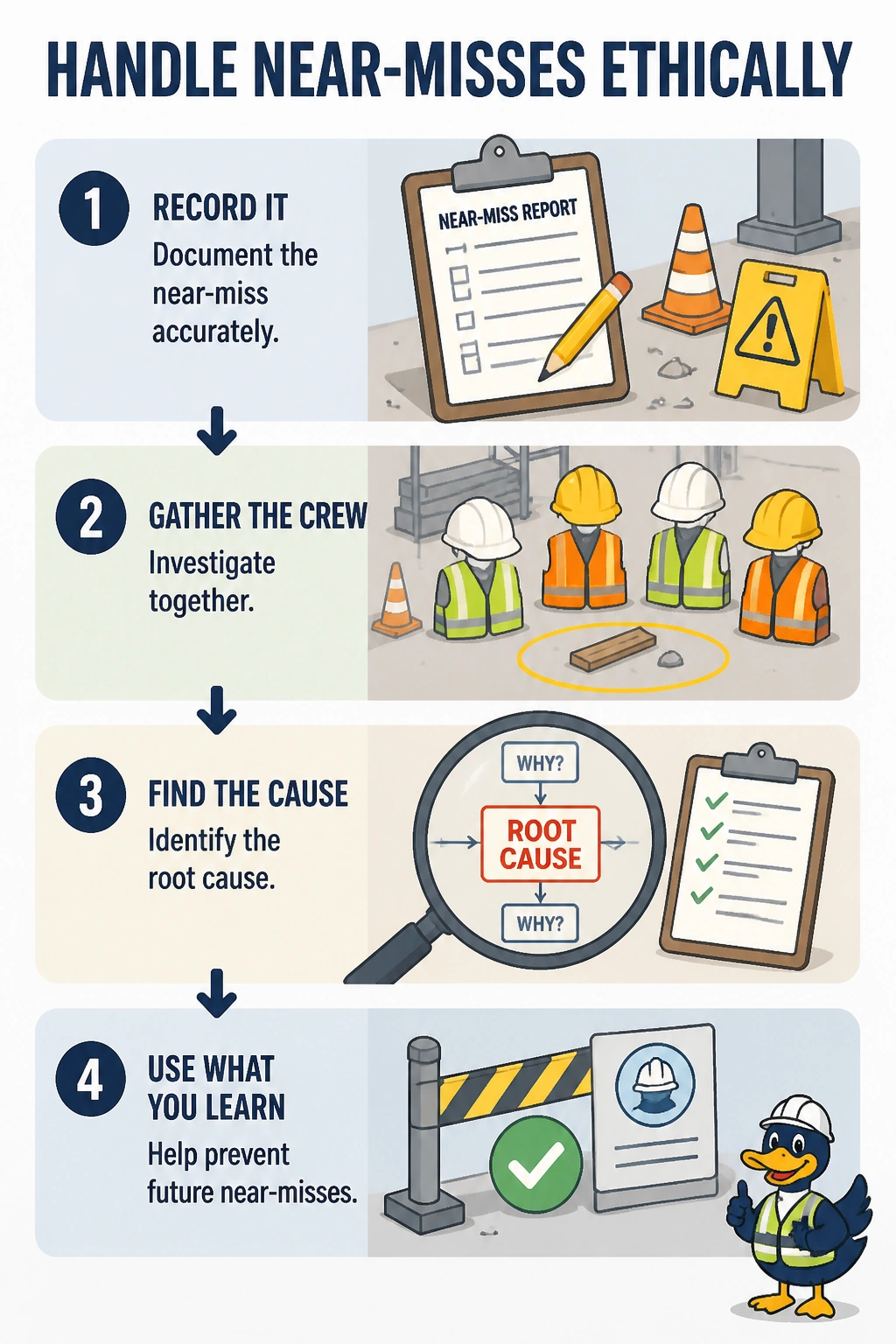
Under the BCSP Code of Ethics, safety practitioners and supervisors must be honest, accurate, and protect people above production metrics or incentive bonuses. Choosing to "Document the near-miss accurately and investigate the root cause with the crew" preserves an honest record and turns a close call into a corrective action before someone gets hurt. Choosing to "Omit the near-miss from the written log but mention it verbally at the next tailgate talk" falsifies site safety records and hides trend data needed by management. Deciding to "Record the event only if the crane operator files a formal complaint with the union" shifts a supervisor's ethical duty onto an individual worker and discourages open reporting. Choosing to "Ask the superintendent to sign a waiver taking personal responsibility for omitting it" still participates in concealing a safety hazard and does not protect the crew or satisfy ethical standards. Caveat: incentive programs that reward zero reported events often pressure crews into hiding incidents, so supervisors must actively model blame-free reporting. Operational check: review daily near-miss logs against field observations each week and verify that every logged close call has a documented corrective action.
Prefer to study offline? Printable PDF study book + test engine ($7.50, unofficial). These questions stay free here.