
A commercial general contractor has run its safety management system for one year, collecting audit scores, near-miss reports, and training completion logs without ever reviewing the overall results with executives. What program sustainment step is missing?
Select an answer to reveal the explanation.
Short Explanation
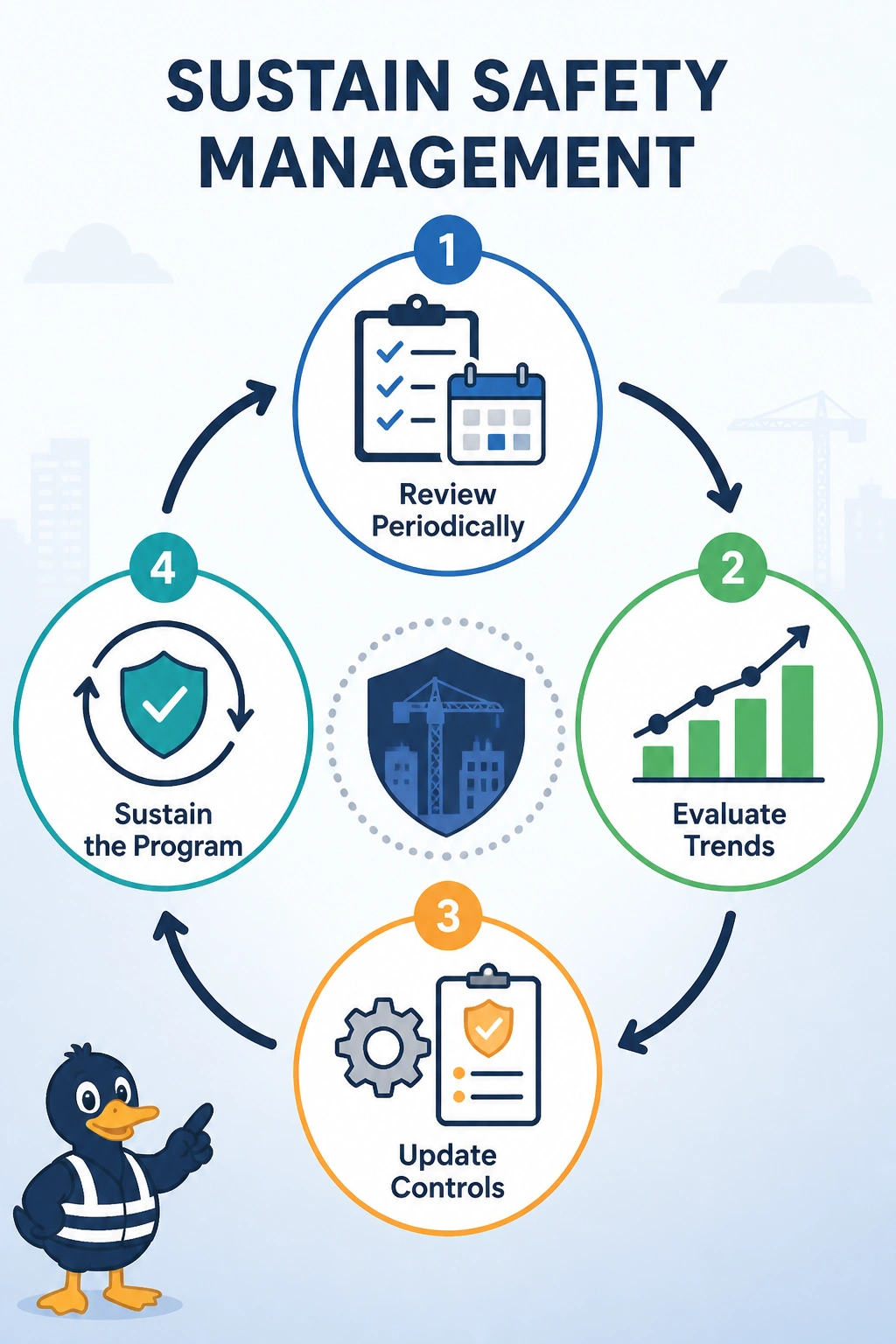
Collecting safety metrics without reviewing them at the top is like keeping a dashboard covered with tape while you drive. Your organization needs a periodic management review to evaluate trends, fix resource gaps, and update program controls. The trap is thinking data collection alone—or hiding behind annual injury logs—sustains a safety program.
Full Explanation
A safety program only improves when leadership examines operational data and adjusts resources, procedures, and priorities based on what the evidence shows. To close the continuous improvement loop, the contractor must Conduct a periodic management review to evaluate trends and update program controls across active jobsites. Choosing to Eliminate all leading indicator tracking so executives only review annual OSHA 300A totals blinds leadership to emerging hazards until workers are already hurt. Deciding to Archive the collected records in off-site storage without sharing findings with managers turns audits and near-miss reports into paperwork exercises with zero corrective impact. Trying to Replace the entire written safety manual every quarter regardless of project conditions creates confusion and wasted effort without targeting actual program weaknesses. As a caveat, management reviews should include input from field supervisors and craft workers so executive decisions match real site conditions. As an operational check, schedule quarterly leadership review meetings with a standing agenda covering open corrective actions, training gaps, and upcoming high-hazard phases.
Prefer to study offline? Printable PDF study book + test engine ($7.50, unofficial). These questions stay free here.