
An ironworker cuts a palm on sharp sheet metal flashing and visits an urgent care clinic, where a physician closes the wound with three sutures and releases the worker to full regular duty the next day. How must the safety technician classify this case under 29 CFR 1904.7?
Select an answer to reveal the explanation.
Short Explanation
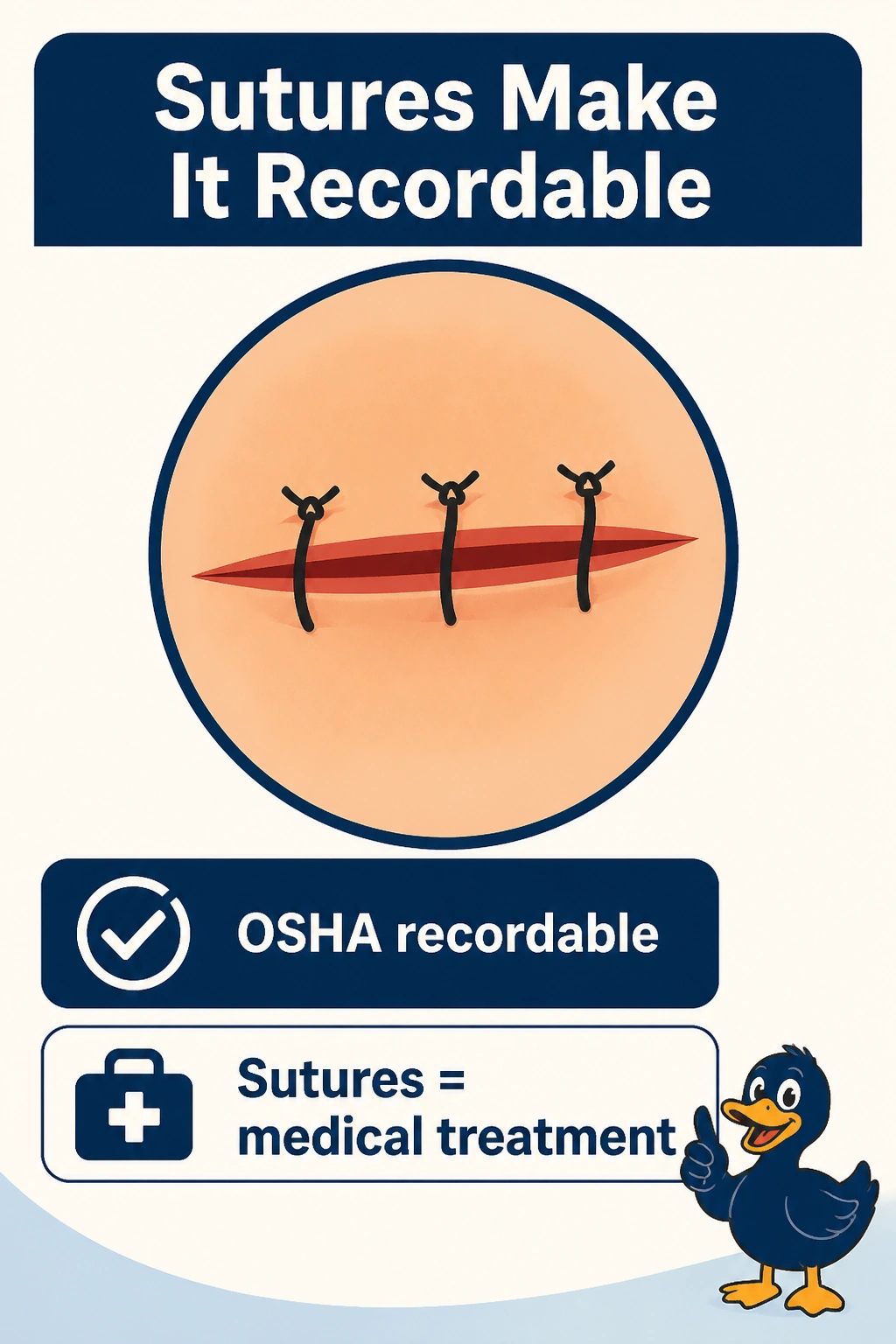
Butterfly bandages and Steri-Strips keep a cut in the first-aid column, but stitches cross the OSHA recordkeeping line every time. Even when your worker comes right back to full duty, sutures make the injury recordable.
Full Explanation
Under OSHA 29 CFR 1904.7, wound-closing devices such as sutures and staples are classified as medical treatment beyond first aid, making any work-related injury requiring them OSHA-recordable. Therefore, this incident must be logged as An OSHA-recordable medical treatment case, because sutures were used to close the wound, regardless of whether the worker missed any shifts. Classifying it as Non-recordable first aid, because the worker returned to full regular duty the next day overlooks that medical treatment alone triggers recordability even without days away or restricted work. Treating it as Non-recordable first aid, because the wound was cleaned and closed in an outpatient clinic confuses the treatment location with the specific clinical procedure performed. Recording it as A restricted-duty case only, because the sutures limit grip strength until they are removed is incorrect because the physician cleared the worker for full regular duty and no work restriction was issued. As a caveat, simple butterfly bandages or Steri-Strips remain non-recordable first aid if no other recordable criteria apply. For an operational check, verify the clinic discharge summary before logging the case on Form 300 within seven calendar days.
Prefer to study offline? Printable PDF study book + test engine ($7.50, unofficial). These questions stay free here.