
A general contractor is prequalifying two mechanical subcontractors: one has a low Experience Modification Rate (EMR) of 0.78, while the other has an EMR of 1.05. Why should the safety technician avoid using EMR as the sole pass-fail metric?
Select an answer to reveal the explanation.
Short Explanation
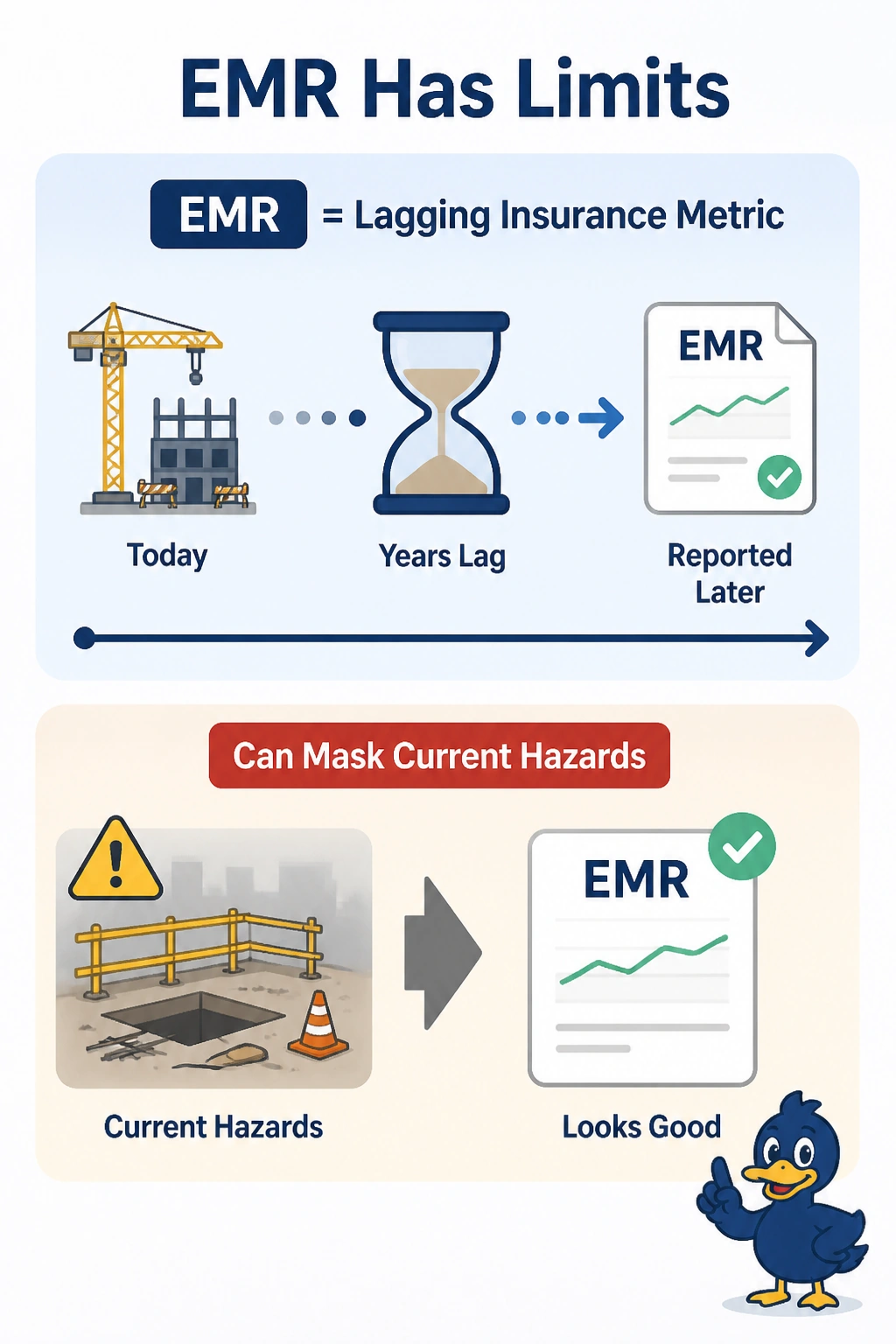
Treating an EMR like a live speedometer is a classic prequalification mistake—it is really a rearview mirror showing insurance claims from up to three years ago. The trap is rejecting or approving a bidder on one number alone, when you need current OSHA logs, inspection records, and field leadership checks to see how they work today.
Full Explanation
An Experience Modification Rate compares a company's actual workers' compensation loss experience to the expected average for its industry classification, usually over a three-year rolling window excluding the most recent policy year. Because "EMR is a lagging insurance metric that lags by years and can mask current site hazards", a firm with recent leadership turnover or new high-risk work can look clean on paper while operating unsafely today, and smaller contractors can see sharp swings from a single claim. "EMR is calculated solely from daily toolbox talk attendance rather than injury claims" is false because EMR is driven by workers' compensation claim frequency and severity, not training logs. "OSHA regulations prohibit general contractors from reviewing subcontractor EMR values during bidding" is incorrect because owners and general contractors routinely request EMRs as part of risk management. "A lower EMR guarantees that a subcontractor maintains full-time site safety supervision" overstates what an insurance multiplier measures, as low claim costs may reflect luck or underreporting rather than active supervision. As a caveat, EMR should still be reviewed alongside DART rates and OSHA citation history. For an operational check, pair EMR data with the subcontractor's past three years of Form 300A summaries, written safety program, and field audit results.
Prefer to study offline? Printable PDF study book + test engine ($7.50, unofficial). These questions stay free here.