
A roofer twists an ankle on a Thursday afternoon, is told by a physician to stay off work Friday, Saturday, and Sunday, and returns to full duty Monday morning. How many days away from work must the safety technician record on the OSHA Form 300 Log under 29 CFR 1904.7?
Select an answer to reveal the explanation.
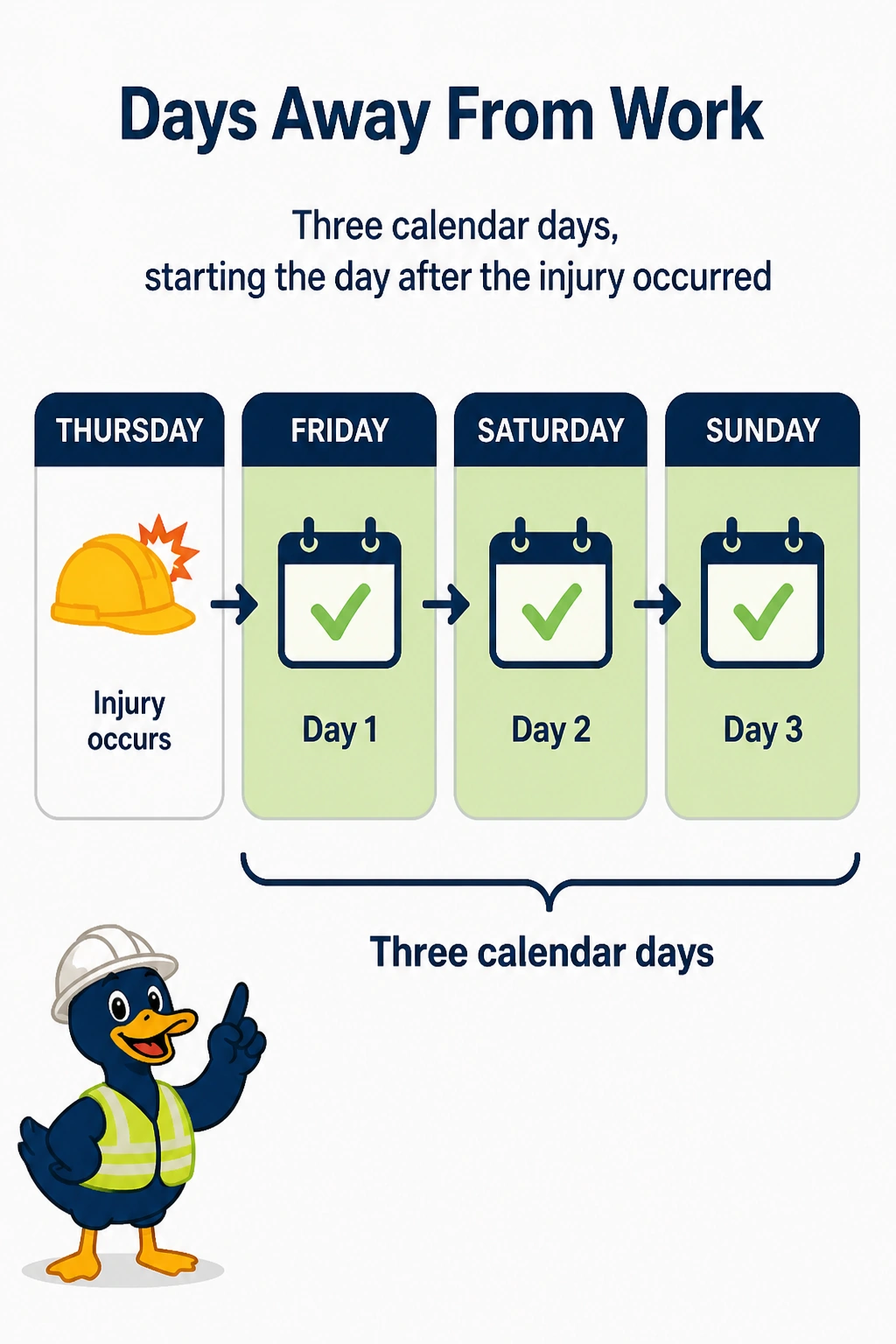
Short Explanation
OSHA's injury calendar runs like a hotel stay—once the doctor orders time off, every day on the clock counts, even the weekend. You do not skip Saturday and Sunday just because the crew wasn't scheduled to work. The trap is counting only missed shifts or including the day of the injury itself.
Full Explanation
Under 29 CFR 1904.7, days away from work are counted using calendar days, not scheduled workdays, beginning on the day after the injury or illness occurs. Because the physician directed the roofer to stay off work on Friday, Saturday, and Sunday, the technician must record Three calendar days, starting the day after the injury occurred. Recording One day, counting only the roofer's normally scheduled Friday workday is incorrect because OSHA explicitly requires counting weekends, holidays, and vacation days if the physician indicates the employee could not work. Logging Four calendar days, including the Thursday afternoon when the injury happened violates the rule that the day of injury is excluded from the day count. Entering Zero days, because the worker returned to full duty by the next week is wrong because any calendar day of physician-ordered absence starting the day after the incident makes the case recordable as days away from work. As a caveat, employers may cap the recorded count at 180 calendar days for a single severe injury and may stop counting once the physician clears the worker to return. For an operational check, audit Form 300 entries monthly against clinic work-status notes to verify calendar-day math and ensure the injury date is excluded.
Prefer to study offline? Printable PDF study book + test engine ($7.50, unofficial). These questions stay free here.