
During a monthly site audit, a safety technician notices that the same missing mid-rail and blocked electrical panel findings keep appearing on weekly inspection sheets without getting fixed. What program step is missing?
Select an answer to reveal the explanation.
Short Explanation
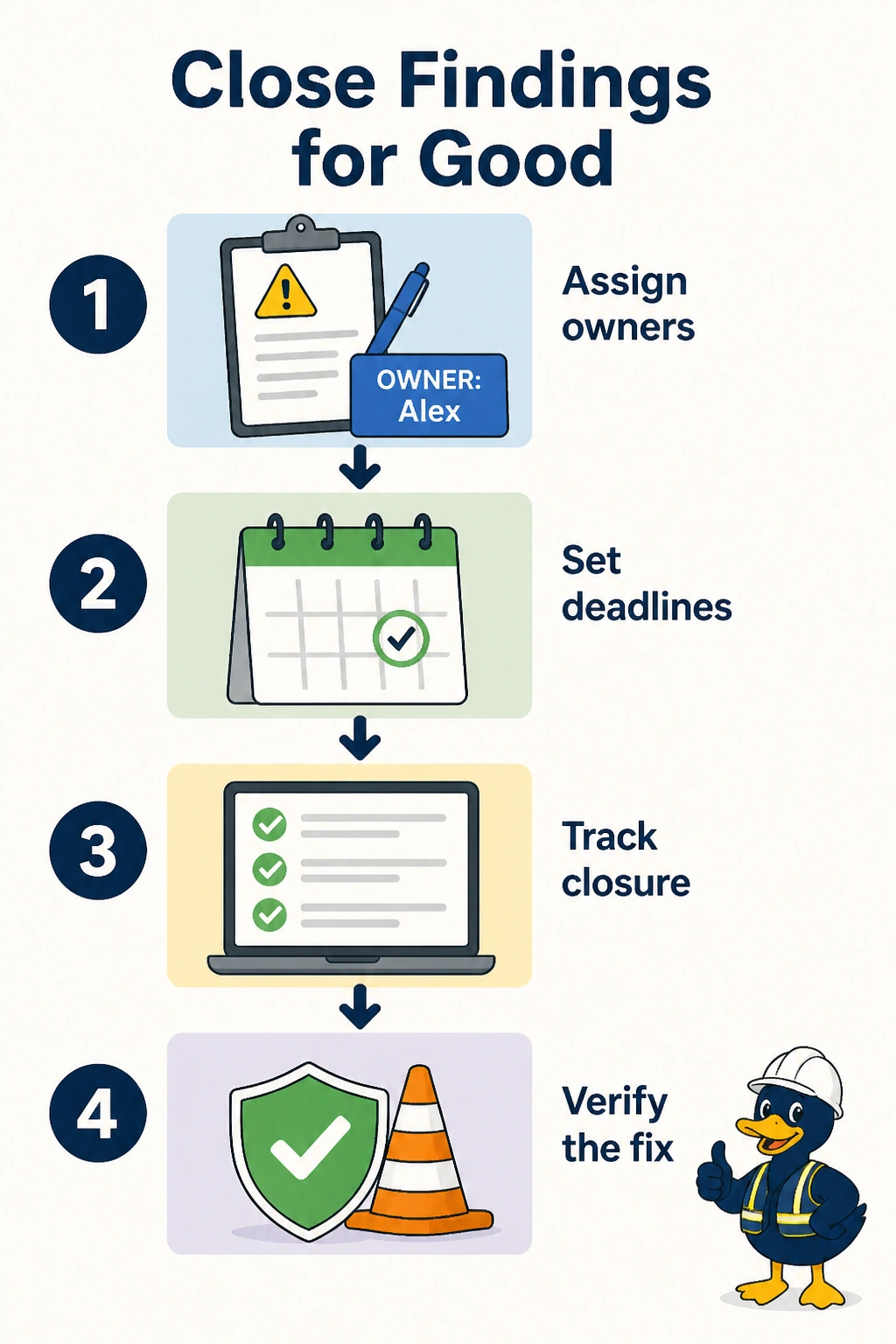
Finding hazards without fixing them is like taking your car to a mechanic who only hands you a list of broken parts. For your inspection program to actually protect workers, every finding needs an owner, a due date, and a follow-up check to verify closure. The trap is thinking more checklists or public scores will fix hazards on their own.
Full Explanation
An inspection program only reduces risk when it closes the loop through Assigning owners, deadlines, and verified closure tracking. Naming a responsible person, setting a risk-based target date, and requiring physical or photographic verification before closing an item ensures hazards are abated rather than repeatedly documented. Increasing the frequency of daily walkaround checklists generates more paperwork without creating accountability for repairs, leading to inspection fatigue. Archiving completed inspection sheets in a locked trailer preserves historical records for compliance but leaves open hazards uncorrected in the field. Posting raw inspection scores on the breakroom bulletin board may create pressure without clarifying who must fix each specific deficiency or confirming that the repair actually occurred. Caveat: high-severity hazards such as missing guardrails or blocked disconnects require immediate interim controls or stop-work action rather than waiting for a scheduled due date. As an operational check, review the open corrective-action log during each weekly superintendent meeting and verify overdue items in the field before marking them closed.
Prefer to study offline? Printable PDF study book + test engine ($7.50, unofficial). These questions stay free here.