
After a monthly site audit, a safety technician has a list of twelve open findings ranging from missing fade-resistant exit signs to an unguarded 18-foot floor opening near active traffic. How should the technician prioritize corrective actions?
Select an answer to reveal the explanation.
Short Explanation
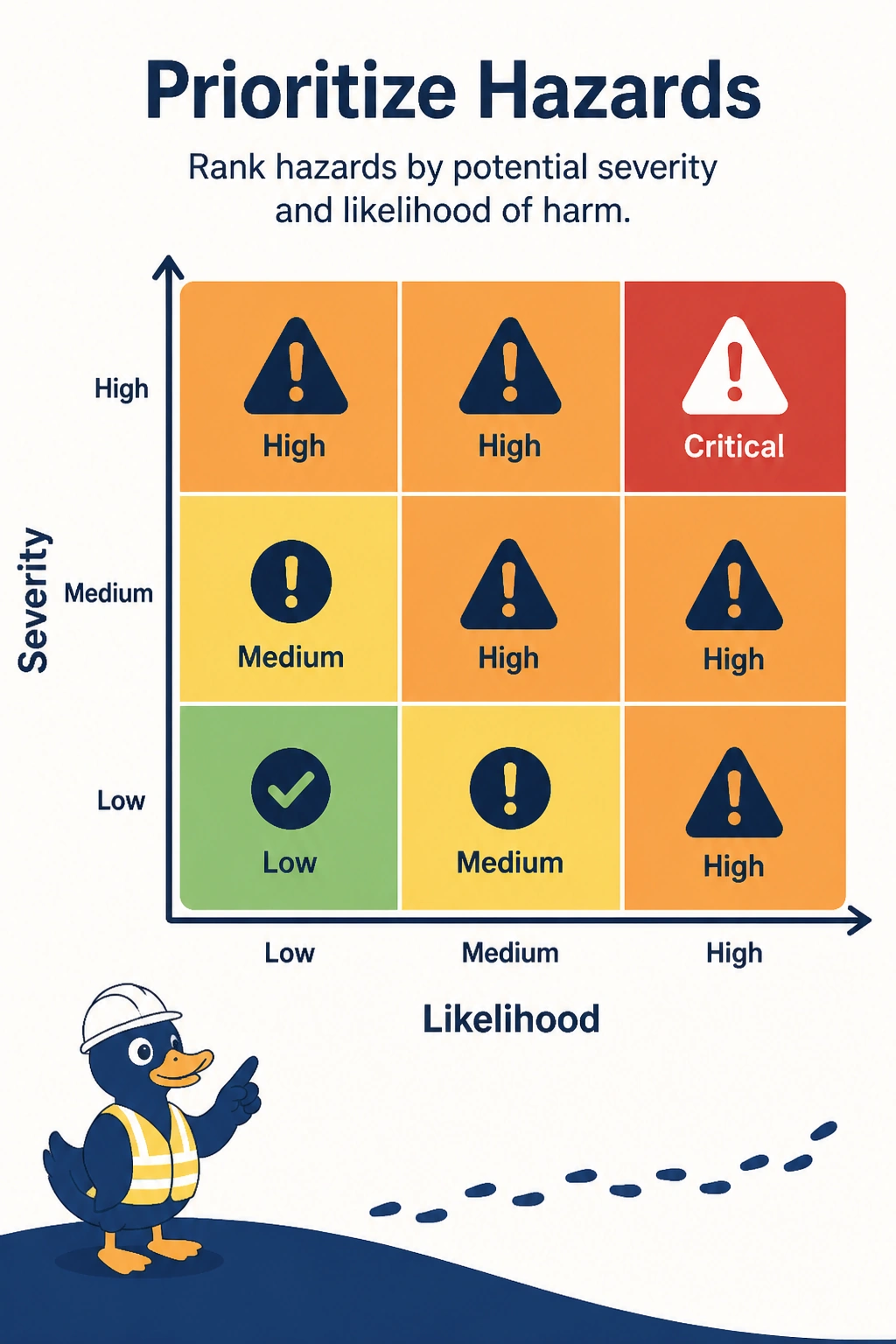
Checking off easy, cheap fixes to shrink an audit list looks busy, but it leaves fatal hazards wide open! You should always triage corrective actions by risk—putting high-severity, high-likelihood dangers like unguarded drops at the front of the line.
Full Explanation
Effective risk management allocates limited time and crew resources where they prevent the worst outcomes first. Rank hazards by potential severity and likelihood of harm is correct because risk-based prioritization evaluates how badly a worker could be hurt and how probable exposure is, ensuring imminent dangers such as an unguarded 18-foot floor opening receive immediate correction. Fix the lowest-cost items first to reduce count fails because knocking out minor administrative items leaves life-threatening fall hazards exposed. Resolve items alphabetically by subcontractor is arbitrary and delays urgent abatement based on company name rather than danger level. Address items in the order they were written fails because audit walk paths are organized by geography, not risk, so a minor sign issue seen at the gate would precede a lethal drop on the third floor. As a caveat, lower-risk findings still need assigned owners and target dates so they do not linger indefinitely. For an operational check, score open findings on a simple severity-by-likelihood matrix in your tracking log and verify imminent hazards are barricaded or corrected before leaving the area.
Prefer to study offline? Printable PDF study book + test engine ($7.50, unofficial). These questions stay free here.