
A corporate safety director asks the site safety technician to perform a comprehensive safety program audit rather than a daily site walk. How does a safety program audit differ from a routine workplace inspection?
Select an answer to reveal the explanation.
Short Explanation
A daily site walk checks whether today's guardrails are up and harnesses are clipped, while a program audit zooms out to ask why those controls succeed or fail over time. When you run an audit, you are testing the health of the whole safety system—training, documentation, accountability, and follow-through. Do not confuse spotting a missing guardrail with auditing the program.
Full Explanation
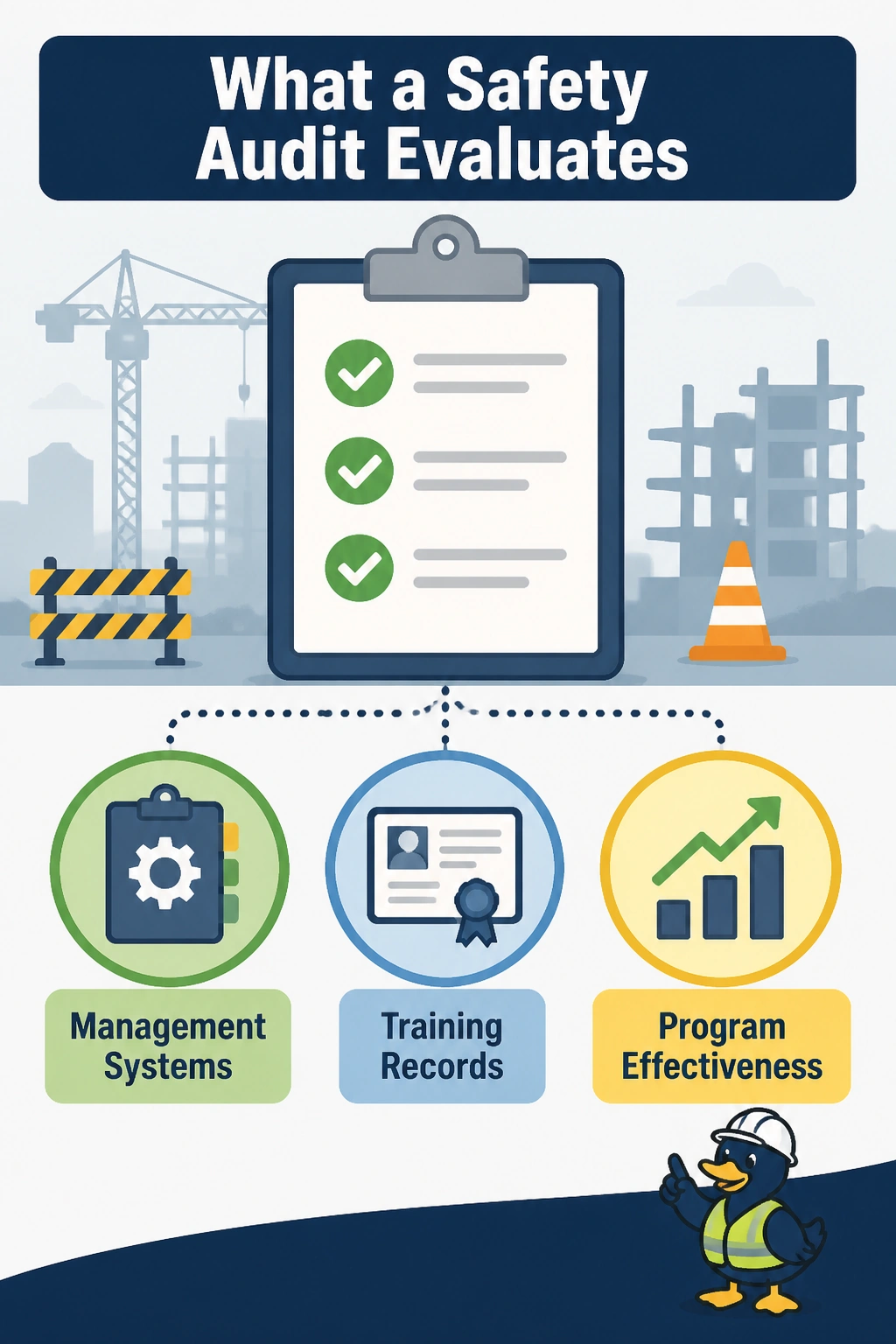
Understanding the difference between inspections and audits helps safety teams measure both immediate field conditions and long-term system performance. Specifically, An audit evaluates management systems, training records, and program effectiveness by reviewing written policies, worker interviews, corrective-action closure rates, and leadership accountability. By contrast, saying An audit focuses solely on spotting immediate physical hazards like unguarded floor holes describes a routine workplace inspection rather than a systemic evaluation. Claiming An audit replaces the need for competent person inspections on trenches and scaffolds is false because statutory daily and shift-based field inspections remain mandatory regardless of program audits. Stating An audit is conducted only after an OSHA compliance officer issues a formal citation confuses reactive enforcement responses with proactive self-evaluation. As a caveat, an effective audit still includes a field verification walk to confirm written procedures match actual jobsite practice. For an operational check, pair your quarterly program audit findings with tracked corrective-action due dates and verify closure during the next audit cycle.
Prefer to study offline? Printable PDF study book + test engine ($7.50, unofficial). These questions stay free here.