
After a crane rigging near-miss on a multi-trade commercial site, rumors circulate and crews worry about being blamed if they report close calls. How should the safety technician share the investigation takeaways across the project?
Select an answer to reveal the explanation.
Short Explanation
Publicly shaming a worker after a close call drives every future near-miss underground. When you strip out the names and focus on what broke in the process, your crews learn the fix without fearing a target on their back.
Full Explanation
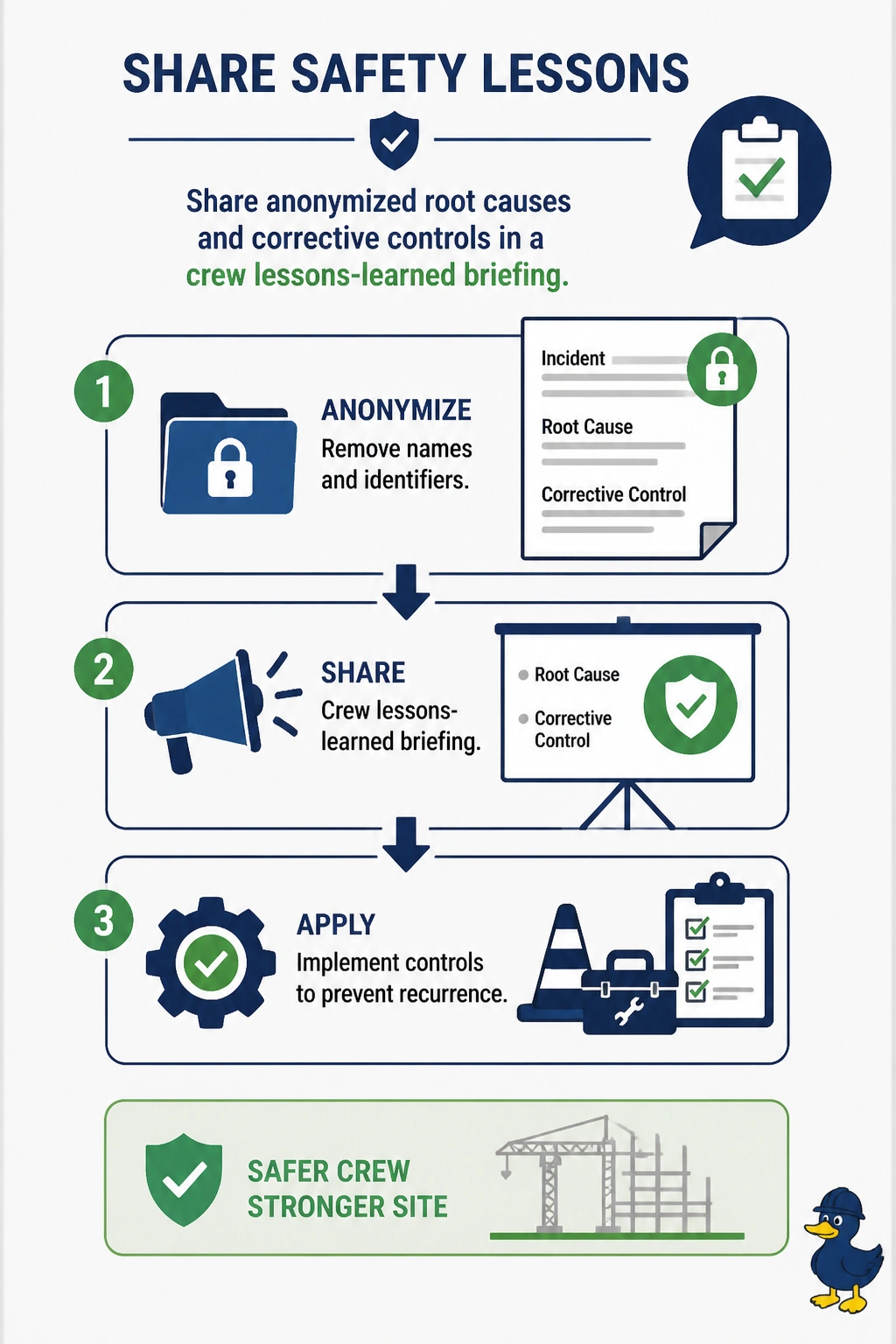
Effective safety leadership treats incidents and near-misses as learning opportunities for the entire project rather than occasions for public blame. Sharing anonymized root causes and corrective controls in a crew lessons-learned briefing helps all trades recognize similar rigging or communication gaps while protecting individual privacy and encouraging future reporting. Posting the worker involved in the near-miss's full name and disciplinary write-up on the jobsite bulletin board destroys trust, violates basic confidentiality norms, and chills near-miss reporting. Limiting incident findings strictly to upper management so crews do not lose focus on production leaves frontline riggers and operators unaware of the hazards and updated controls. Emailing executives the crane invoice and the schedule slip, and telling the crews only that the lift was delayed focuses on cost and schedule while withholding the root causes and corrective controls crews need to work safely. As a caveat, keep the briefing concise, visual, and tied directly to the equipment or procedures crews are using that week. For an operational check, review the lessons-learned summary with foremen during the next morning huddle and verify that the updated rigging control is applied in the field.
Prefer to study offline? Printable PDF study book + test engine ($7.50, unofficial). These questions stay free here.