
A crane foreman privately alerts the safety technician that a rigger appears unsteady, smells strongly of alcohol, and is slurring words just before a steel pick. What should the safety technician do first to protect the crew and handle the situation appropriately?
Select an answer to reveal the explanation.
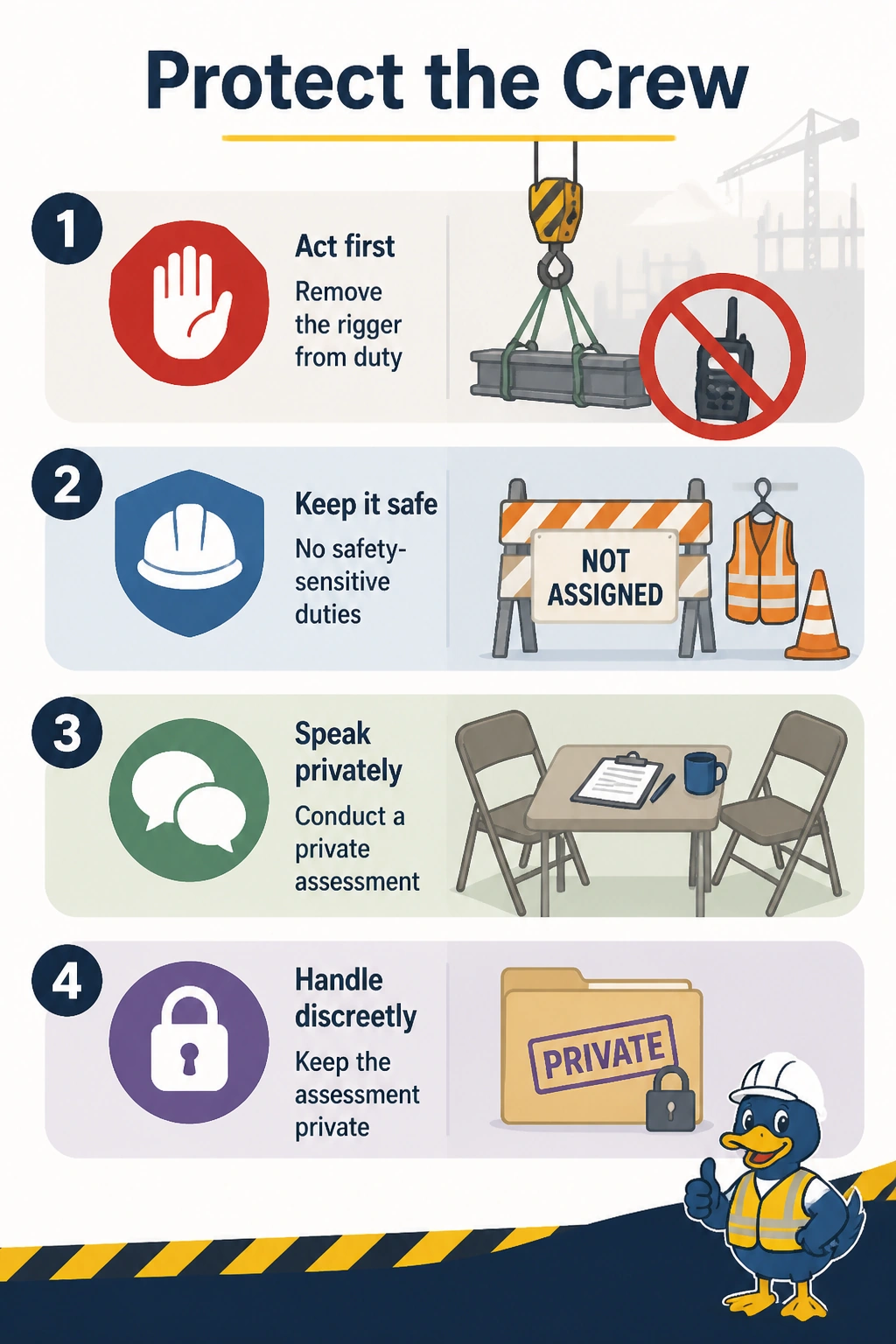
Short Explanation
When someone appears impaired before a crane pick, you need to stop the risk immediately without turning the jobsite into a courtroom. Removing the rigger from safety-sensitive duties and conducting a private assessment protects the crew while preserving the worker’s dignity and confidentiality.
Full Explanation
The immediate step is to remove the rigger from safety-sensitive duties and conduct a private assessment. Removing the worker from rigging duties at once eliminates the imminent hazard to the crane crew; moving to a private area with a second witness or supervisor allows objective documentation and safe follow-up under company fitness-for-duty policy without public humiliation. Gathering the rigging crew to ask whether anyone saw the worker drinking spreads rumors, breaches confidentiality, and delays hazard removal. Allowing the rigger to finish a crane pick with a spotter nearby is unsafe because a spotter cannot prevent a sudden rigging error or a misread hand signal during a live overhead lift. Posting a break-trailer notice announcing suspension for intoxication broadcasts unverified medical or disciplinary allegations, violates privacy standards, and damages crew trust. As a caveat, never allow a suspected impaired worker to drive themselves home; arrange safe transportation under company policy. Before resuming the pick, check that a qualified rigger has been assigned, and document objective observations privately with HR or management.
Prefer to study offline? Printable PDF study book + test engine ($7.50, unofficial). These questions stay free here.