
After a dropped steel beam narrowly misses a rigging crew on a busy commercial site, rumors spread and morale drops across all trades. How should the safety technician advise project leadership to address the crew before resuming normal operations?
Select an answer to reveal the explanation.
Short Explanation
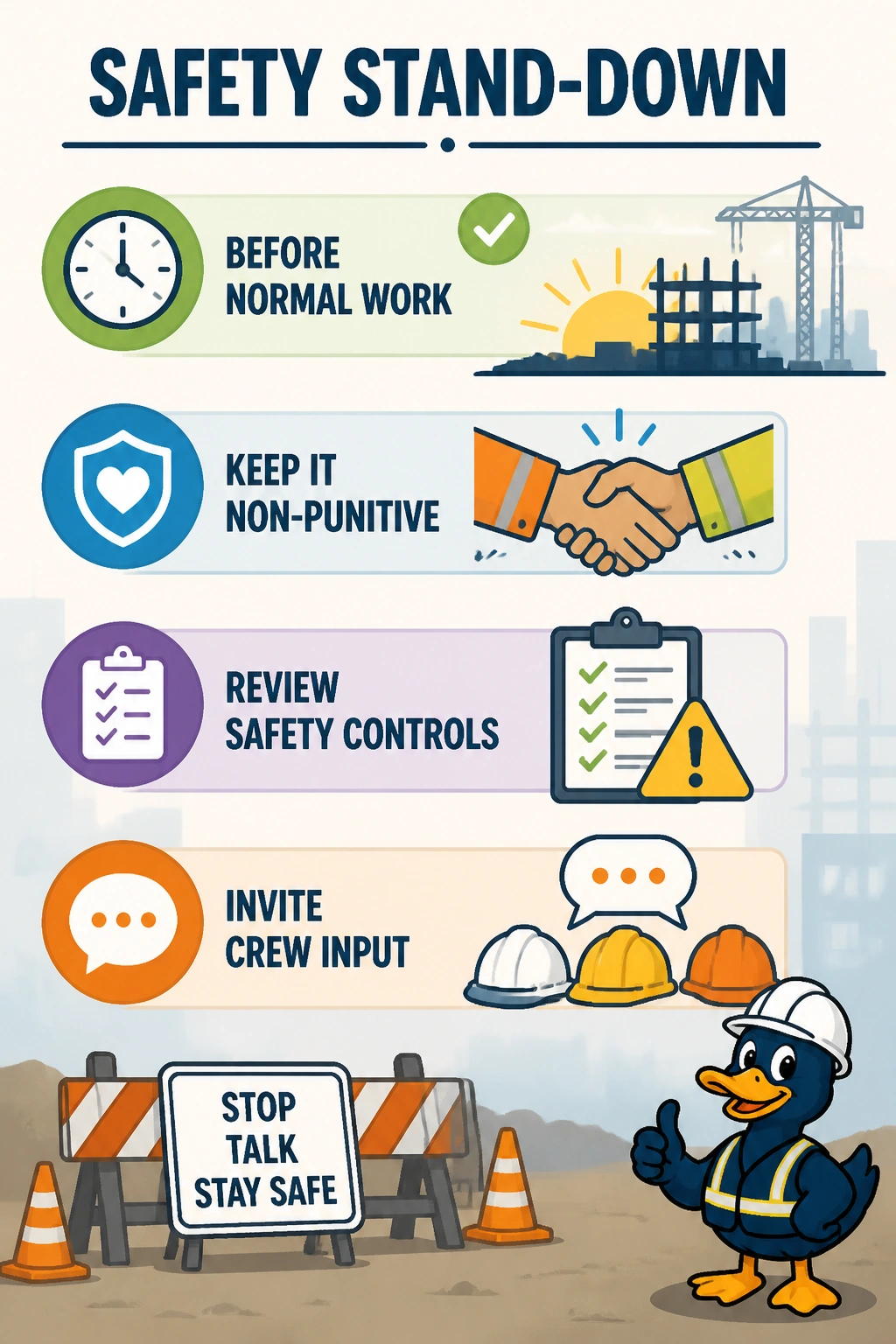
When a close call rattles a jobsite, you cannot restore confidence by barking orders or sweeping it under the rug. You build real buy-in by pausing work for a candid stand-down, avoiding the trap of blanket punishment that drives future hazard reporting underground.
Full Explanation
The best leadership response is to Hold a focused, non-punitive safety stand-down to review controls and invite crew input. Pausing operations demonstrates visible commitment to worker well-being, allows leadership to clarify verified facts instead of letting rumors fester, and encourages frontline trades to share practical rigging or staging concerns openly. Choosing to Issue written warnings to every crew member on site before resuming work to deter future shortcuts fails because punitive mass discipline breeds resentment and discourages workers from speaking up about near-misses. Opting to Post a brief memo on the trailer door and immediately return all crews to production fails because passive paperwork rarely reaches every worker and signals that schedule outweighs safety. Electing to Require the foreman to handle all communication privately with only the rigging crew misses the broader site impact, since adjacent trades also witnessed the event and share overhead exposure. One caveat is that a stand-down should never turn into a blame session or speculate on unverified root causes before the investigation finishes. As an operational check, document attendance, capture worker suggestions on a flip chart, and assign owners to verify any agreed rigging or exclusion-zone fixes before lifting resumes.
Prefer to study offline? Printable PDF study book + test engine ($7.50, unofficial). These questions stay free here.