
A site safety technician needs to train twelve newly hired laborers on inspecting and donning full-body harnesses before steel decking begins. Which training method best verifies that each worker can perform the task correctly?
Select an answer to reveal the explanation.
Short Explanation
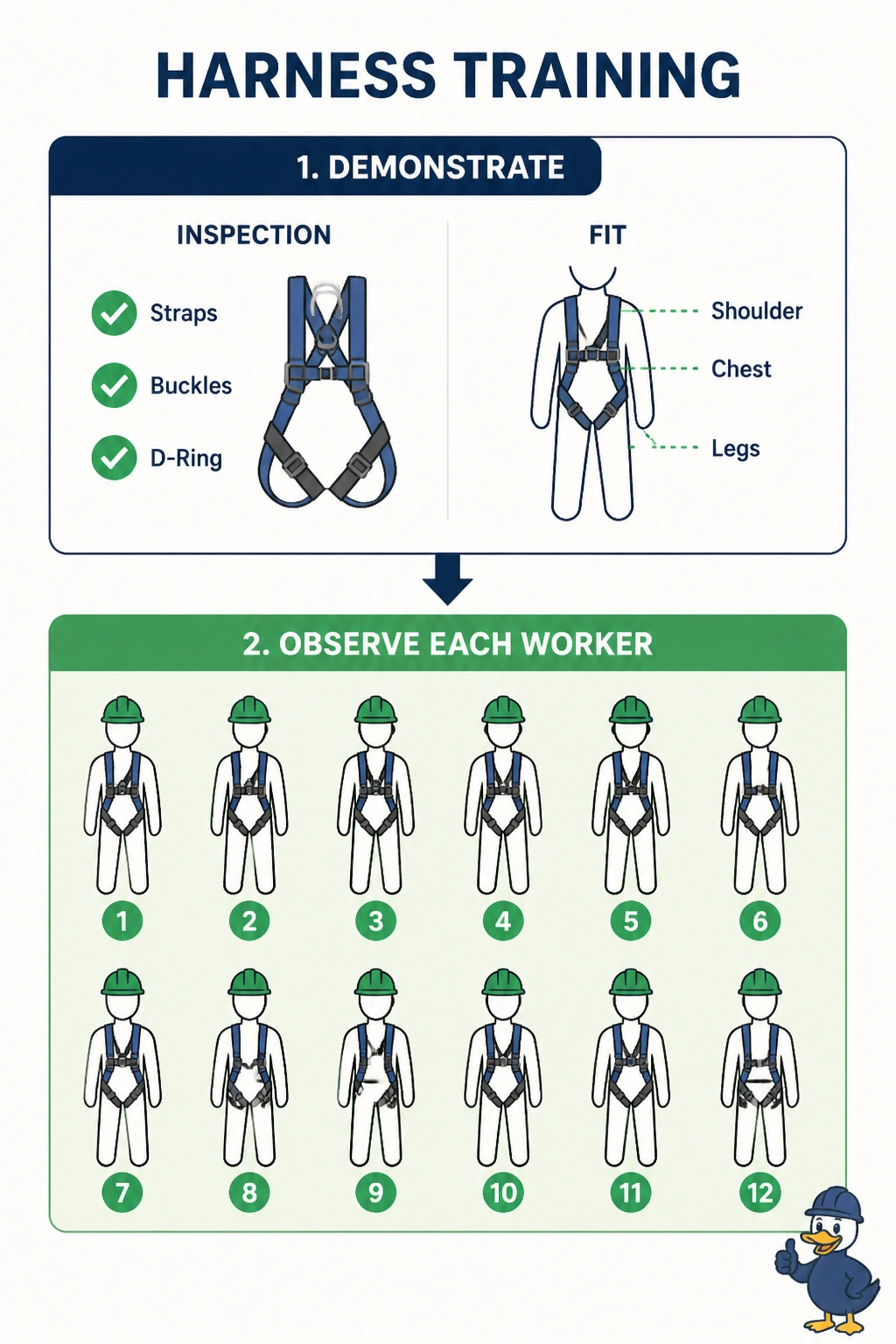
Handing someone a manual on fall harnesses is like teaching them to swim from a textbook—you only know it worked when you see them do it. The trap is settling for passive sign-in sheets or read-aloud policies that never test actual skill. Demonstrate the steps and watch each worker repeat them.
Full Explanation
Hands-on safety training works best when it follows a show-and-verify model, such as Demonstrating the inspection and fit, then observing each worker do it. Watching each laborer check webbing, D-rings, and leg straps lets the trainer catch twisted buckles or loose chest straps immediately. Distributing a printed manufacturer manual for workers to read at home provides no way to confirm comprehension, literacy, or physical ability to adjust the harness. Showing a thirty-minute recorded video followed by a group sign-in sheet documents attendance rather than competence, leaving dangerous fitting errors unnoticed. Reading the company fall protection policy aloud during morning stretch covers administrative rules but fails to build muscle memory for equipment inspection and proper sizing. As a caveat, OSHA fall protection training rules require retraining whenever workplace changes or worker inadequacies show the prior training did not stick. For an operational check, use a short practical checklist to verify that each worker can identify damaged stitching and achieve a snug harness fit before stepping onto the deck.
Prefer to study offline? Printable PDF study book + test engine ($7.50, unofficial). These questions stay free here.