
An apprentice ironworker pauses a steel erection pick after noticing a frayed choker sling, and the crew foreman complains loudly about losing crane time. How should the safety technician support the site's Stop-Work Authority program?
Select an answer to reveal the explanation.
Short Explanation
Stop-Work Authority only works if the newest apprentice on site can use it without getting punished for slowing down the schedule. If your crew sees a foreman bully someone who spoke up, nobody will flag the next hazard until someone gets hurt. Back the worker publicly and fix the leadership pushback.
Full Explanation
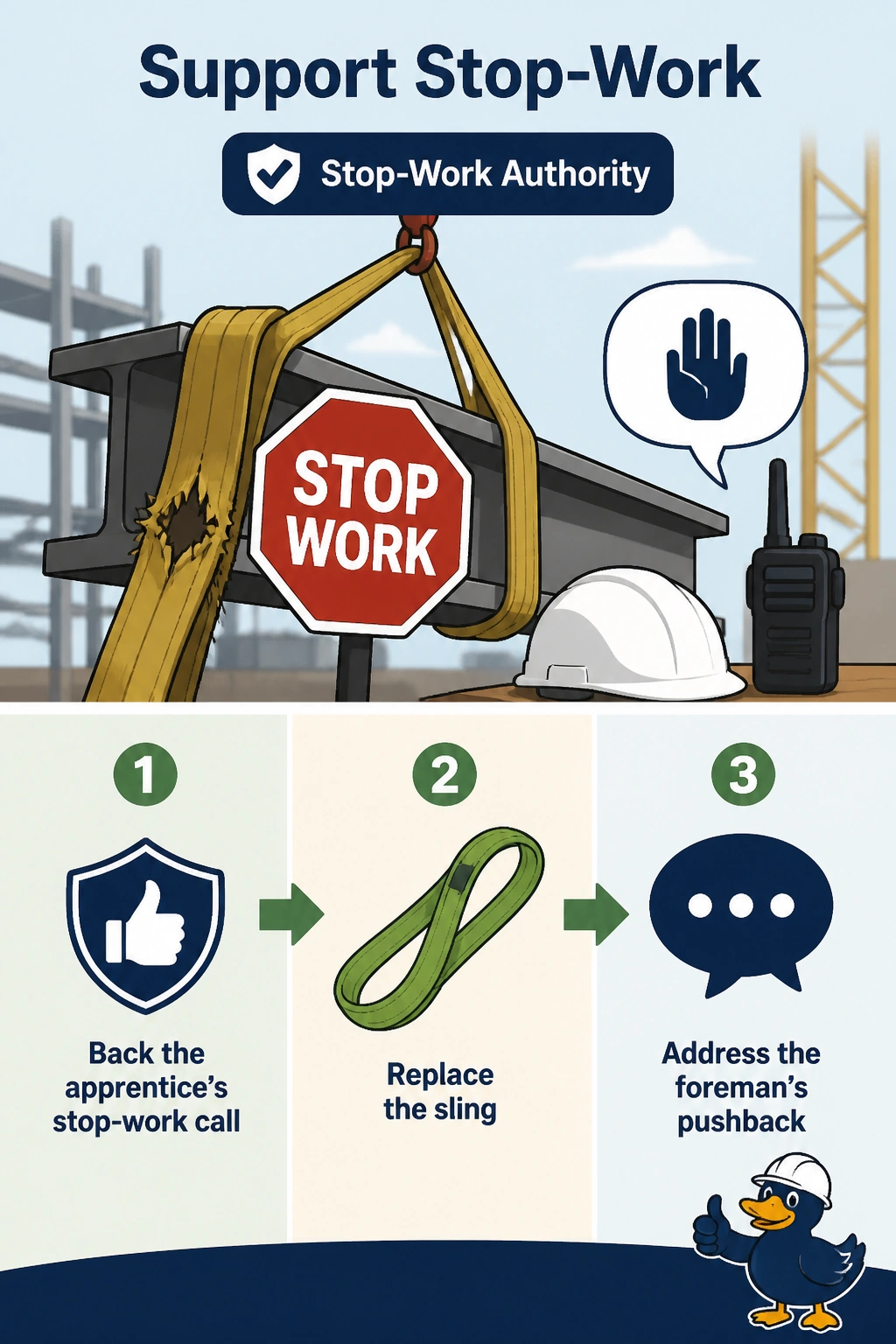
A credible Stop-Work Authority program depends on psychological safety and visible leadership support, so the technician should Back the apprentice's stop-work call, replace the sling, and address the foreman's pushback. Publicly validating a good-faith safety pause reinforces hazard reporting, prevents a catastrophic load drop, and corrects supervisory behavior that discourages future interventions. Choosing to Reassign the apprentice to ground cleanup to prevent friction with the crew signals retaliation to the workforce, even if framed as peacekeeping. Choosing to Allow the pick to finish first so the crane schedule stays on track gambles with a damaged rigging component and teaches crews that production overrides life safety. Choosing to Require written approval from the project manager before any pause defeats the purpose of immediate hazard intervention and creates fatal delays during dynamic crane operations. As a caveat, after a stop-work event is resolved, review the near-miss neutrally with the crew rather than shaming anyone. Check during weekly foreman huddles whether recent stop-work calls were logged, resolved promptly, and free of any informal crew retaliation.
Prefer to study offline? Printable PDF study book + test engine ($7.50, unofficial). These questions stay free here.