
During a large-scale trench collapse and utility main break on a mixed-use construction site, multiple fire companies, utility crews, and site trades begin reporting directly to the Incident Commander, creating communication bottlenecks. How should the Incident Command System structure be adjusted?
Select an answer to reveal the explanation.
Short Explanation
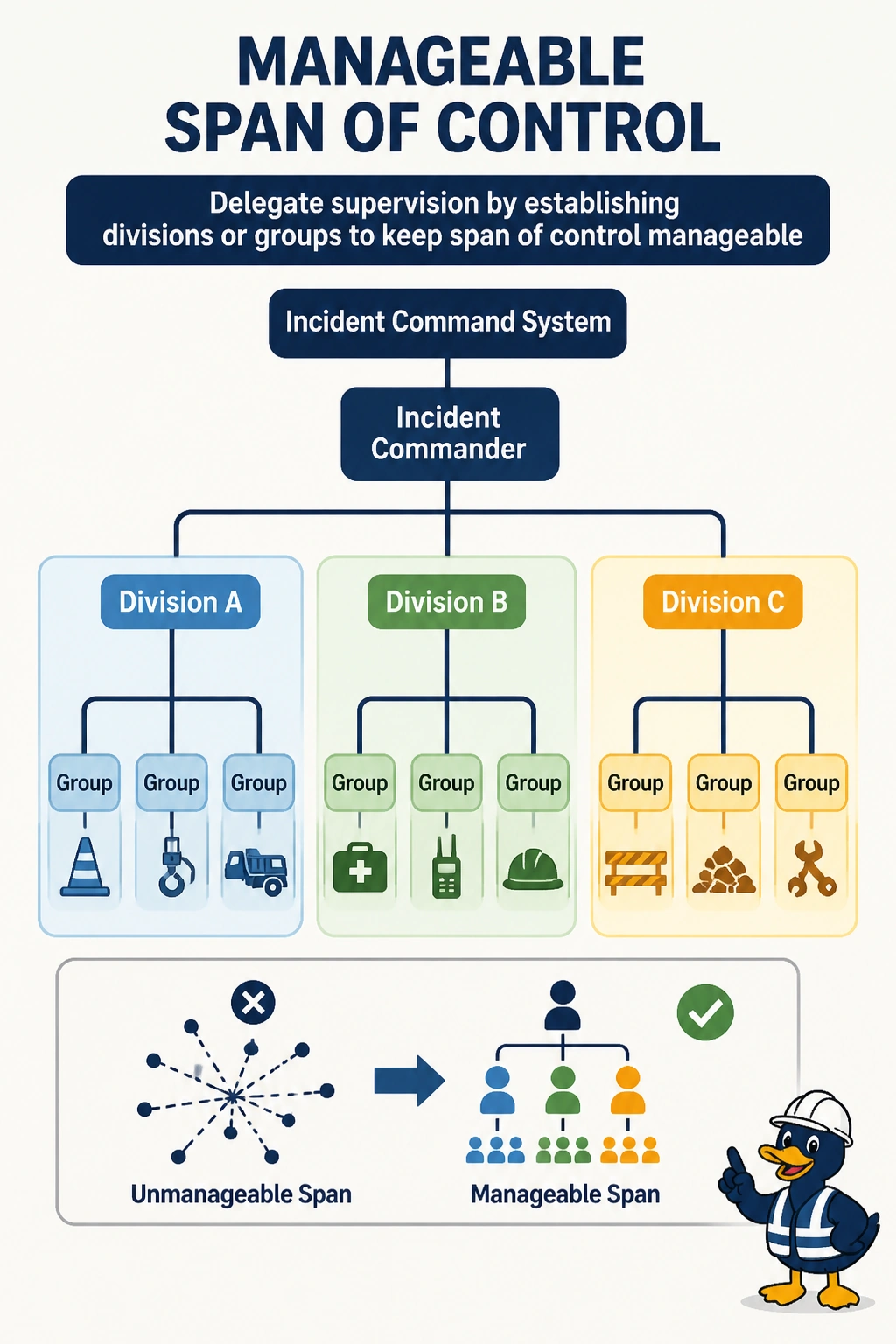
When many crews report to one commander, you can end up with unclear orders and communication bottlenecks—like trying to run a busy kitchen with no line leads. Under ICS, you keep span of control manageable by establishing divisions or groups; having every foreman and engine captain report to one commander creates congestion, while waiting for executives or assigning the safety technician to direct traffic and media crews does not solve the problem. You keep rescue operations under qualified on-scene emergency leadership and safety oversight focused on hazards.
Full Explanation
A core Incident Command System principle is maintaining a manageable span of control, typically three to seven subordinates per supervisor, with five considered optimal. When arriving resources exceed that limit, the Incident Commander should delegate supervision by establishing divisions or groups, organizing responders by geographic area or functional task so orders and accountability flow through designated leaders. Having all arriving trade foremen and engine captains report directly to one commander creates radio congestion, delays decisions, and weakens accountability. Pausing rescue operations until corporate executives arrive wastes critical time and places command with corporate management rather than qualified on-scene emergency leadership. Assigning the site safety technician to direct traffic and media crews at the same time overloads one role and diverts safety oversight from life-safety hazards at the collapse zone. Caveat: expand the ICS organization proactively as incoming units are dispatched, rather than waiting for radio traffic to break down. Practical check: during pre-incident drills, verify that site supervisors know to check in at the staging area and wait for a division or group assignment instead of self-dispatching.
Prefer to study offline? Printable PDF study book + test engine ($7.50, unofficial). These questions stay free here.