
A laborer on a concrete slab project needs to refill the gasoline tank on a portable plate compactor that has been running for two hours. What fire prevention step must the safety technician require before refueling begins?
Select an answer to reveal the explanation.
Short Explanation
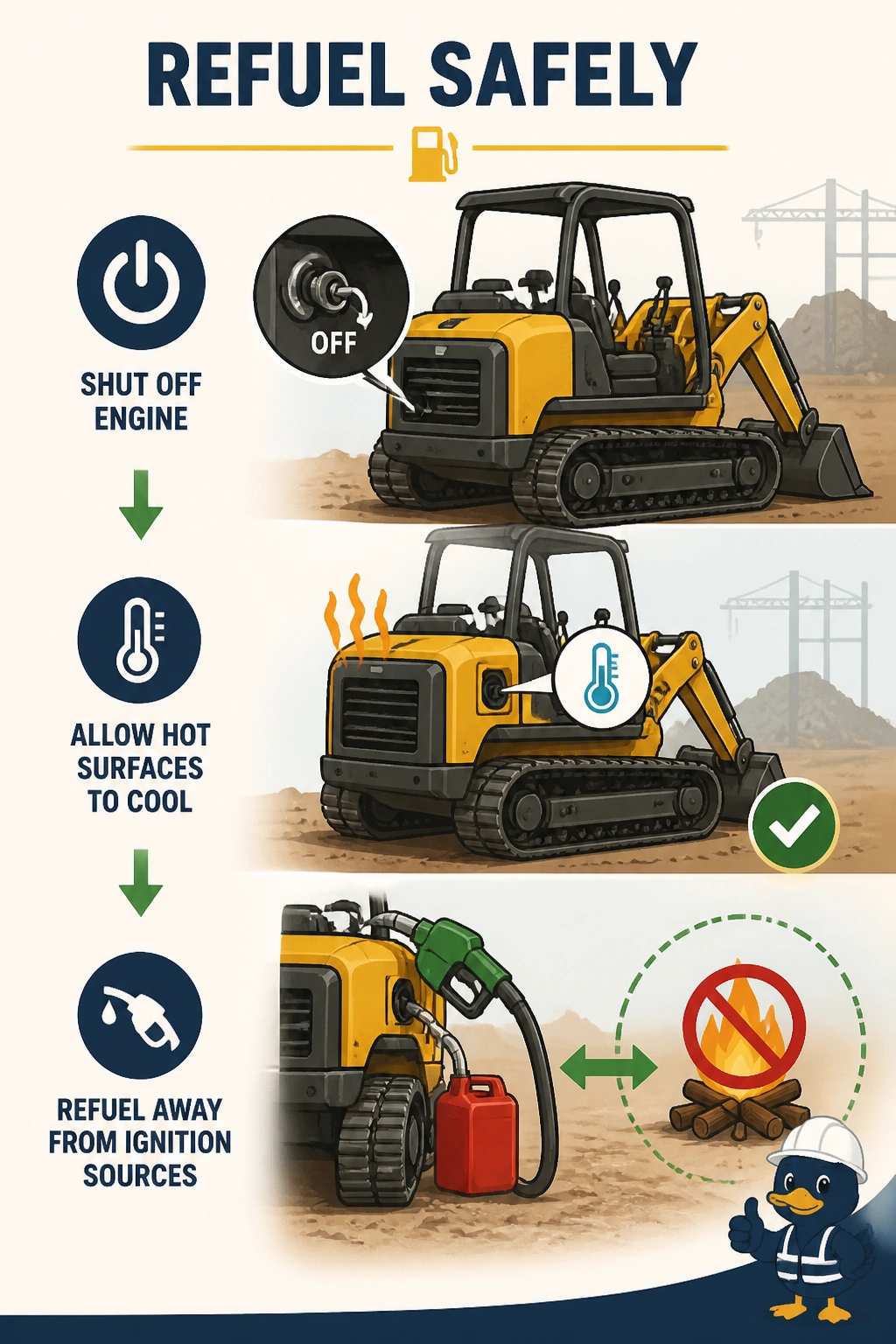
Pouring gasoline onto a hot, running compactor is like inviting a flash fire to lunch with your crew. Before refueling, you must shut off the engine and let hot surfaces cool away from any ignition source. The trap is thinking a low idle or fast pour saves time without turning fuel vapors into an explosion.
Full Explanation
Gasoline produces flammable vapors at ambient temperatures that can ignite instantly upon contact with hot exhaust manifolds, sparks, or static discharges. Under 29 CFR 1926.152(g)(10), shut off the engine before fueling. Letting hot surfaces cool away from ignition sources is manufacturer and fire-prevention practice, not a separate 1926.152 requirement. Attempting to Keep the engine idling at low speed so the fuel cap vents pressure evenly during pouring leaves active ignition sources, electrical sparks, and extreme muffler heat right next to the open tank. Choosing to Refuel the compactor directly next to an active welding cart to save walking distance places flammable vapor clouds within reach of hot slag and open arcs. Trying to Use an open plastic bucket instead of an approved safety can to pour the gasoline faster increases spill risk, vapor release, and static buildup without a flame arrester. As a caveat, always keep a suitable portable fire extinguisher accessible near fueling areas and wipe up minor drips before restarting. As an operational check, verify that crews use listed safety cans with spring-closing lids and inspect fueling zones for hot-work clearance.
Prefer to study offline? Printable PDF study book + test engine ($7.50, unofficial). These questions stay free here.