
During a busy steel delivery on a commercial hospital addition, a subcontractor parks a flatbed trailer and stacks pallets of drywall directly in front of the site's only active fire hydrant and across the designated fire apparatus access lane. What must the safety technician require immediately?
Select an answer to reveal the explanation.
Short Explanation
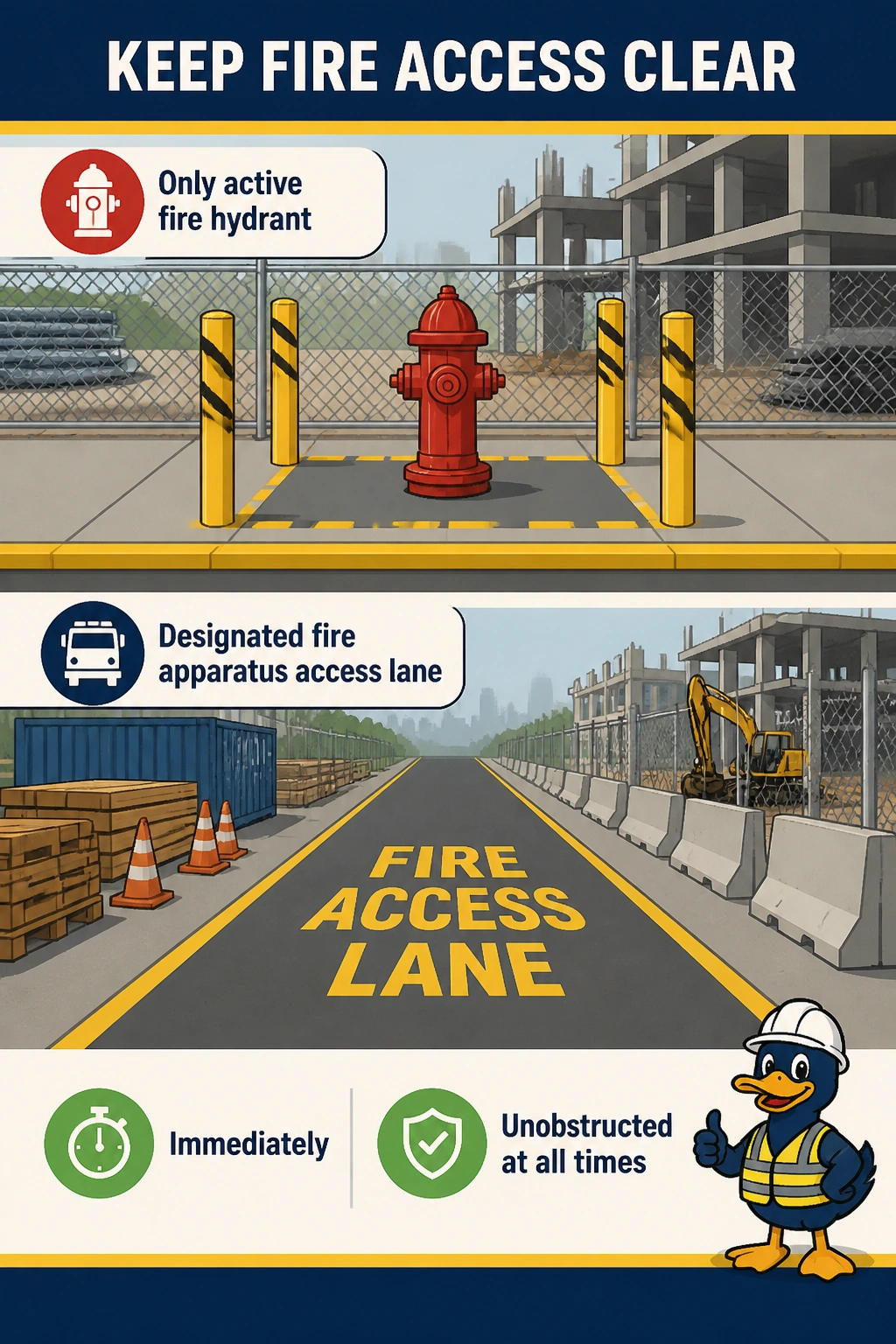
Think of a blocked fire lane like locking your emergency exit during a busy shift—seconds lost moving materials can cost lives and the entire structure. Under OSHA 29 CFR 1926.150, you must keep firefighting equipment and access routes clear at all times. Don't fall for temporary workarounds like cones, signs, or waiting until unloading finishes; clear the path right away.
Full Explanation
Under OSHA 29 CFR 1926.150, access to all available firefighting equipment on a construction site must be maintained at all times so emergency responders can connect hoses and stage apparatus without delay. Therefore, you must Clear the hydrant and fire access lane immediately and keep them unobstructed at all times. Material deliveries and staging plans must adapt to emergency access requirements, never the other way around. Choosing to Allow the crew two hours to finish unloading the trailer before moving the pallets leaves the site vulnerable during that entire window, because a fire can grow beyond control in minutes. Attempting to Place orange traffic cones around the stacked pallets so arriving fire trucks can spot them easily only highlights the obstruction without restoring physical clearance for apparatus or hose connections. Similarly, choosing to Attach a reflective sign to the flatbed noting that the driver is nearby if an emergency occurs relies on locating an individual during chaos rather than guaranteeing immediate, unimpeded access. One practical caveat is that fire access lanes must also remain clear of parked personal vehicles, trench spoils, and overhead obstructions as site phases shift. For an operational check, walk the perimeter fire lanes and hydrant locations at the start of every shift and before major deliveries to verify unobstructed clearance.
Prefer to study offline? Printable PDF study book + test engine ($7.50, unofficial). These questions stay free here.