
A concrete finisher kneels in wet Portland cement inside a foundation form for twenty minutes, soaking through jeans and causing burning pain and redness on both knees. What immediate first-aid action should the safety technician direct?
Select an answer to reveal the explanation.
Short Explanation
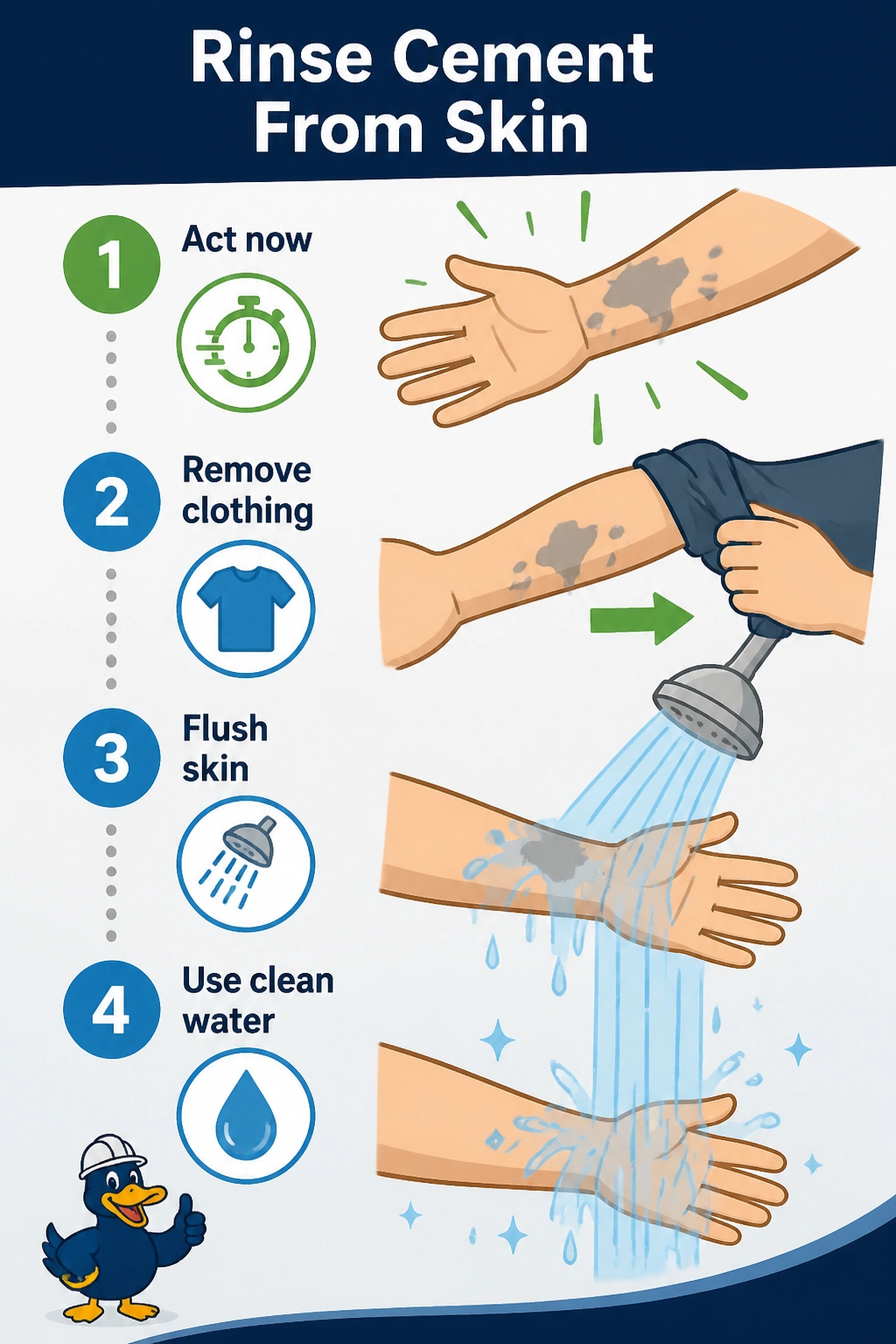
Wet cement is a sneaky caustic hazard that keeps eating into skin long after you step out of the form. You stop the chemical burn by stripping soaked clothes and flushing with plenty of clean water, avoiding the trap of pouring vinegar or trapping paste under ointments.
Full Explanation
The proper immediate action is to Remove contaminated clothing and flush the skin with copious clean water. Wet Portland cement is strongly alkaline and causes severe caustic chemical burns if trapped against skin; stripping away soaked trousers and irrigating thoroughly with clean water dilutes and removes the corrosive paste before deeper tissue necrosis develops. Choosing to Neutralize the alkaline residue immediately by pouring household vinegar over the skin is hazardous because acid-base reactions on skin can generate heat and worsen tissue injury. Opting to Apply petroleum jelly over the wet cement to seal out air before washing traps the caustic alkali directly against the epidermis instead of removing it. Electing to Wrap the damp pant leg tightly with dry gauze until the end of the work shift prolongs skin contact with saturated fabric, turning mild irritation into a full-thickness burn. One caveat is that chemical burns from concrete can appear minor at first and worsen hours later, so medical evaluation is warranted for persistent pain, blistering, or large affected areas. As an operational check, confirm portable wash stations and clean water supplies are staged right at active concrete pours and verify workers wear waterproof kneepads or boots.
Prefer to study offline? Printable PDF study book + test engine ($7.50, unofficial). These questions stay free here.