
An excavator boom accidentally strikes an energized overhead distribution line, and the operator is uninjured inside the cab while sparks fly near the tracks. What should the safety technician instruct the operator to do if there is no fire inside the cab?
Select an answer to reveal the explanation.
Short Explanation
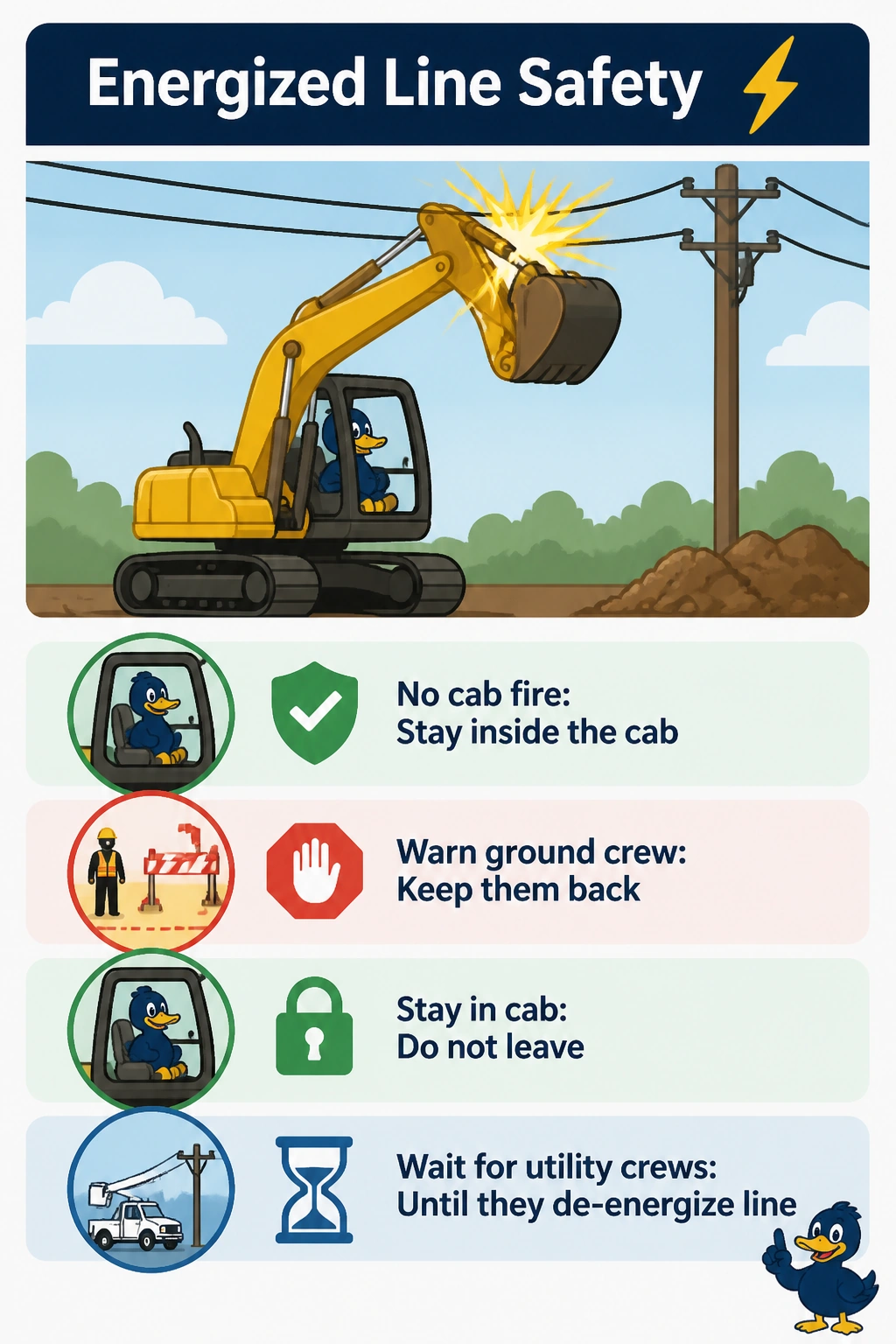
You’re safest inside the cab while the machine remains in contact with an energized line, so warn ground crew to stay back until utility crews de-energize it. Climbing down or stepping onto the ground while holding the handrail could make your body a path to ground, and driving while dragging the wire creates further hazards.
Full Explanation
When an excavator contacts an energized overhead line and there is no fire inside the cab, instruct the operator to stay inside and warn ground crew back until utility crews de-energize the line. The operator and machine frame are at roughly the same electrical potential; contact with the ground and machine at the same time can create a lethal step-and-touch voltage path through the body. Climbing down the metal ladder to inspect the tracks exposes the operator to electrocution when a foot contacts energized earth. Stepping onto the ground while holding the cab handrail can complete a circuit through the operator’s arms and legs. Driving the excavator away while dragging the downed wire risks snapping poles, energizing nearby fences or water puddles, and endangering bystanders. The exam caveat is that this instruction applies when there is no fire inside the cab; fire requires an emergency response rather than remaining in the cab. As a practical check, establish a wide exclusion perimeter, call 911 and the electric utility, and verify utility lock-out confirmation before anyone approaches the machine.
Prefer to study offline? Printable PDF study book + test engine ($7.50, unofficial). These questions stay free here.