
While trenching for a storm drain on a former industrial lot, an excavator operator uncovers rusted drums leaking a sharp-smelling black sludge into the trench. What should the safety technician direct the crew to do first?
Select an answer to reveal the explanation.
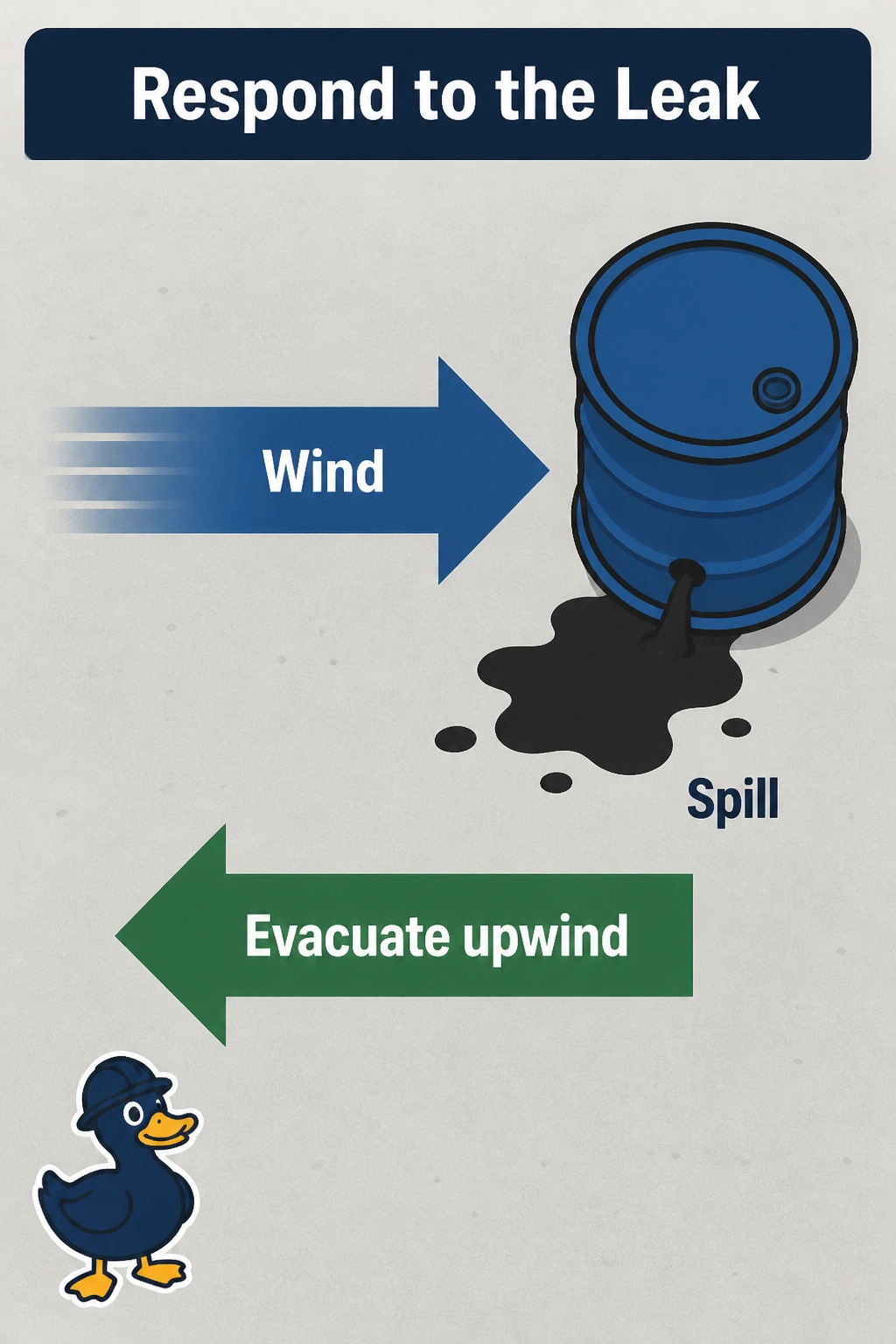
Short Explanation
When an excavator hits mystery sludge, curiosity can put your crew in the hospital! The trap is trying to move or bury the drums before knowing what is inside, so your first move is always to stop work, get everyone upwind, and isolate the hazard.
Full Explanation
Unidentified industrial waste can release toxic vapors, flammable gases, or corrosive liquids within seconds of being disturbed. Stop digging, evacuate workers upwind, and secure the area is the right first action because removing personnel from potential inhalation or contact exposure and preventing others from entering protects life safety until qualified hazmat responders evaluate the material. Scoop the leaking drums out with the excavator to inspect labels fails because mechanical handling can rupture corroded containers, trigger a fire or chemical reaction, and expose the operator. Cover the sludge with clean backfill to contain the odor quickly is dangerous and violates environmental reporting rules by concealing an active release that can migrate into groundwater. Wash the trench bottom with a fire hose to dilute the material is wrong because water can react violently with certain chemicals and spread contamination into storm drains or nearby soil. Keep in mind as a caveat that site crews without hazardous waste operations training must not enter the exclusion zone to sample or contain the spill. As an operational check, confirm your emergency action plan lists local environmental and hazmat contacts and verify workers know the site's upwind assembly points.
Prefer to study offline? Printable PDF study book + test engine ($7.50, unofficial). These questions stay free here.