
Smoke and flames erupt inside an energized 480-volt temporary distribution panel in a concrete basement, and workers are clear of the immediate arc zone. Which portable fire extinguisher type is appropriate if a trained worker attempts to extinguish the fire?
Select an answer to reveal the explanation.
Short Explanation
Spraying water on a live 480-volt panel can turn a fire response into an electrocution hazard in a heartbeat. Choose a non-conductive agent rated for energized electrical equipment, rather than grabbing a water-based extinguisher just because flames are visible.
Full Explanation
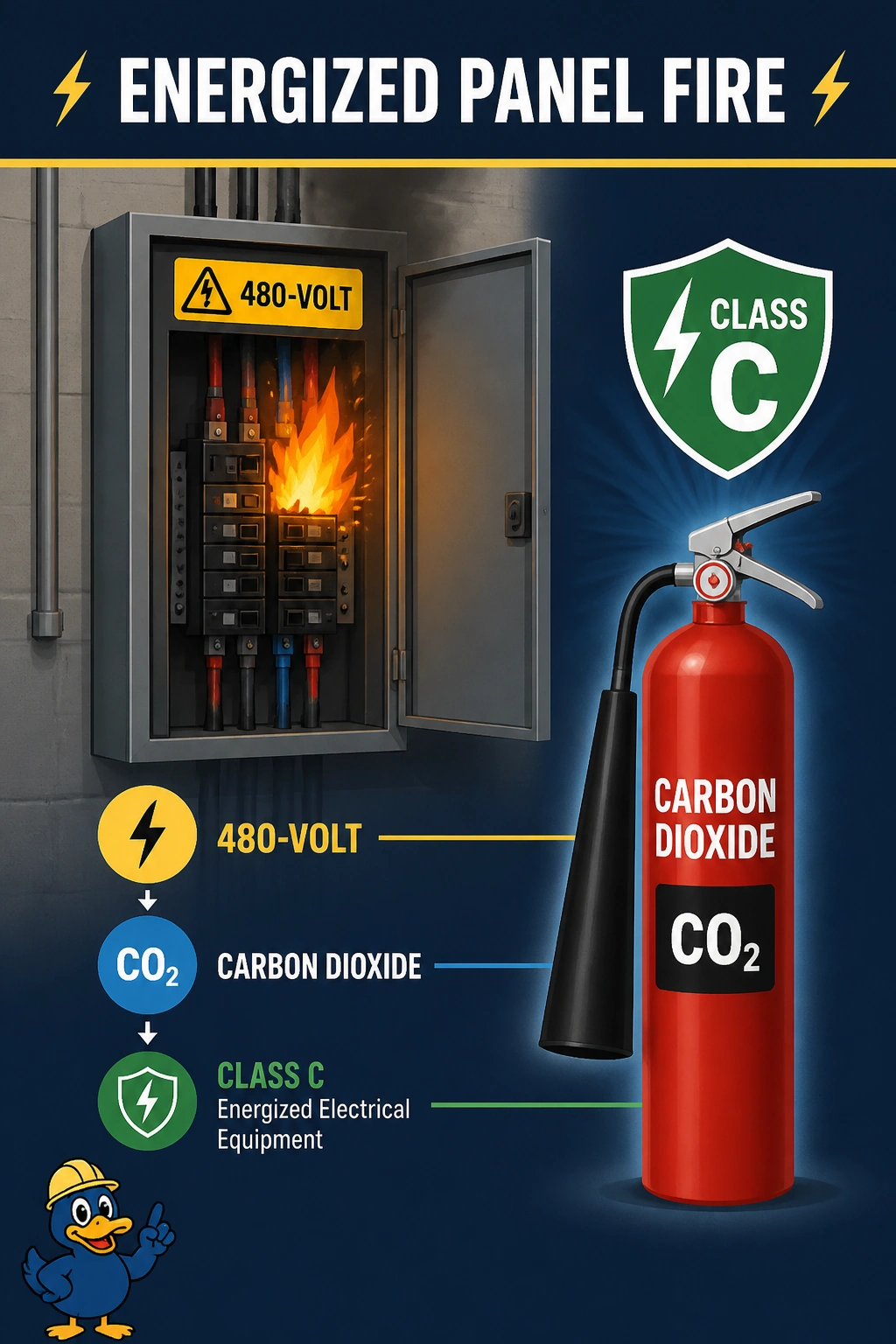
When a fire involves energized electrical equipment, you need a non-conductive extinguishing agent, so a carbon dioxide extinguisher rated for energized Class C electrical fires is appropriate. Carbon dioxide displaces oxygen and cools the fuel without conducting electricity back to you, consistent with OSHA 29 CFR 1926.150 fire protection rules. A pressurized water extinguisher rated for ordinary combustible Class A materials is dangerous at a live panel because water conducts electrical current and creates a severe shock hazard. A loaded-stream water-based extinguisher designed for deep-seated timber fires also contains conductive liquid and must not be aimed at live 480-volt equipment. A wet chemical extinguisher formulated for cooking oil and grease is intended for Class K kitchen fires and uses a conductive alkaline solution unsuitable for an energized panel. Exam caveat: once power is safely shut off, a remaining fire may be treated as Class A or Class B depending on whether insulation or other material is burning; carbon dioxide can also displace oxygen in a tight room. For a practical check, confirm that Class C-rated extinguishers are mounted within travel distance of temporary power panels and inspect their pressure gauges monthly.
Prefer to study offline? Printable PDF study book + test engine ($7.50, unofficial). These questions stay free here.