
An ironworker finishes oxy-acetylene torch cutting near stored cardboard packaging and timber framing, and the assigned fire watch asks if they can pack up immediately once the torch is shut off. What should the safety technician instruct the fire watch to do?
Select an answer to reveal the explanation.
Short Explanation
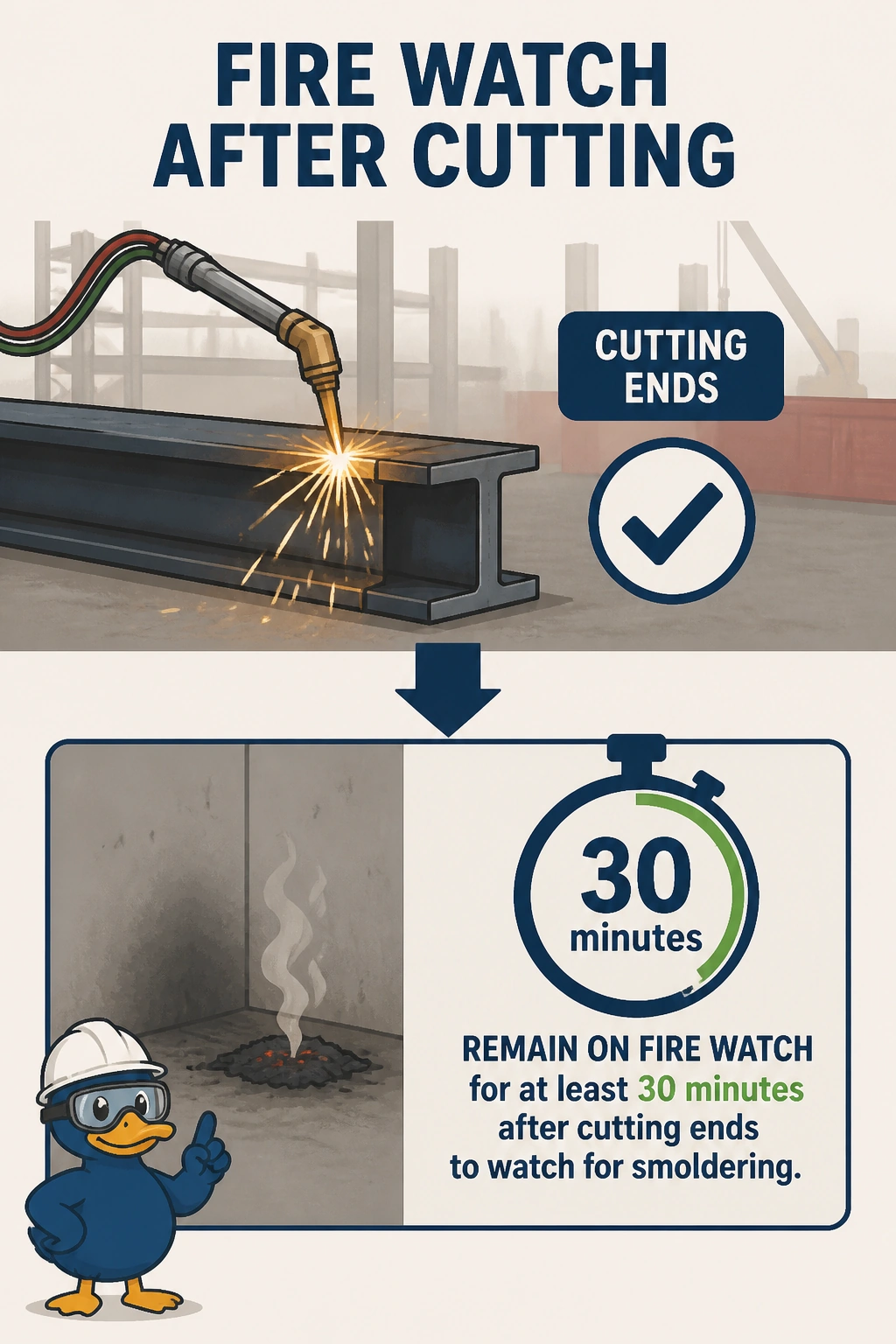
Just because the torch is off does not mean the fire risk went home for the day. The trap is letting your fire watch pack up the second the sparks stop, when hot slag can smolder in cardboard or wood for half an hour.
Full Explanation
Hot slag and sparks from oxy-acetylene cutting can lodge in wood framing or cardboard and ignite well after visible sparks fade, so the technician must instruct the worker to Remain on fire watch for at least 30 minutes after cutting ends to watch for smoldering. 29 CFR 1926.352(e) requires a fire watch during cutting, welding, or heating and for a sufficient period after completion to ensure that no possibility of fire exists, and it states no minute count. Thirty minutes is 29 CFR 1910.252(a)(2)(iii)(B) for general industry, which does not govern this construction ironworker. Here at least 30 minutes is a floor consistent with a sufficient period, not a construction maximum. Choosing to Leave immediately after spraying the floor with a water bottle misses pockets, cavities, or packaging stacks where hot metal stays dry and trapped. Choosing to Lock the fire extinguisher in the gang box before exiting the floor removes immediate suppression while the area is still cooling. Choosing to Sign the hot work permit and hand it to the crane operator closes paperwork prematurely and transfers responsibility to someone who cannot monitor the cut zone. Operational check: keep the charged extinguisher within reach and check adjacent and lower levels for stray slag, closing the permit only per site procedures after ensuring no possibility of fire exists.
Prefer to study offline? Printable PDF study book + test engine ($7.50, unofficial). These questions stay free here.