
A metal fabrication plant notices that new press-brake helpers pick up unsafe shortcuts when they simply shadow veteran operators on the floor without a structured curriculum. Which training approach best prevents informal bad habits from being passed along?
Select an answer to reveal the explanation.
Short Explanation
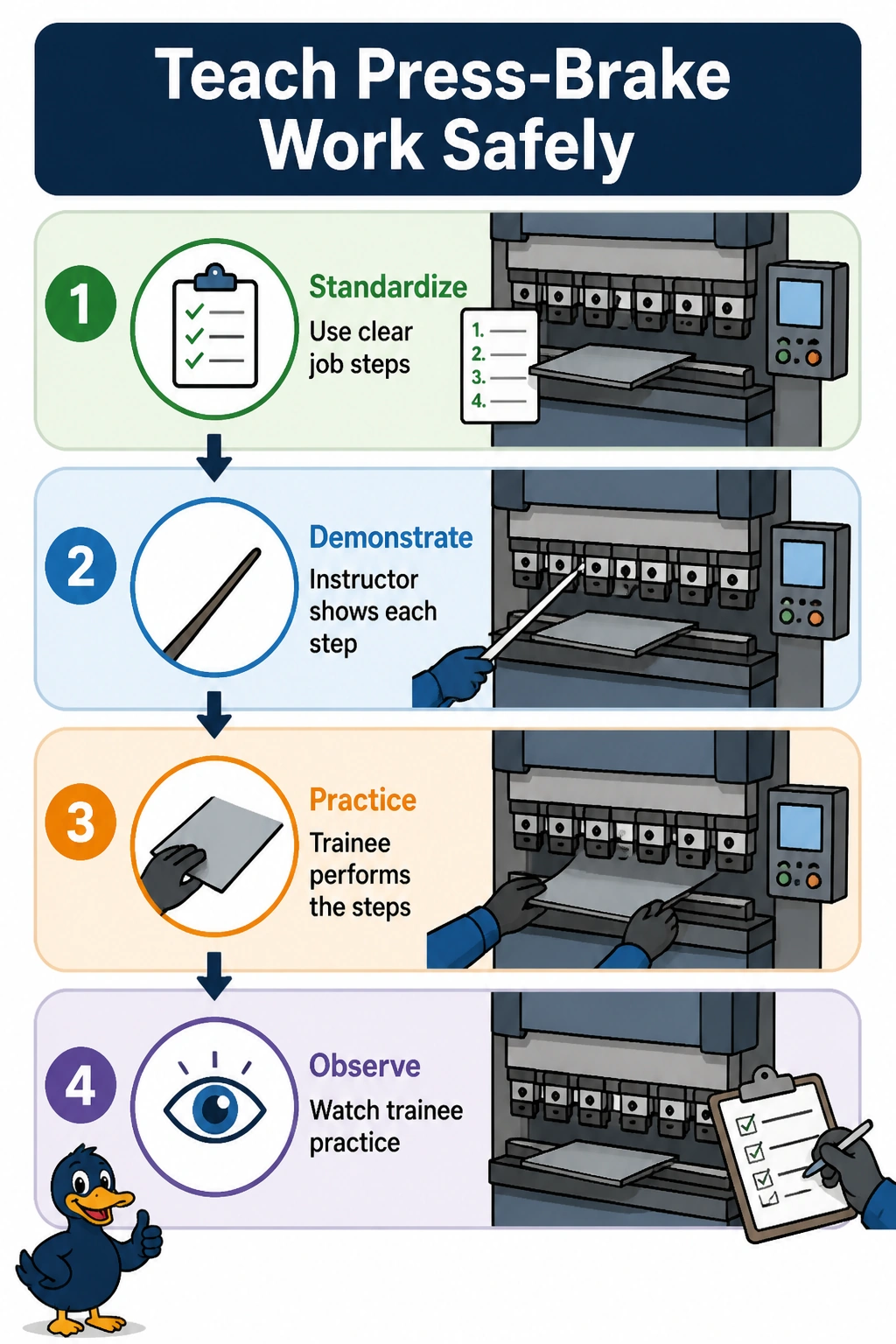
Unstructured shadowing is like playing telephone with safety—every shortcut gets passed down as gospel. To break that cycle, you need a standardized four-step on-the-job method where a qualified trainer explains, demonstrates, observes your trainee's practice, and follows up. The trap is assuming speed on the floor or solo manual reading builds safe habits.
Full Explanation
Structured On-the-Job Training (OJT)—often modeled on the four-step Job Instruction method (prepare, present/demonstrate, try out, and follow up)—ensures every new worker learns the exact approved sequence and hazard controls rather than improvised shortcuts. Choosing "Use standardized job steps with instructor demonstration and observed trainee practice" anchors training in written standards and verifies hands-on competence before solo work. Selecting "Pair new hires with the fastest production operator for informal shadowing" reinforces production-over-safety habits because fast operators frequently bypass guards or skip checks. Selecting "Have new hires read the equipment manual independently before operating" fails because reading dense technical text does not build psychomotor skill or confirm comprehension. Selecting "Limit new-hire instruction to a single classroom lecture on safety rules" leaves trainees unable to translate abstract rules into physical machine operation. Caveat: even a structured OJT program fails if trainers are not vetted for safe work habits and coached on how to give corrective feedback. Operational check: require trainers to use a written job-breakdown checklist and sign off only after the trainee performs the task safely without prompting.
Prefer to study offline? Printable PDF study book + test engine ($7.50, unofficial). These questions stay free here.