
Machine operators in a metal fabrication shop use compressed air nozzles connected to a 90-psi plant air line to blow metal shavings off their workpieces and clothing. Under OSHA 29 CFR 1910.242(b), what condition is required if compressed air is used for cleaning?
Select an answer to reveal the explanation.
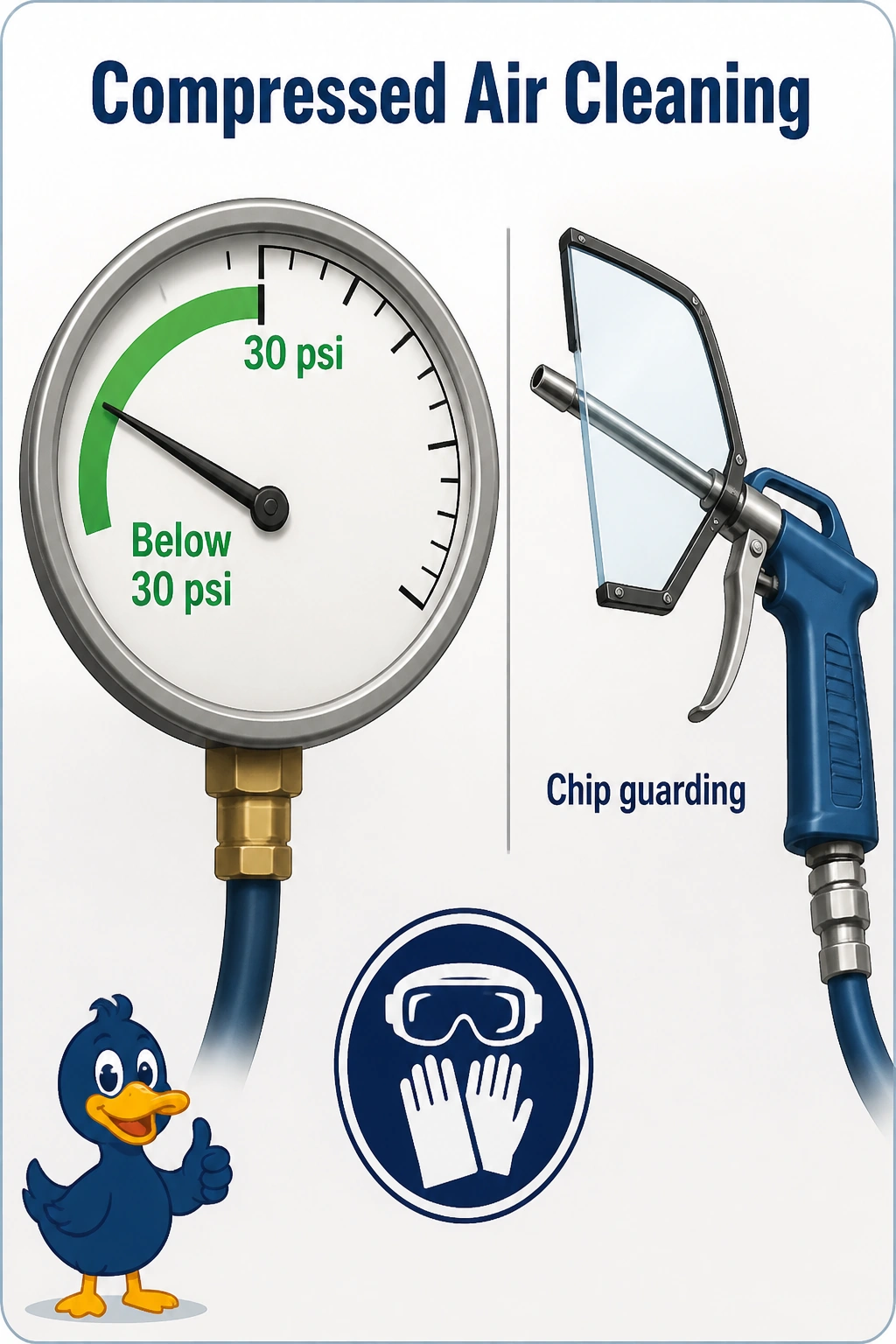
Short Explanation
Ninety-psi shop air is strong enough to inject air bubbles into your bloodstream or drive metal chips straight through skin and eyes. Don't fall for the trap of thinking a dead-man trigger or a 60-psi regulator is enough—under OSHA rules, you must knock that pressure down below 30 psi and pair it with chip guarding and proper PPE.
Full Explanation
Unregulated compressed air poses severe hazards including air embolism if forced through the skin, ruptured eardrums, and high-velocity flying debris. Under OSHA's Hand and Portable Powered Tools standard (29 CFR 1910.242), compressed air must not be used for cleaning purposes unless employers Reduce pressure below 30 psi and use chip guarding and appropriate PPE to protect operators and nearby workers from flying particles. Choosing to Use an inline regulator set to 60 psi with safety glasses violates the strict 30-psi maximum threshold and leaves workers exposed to high-pressure injection and impact hazards. Deciding to Allow full 90-psi air pressure if a dead-man trigger is used still exceeds the 30-psi limit; a dead-man switch only stops flow when released and does not reduce static pressure at the nozzle. Similarly, attempting to Limit cleaning with 90-psi air to workbenches, not clothing remains noncompliant because the 30-psi cap applies to all compressed-air cleaning operations. As a caveat, safety relief nozzles that bleed pressure below 30 psi when dead-ended still require chip guarding (such as a cone shield or barrier) and eye/face protection. For an operational check, test blow-gun nozzles with a dead-end pressure gauge during shop audits and provide industrial vacuums or brushes as safer alternatives.
Prefer to study offline? Printable PDF study book + test engine ($7.50, unofficial). These questions stay free here.