
A warehouse forklift operator is about to drive a 9,000-pound electric lift truck across a dock plate into a semi-trailer to unload pallets of bottled water. Under OSHA 29 CFR 1910.178, what must be verified before the forklift enters the trailer?
Select an answer to reveal the explanation.
Short Explanation
A heavy forklift driving onto a trailer acts like a battering ram, and if the trailer creeps forward, the lift truck can drop straight into the gap. The trap is focusing on routine checklist items while ignoring trailer movement. Always confirm the wheels are chocked or locked before you cross that dock plate.
Full Explanation
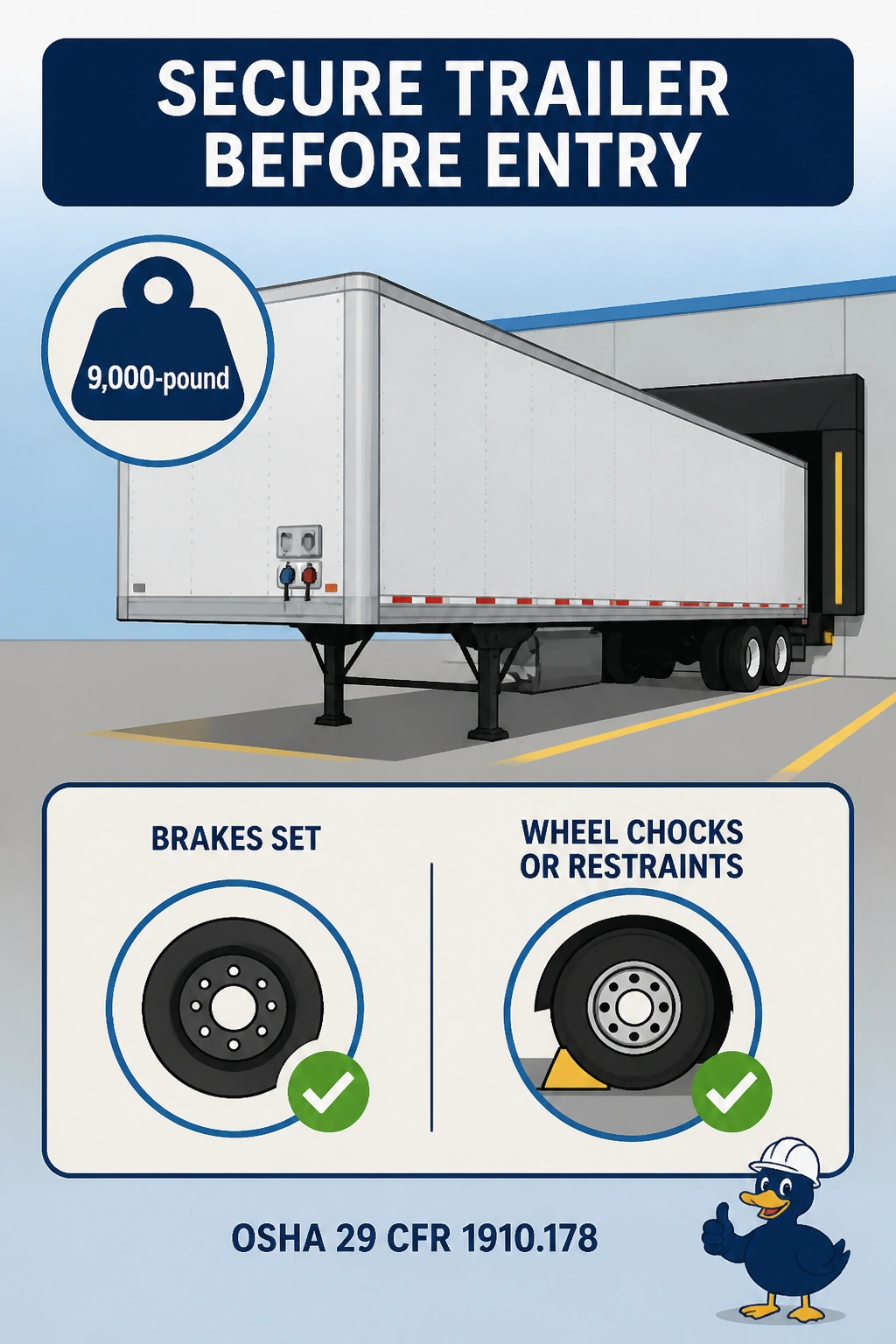
Under OSHA 29 CFR 1910.178(k)(1), highway truck and trailer brakes must be set and wheel chocks placed under the rear wheels to prevent rolling before a powered industrial truck boards, so the operator must confirm The trailer brakes are set and wheel chocks or restraints block movement. Every time a 9,000-pound forklift enters, brakes, or turns inside a trailer, longitudinal forces can cause trailer creep or an unscheduled pull-away, risking a fatal dock fall. Checking that The trailer interior lights are switched on and the dock leveler is painted yellow improves visibility but does nothing to keep the trailer anchored to the dock wall. Confirming that The forklift battery is charged above 50 percent and the horn operates properly addresses truck readiness rather than trailer stability. Verifying that The shipping manifest matches the pallet count listed on the warehouse order is an inventory control step that has no bearing on dock safety. As a caveat, OSHA recognizes mechanical dock-lock restraint systems as an alternative when properly engaged, though some sites still require chocks as backup. For an operational check, require dock workers to confirm positive dock-lock engagement or inspect chock placement visually before removing the red stop sign.
Prefer to study offline? Printable PDF study book + test engine ($7.50, unofficial). These questions stay free here.