
A facilities technician must inspect HVAC exhaust fans located two feet from an unprotected flat roof edge on a commercial warehouse. Which fall protection method prevents the technician from physically reaching the edge and eliminates any free-fall hazard?
Select an answer to reveal the explanation.
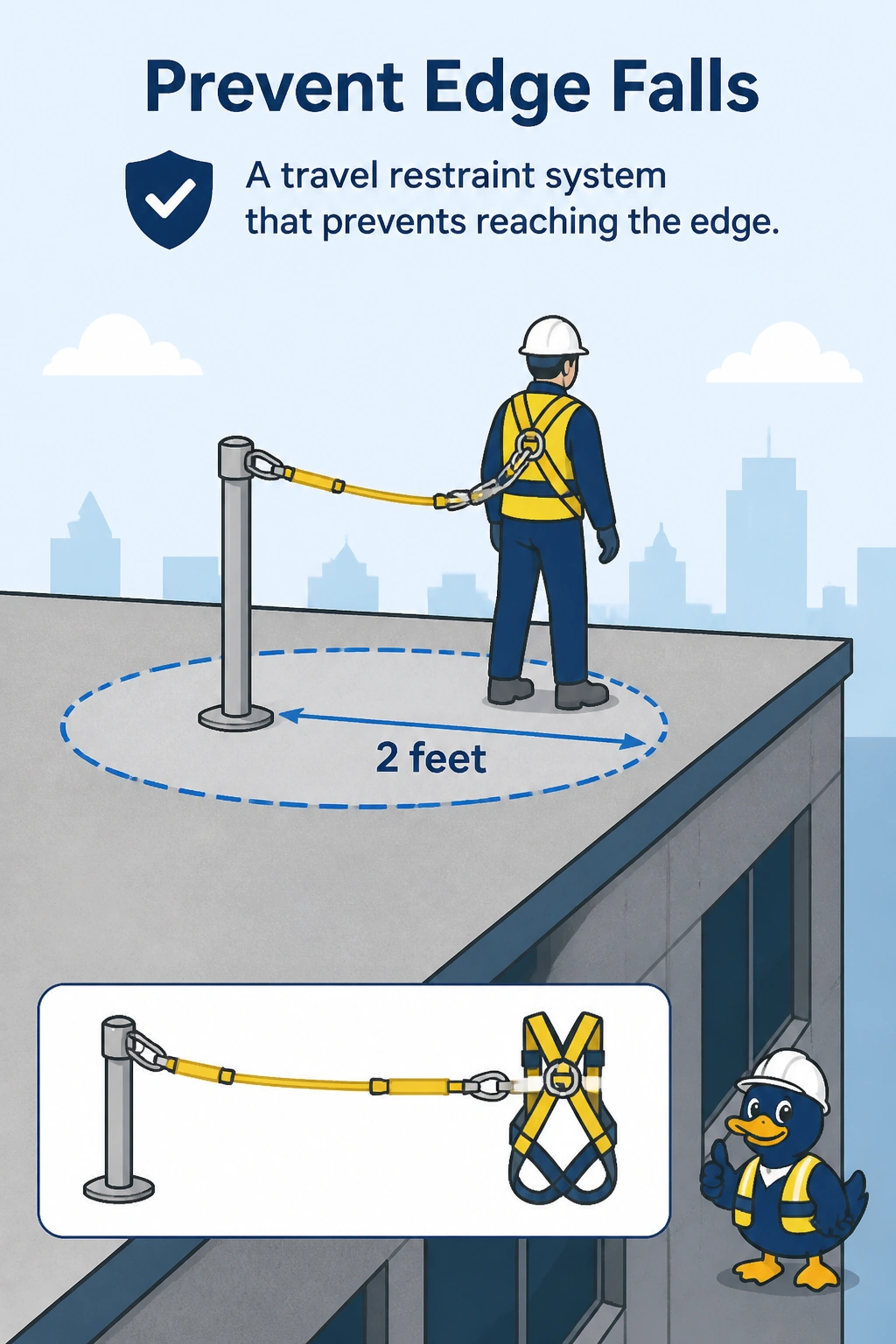
Short Explanation
Why catch a fall in midair when you can keep your feet safely away from the cliff in the first place? Don't fall for the trap of picking a standard fall arrest lanyard when the question asks for a system that stops you from reaching the edge altogether.
Full Explanation
A travel restraint system that prevents reaching the edge tethers a worker's harness to a fixed anchorage with a short, fixed-length lanyard so the worker can service the fan without ever stepping past the unprotected roof perimeter. By eliminating the possibility of going over the edge, restraint avoids arrest shock loads, suspension trauma, and complex rescue operations. By contrast, A personal fall arrest system with a six-foot shock-absorbing lanyard allows the technician to walk over the edge and experience a free fall before decelerating, which still exposes the worker to swing-fall hazards and requires sufficient clearance below. Meanwhile, A safety monitoring system using a designated observer on the roof relies on observation only. A safety monitor does not physically stop a slip, and for this maintenance task it is not the method that prevents reaching the edge. Finally, A warning line system placed three feet back from the roof perimeter neither meets standard six-foot setback rules nor physically stops a worker from stepping past the line. Caveat: travel restraint anchorages must still be properly rated and positioned so slack cannot allow the worker to reach the drop-off. As an operational check, measure the exact lanyard length from the anchor to the roof edge before starting work.
Prefer to study offline? Printable PDF study book + test engine ($7.50, unofficial). These questions stay free here.