
After reviewing an air-sampling report, a plant worker asks the company's safety specialist whether their chronic cough is officially work-related asthma and whether they should sue a former chemical supplier. How should the safety specialist respond within professional scope limits?
Select an answer to reveal the explanation.
Short Explanation
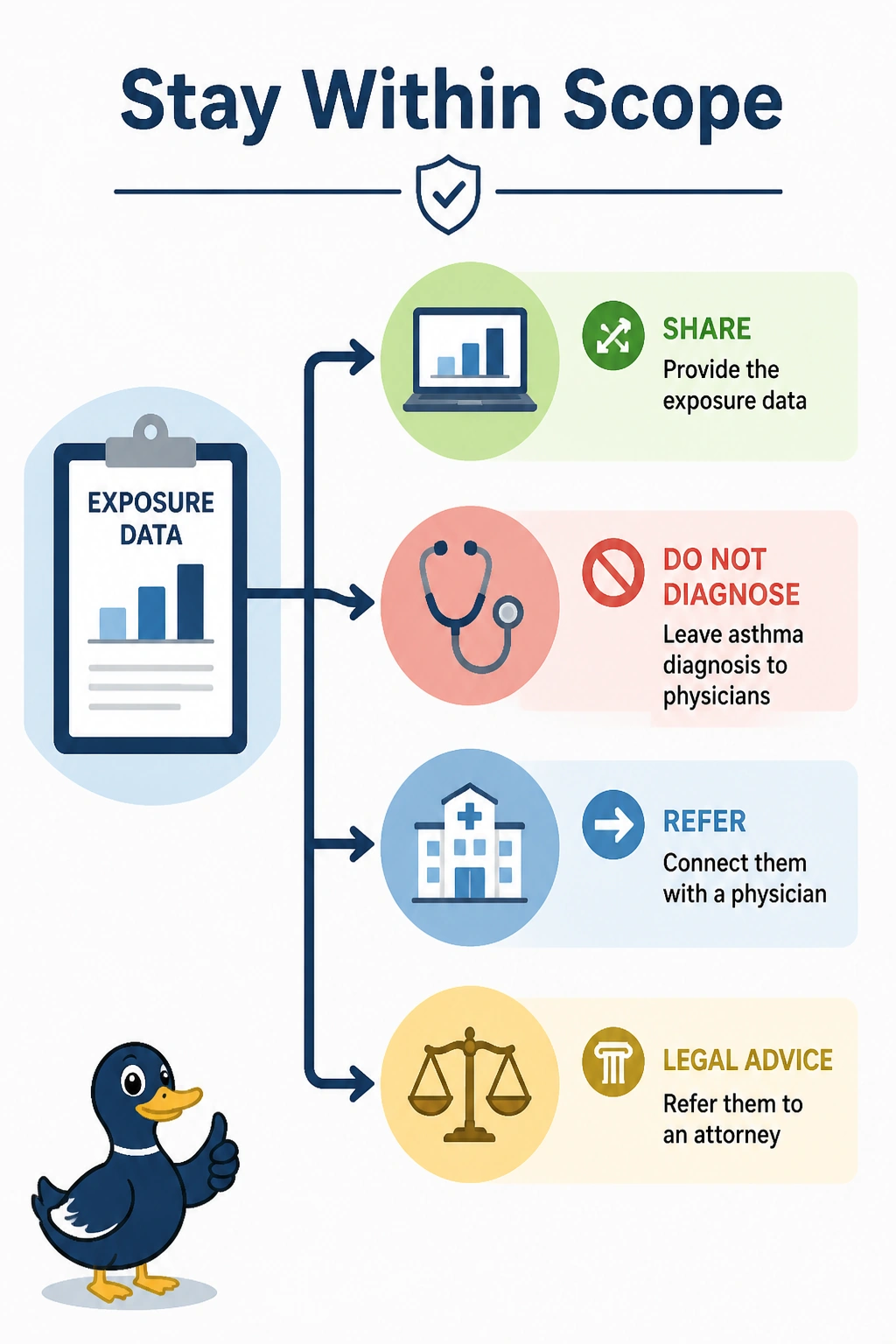
Knowing where your expertise ends is just as important as knowing your regulations. When a worker asks for a medical diagnosis or legal strategy, the trap is trying to be helpful by playing doctor or lawyer instead of making a clean referral.
Full Explanation
Safety professionals must practice within their areas of competence and avoid rendering medical diagnoses or legal advice. By choosing to Share the exposure data and refer to a physician or attorney, the specialist fulfills transparency duties while directing the worker to licensed professionals qualified to evaluate respiratory illness and legal claims. Choosing to Provide a preliminary asthma diagnosis based on the Safety Data Sheet crosses into the unauthorized practice of medicine because Safety Data Sheets describe general chemical hazards, not clinical diagnoses for individual patients. Choosing to Advise the worker on filing a civil lawsuit against the supplier constitutes unauthorized legal advice and creates professional liability for both the specialist and the employer. Choosing to Withhold the personal air-sampling results until management approves violates OSHA's employee exposure notification and access rules under 29 CFR 1910.1020 and erodes worker trust. Caveat: safety practitioners can explain what airborne concentrations were measured and what controls are in place without interpreting personal medical causation. Operational check: maintain an updated referral list for occupational medicine clinics and employee assistance resources so referrals are immediate and consistent.
Prefer to study offline? Printable PDF study book + test engine ($7.50, unofficial). These questions stay free here.