
A logistics warehouse is protected by a standard wet-pipe automatic sprinkler system, and a small pallet fire starts in one storage bay. How does this type of sprinkler system respond to the localized fire?
Select an answer to reveal the explanation.
Short Explanation
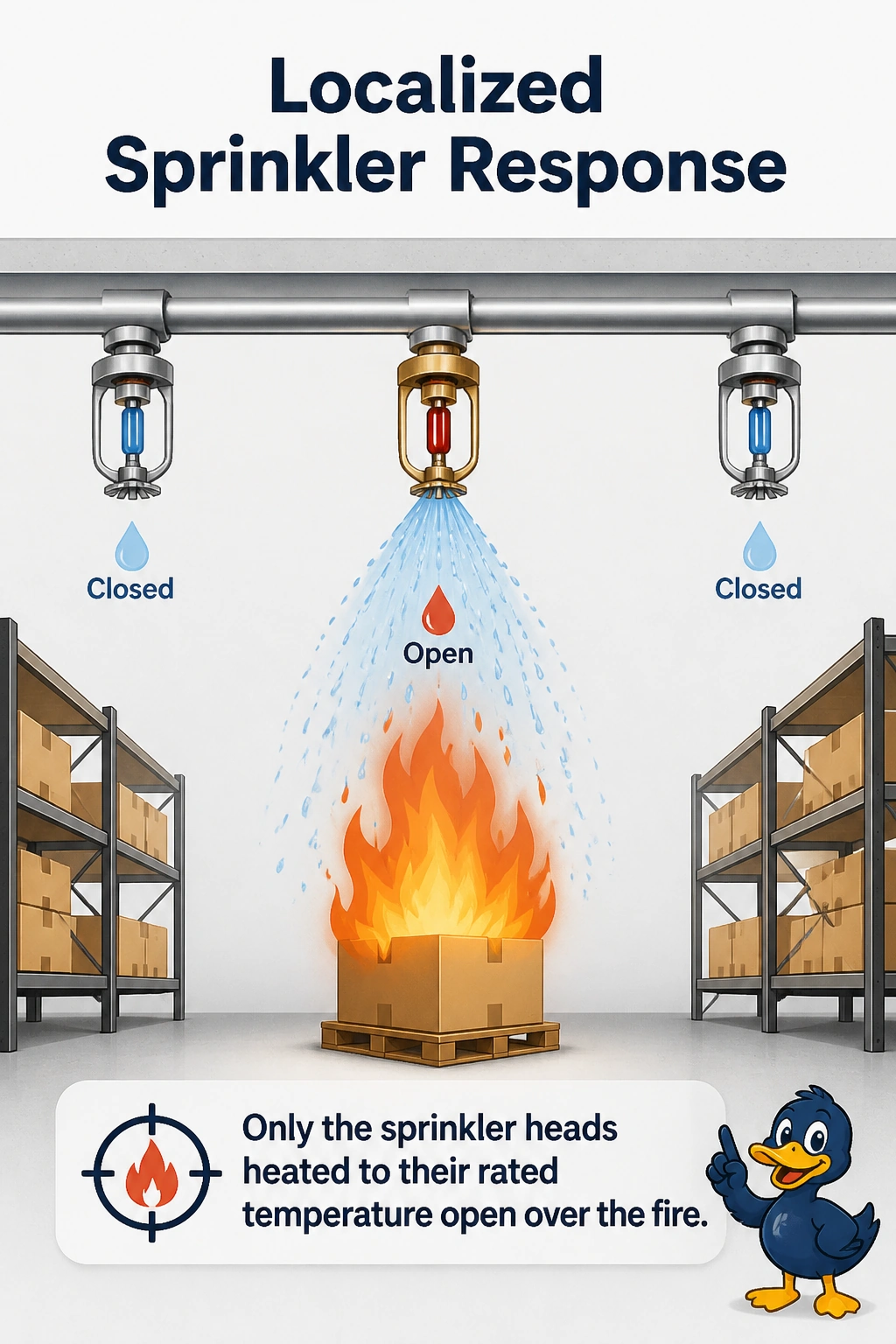
Movies love showing every ceiling sprinkler rain down at once, but real wet-pipe systems are far smarter than that. In your warehouse, heat targets only the heads right above the flames so water damage stays contained. The trap is confusing standard wet-pipe sprinklers with deluge systems or smoke-triggered alarms.
Full Explanation
In a standard wet-pipe automatic sprinkler system, water under pressure fills the piping at all times up to closed fusible-link or glass-bulb heads. Only the sprinkler heads heated to their rated temperature open over the fire, releasing water directly onto the burning area while surrounding heads remain sealed. Every sprinkler head across the entire warehouse opens simultaneously when smoke reaches the ceiling describes a misconception modeled on deluge systems, which use open heads and separate detection rather than individual thermal elements. Compressed air bleeds from the branch piping before water enters the main supply riser describes a dry-pipe sprinkler system designed for unheated spaces subject to freezing, not a standard wet-pipe system. A central alarm panel holds back water until an operator confirms flames on a monitor is false because automatic sprinklers operate thermally without waiting for human confirmation. As a caveat, stacking pallets too close to sprinkler deflectors blocks the spray pattern and allows heat to spread laterally, opening extra heads unnecessarily. As an operational check, inspect sprinkler control valves and pressure gauges regularly and verify at least 18 inches of clear space below every deflector.
Prefer to study offline? Printable PDF study book + test engine ($7.50, unofficial). These questions stay free here.