
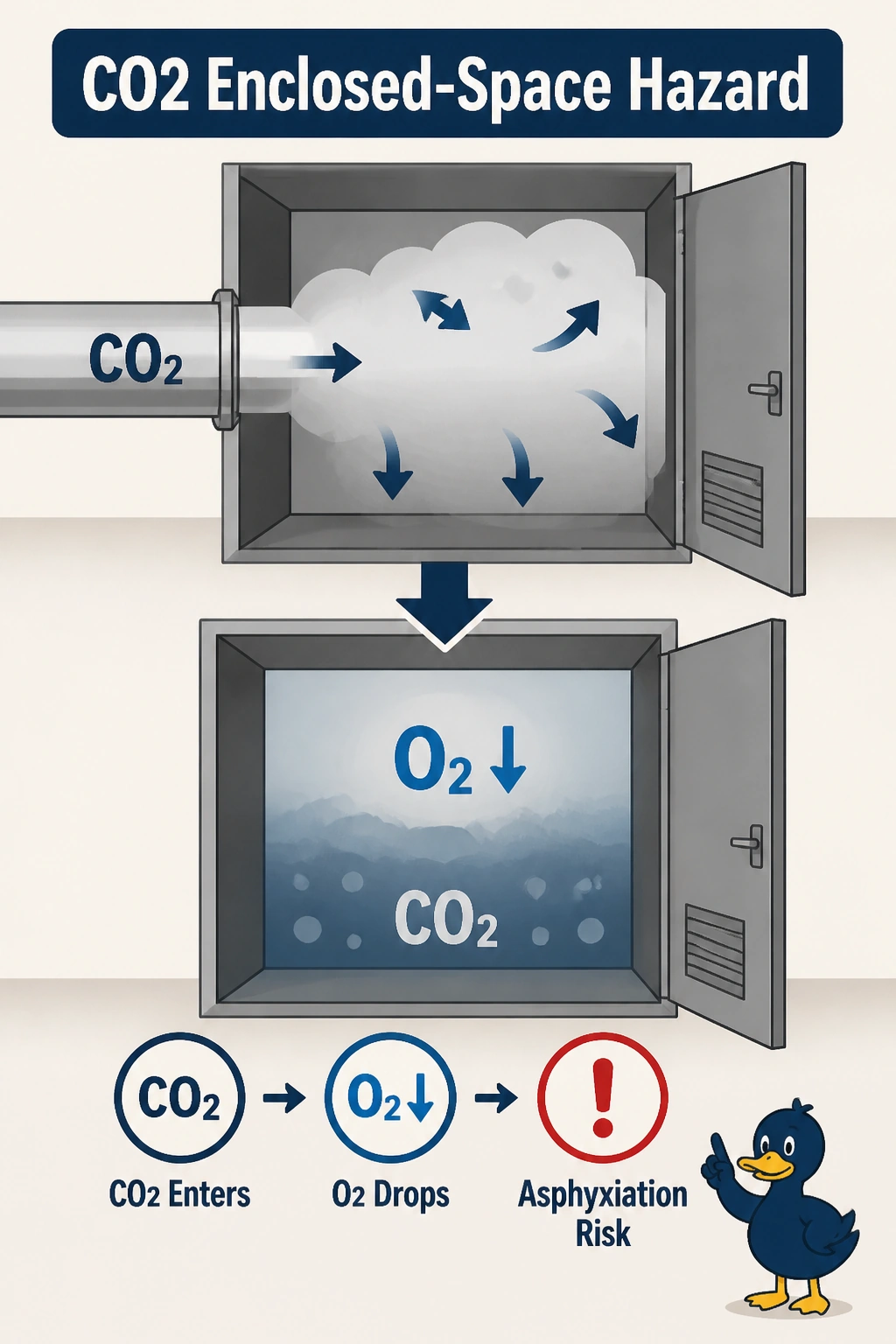
A technician prepares to use a large carbon dioxide (CO2) portable fire extinguisher on a small electrical panel fire inside an unventilated basement equipment closet. What primary hazard must the technician guard against when discharging CO2 in this enclosed space?
Select an answer to reveal the explanation.
Short Explanation
A CO2 extinguisher puts out fire by pushing oxygen out of the way—and in a tight closet, that includes the oxygen you need to breathe. The trap is worrying about residue or shock when your real enemy in a closed room is sudden asphyxiation.
Full Explanation
Rapid oxygen displacement that can cause asphyxiation in an unventilated room is the primary life-safety hazard when discharging carbon dioxide in a small, enclosed space. CO2 extinguishes fire mainly by displacing oxygen below the concentration needed for combustion, and in a confined basement closet it can quickly drop breathable oxygen to dangerous levels while also acting as a toxicant at high concentrations. Electrical conductivity along the CO2 discharge horn back to the operator's hands is incorrect because carbon dioxide is a non-conductive Class C agent, though the horn can become extremely cold from rapid gas expansion. Corrosive chemical residue that permanently damages adjacent copper busbars describes dry-chemical agents rather than CO2, which vaporizes cleanly without leaving solid residue. Violent steam expansion caused by the liquid agent hitting energized conductors occurs when water-based agents are misapplied to live electrical equipment or molten materials, not with CO2. As a caveat, workers should never enter an enclosed space after CO2 discharge without ventilating the area and verifying oxygen levels. As an operational check, ensure technicians stand at the doorway with an open exit behind them and evacuate immediately if the closet fills with gas.
Prefer to study offline? Printable PDF study book + test engine ($7.50, unofficial). These questions stay free here.