
Finishing technicians at a custom cabinetry shop use rags soaked with linseed oil to wipe down wood stains at the end of each shift. Which housekeeping practice prevents spontaneous combustion of the used rags?
Select an answer to reveal the explanation.
Short Explanation
Linseed oil rags generate their own heat as they oxidize, so tossing them into a pile in your shop is like building a slow-motion matchstick. The trap is thinking a tight plastic bag or cardboard box keeps things tidy, when trapped heat inside combustible trash is exactly how you end up with an overnight fire.
Full Explanation
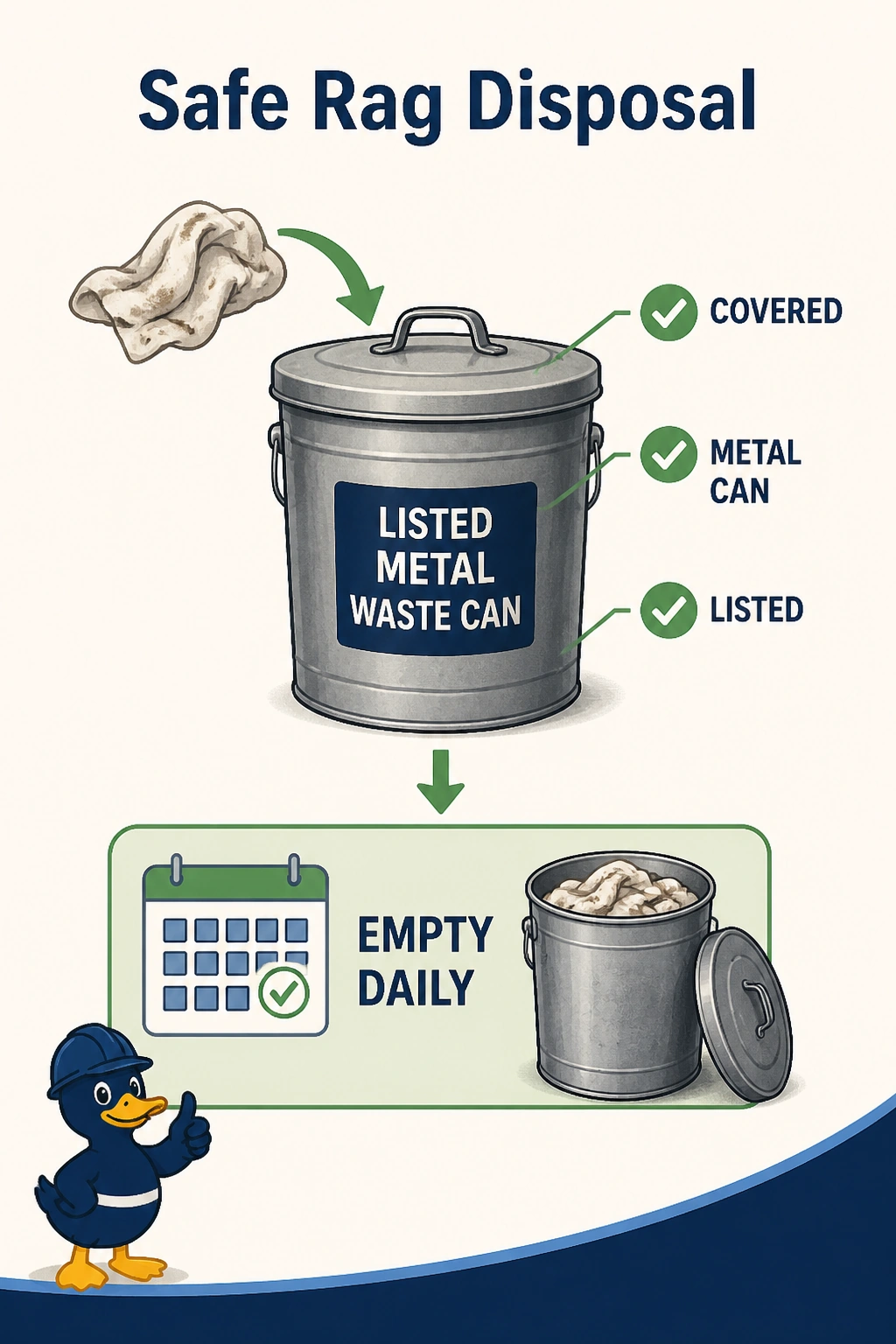
To prevent spontaneous combustion, shops must place the rags in a listed, covered metal waste can emptied daily, consistent with OSHA 29 CFR 1910.106. Drying oils like linseed oil oxidize exothermically as they cure; a covered metal container restricts oxygen supply, contains any heat buildup within a noncombustible shell, and daily emptying removes the fuel load before ignition can occur. Choosing to stack the damp rags neatly in an open cardboard bin beside the paint booth traps heat inside combustible cardboard with abundant oxygen and nearby flammable vapors. Choosing to hang the rags over a wooden drying rack near the shop's space heater adds external heat to an exothermic reaction right next to a wooden fuel source. Choosing to bag the rags tightly in heavy-duty plastic trash liners inside a wooden crate insulates the heat generated by oxidation and surrounds it with combustible plastic and wood. Caveat: oily waste cans must have self-closing lids that shut tightly and must never be propped open or overfilled. As an operational check, inspect finishing-area oily waste cans at the end of every shift to verify lids close flush and liners are removed from the building.
Prefer to study offline? Printable PDF study book + test engine ($7.50, unofficial). These questions stay free here.