
During a fire safety inspection of a retail distribution warehouse, an inspector finds that an exterior emergency exit door has been padlocked from the inside to prevent inventory theft during the night shift. Under OSHA's Means of Egress standards (29 CFR 1910.36), why is this practice prohibited?
Select an answer to reveal the explanation.
Short Explanation
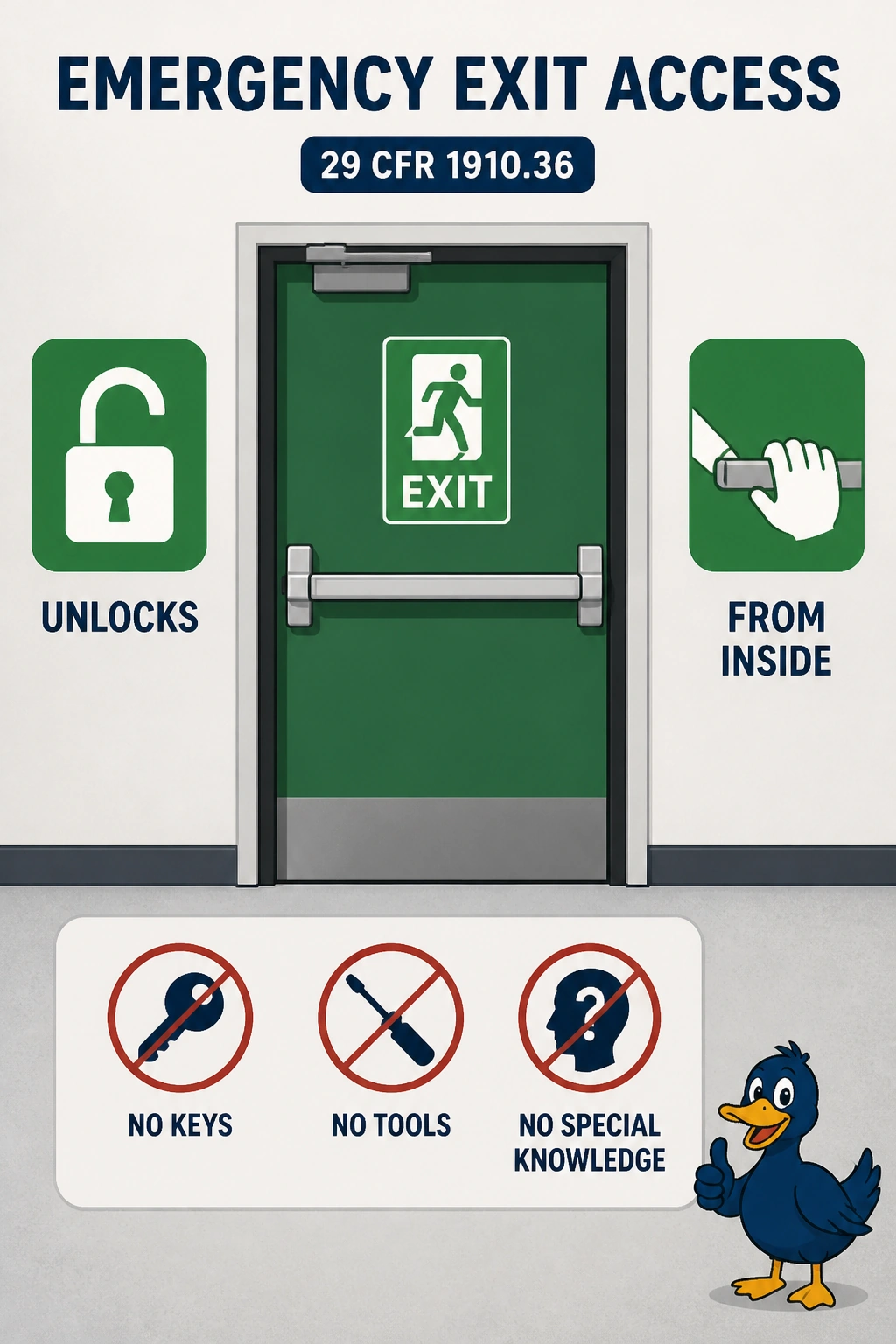
In a smoke-filled warehouse, you should never have to hunt for a key to get out safely. A small shift or a nearby break-glass key box does not excuse a padlock: OSHA requires keyless egress from the inside.
Full Explanation
Under 29 CFR 1910.36, an exit route door must remain usable for emergency egress while the building is occupied; it must unlock from the inside without a key, tool, or special knowledge. A padlock cannot be made acceptable by limiting it to a shift with fewer than ten workers, because the egress requirement does not depend on headcount. Keeping a key in a nearby break-glass box also fails: an employee should not have to find and retrieve a key, especially in smoke or panic, before escaping. Exit doors are not required to open inward. They must be side-hinged and must swing in the direction of exit travel only for an occupancy of more than 50 people or a high-hazard area. As an exam caveat, focus on the stated keyless-egress requirement: theft prevention does not justify restricting an exit, though other applicable code provisions may govern door design. For a practical check, inspect the door from inside at the start of each shift and verify that it unlocks and opens without a key, tool, or special knowledge, with no padlock or other obstruction attached.
Prefer to study offline? Printable PDF study book + test engine ($7.50, unofficial). These questions stay free here.