
Hospital supply technicians regularly move 400-pound linen carts down long corridors and frequently pull the carts backward behind them, leading to lower-back strain and heel-strike injuries. Which work-practice change best reduces musculoskeletal strain during cart transport?
Select an answer to reveal the explanation.
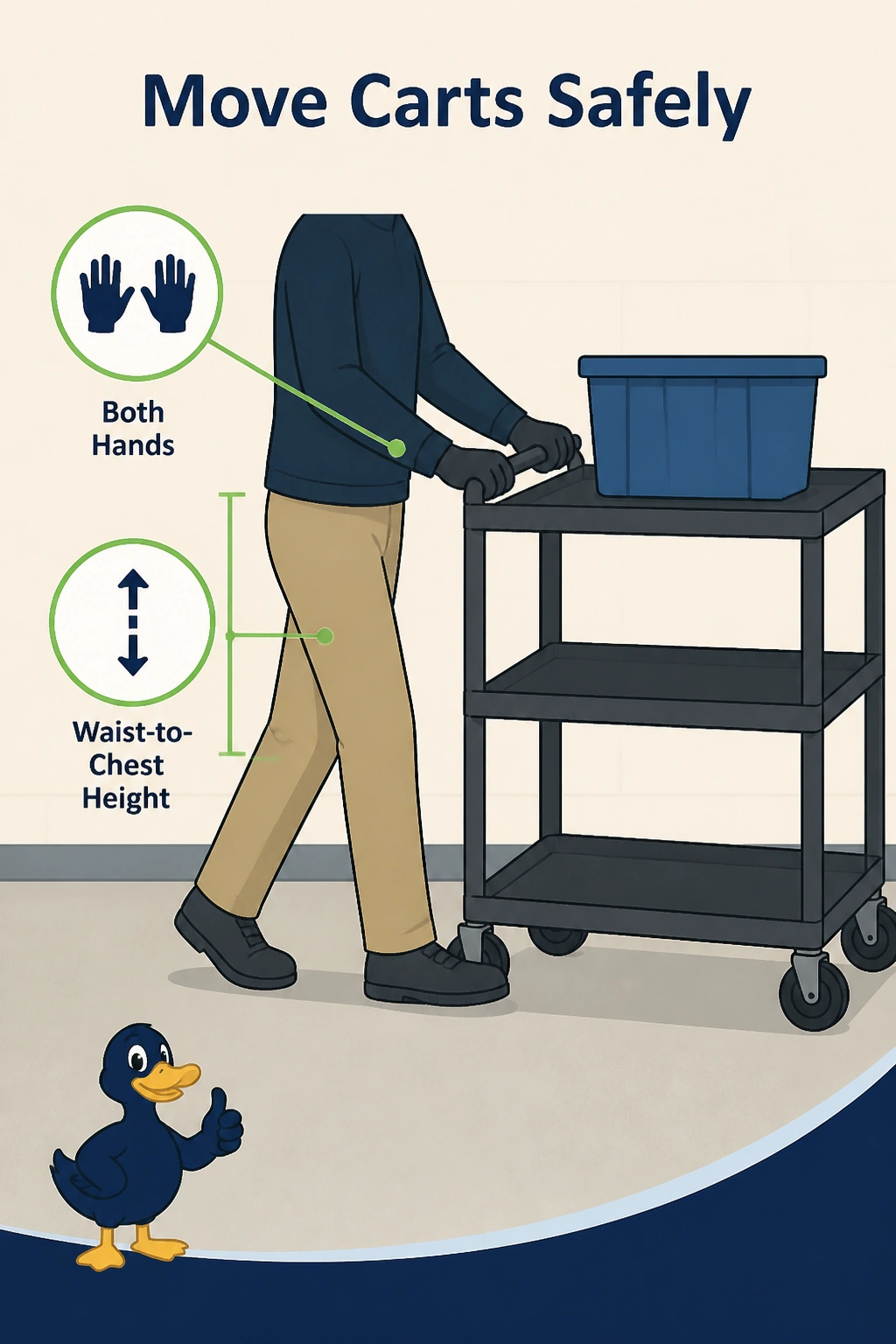
Short Explanation
When you pull a heavy cart behind you, your back twists and your heels can sit in the path of the casters. The trap is thinking pulling gives you better leverage; pushing with both hands at waist-to-chest height lets you use your leg strength and see straight ahead.
Full Explanation
In manual material-handling ergonomics, pushing the cart forward with both hands at waist-to-chest height helps keep your spine neutral, recruits stronger leg and core muscles, and preserves an unobstructed view of hallway obstacles. Pushing also keeps your heels behind the cart’s wheels rather than directly in front of them. Pulling with one hand while twisting your torso to watch the hallway combines spinal rotation with off-center shoulder loading, increasing disc shear forces. Carrying smaller linen bundles in both arms instead of using a cart replaces wheeled mechanical advantage with repetitive lifting and carrying fatigue over long distances. Pulling rapidly from a crouch to build momentum over door thresholds can spike peak lumbar force and create a sudden-jerk hazard if a caster jams. As an exam caveat, pushing reduces strain only when the cart rolls smoothly; poorly maintained casters or uneven thresholds may still require excessive initial force. As a practical check during a floor walk, inspect wheel bearings for hair or debris and verify that handle heights fall between workers’ waist and elbow levels.
Prefer to study offline? Printable PDF study book + test engine ($7.50, unofficial). These questions stay free here.