
An ergonomist is designing a new standing assembly workstation used by a diverse workforce and needs to ensure both shorter and taller workers can operate safely without awkward postures. Which anthropometric design rule should guide reach distances and physical clearances?
Select an answer to reveal the explanation.
Short Explanation
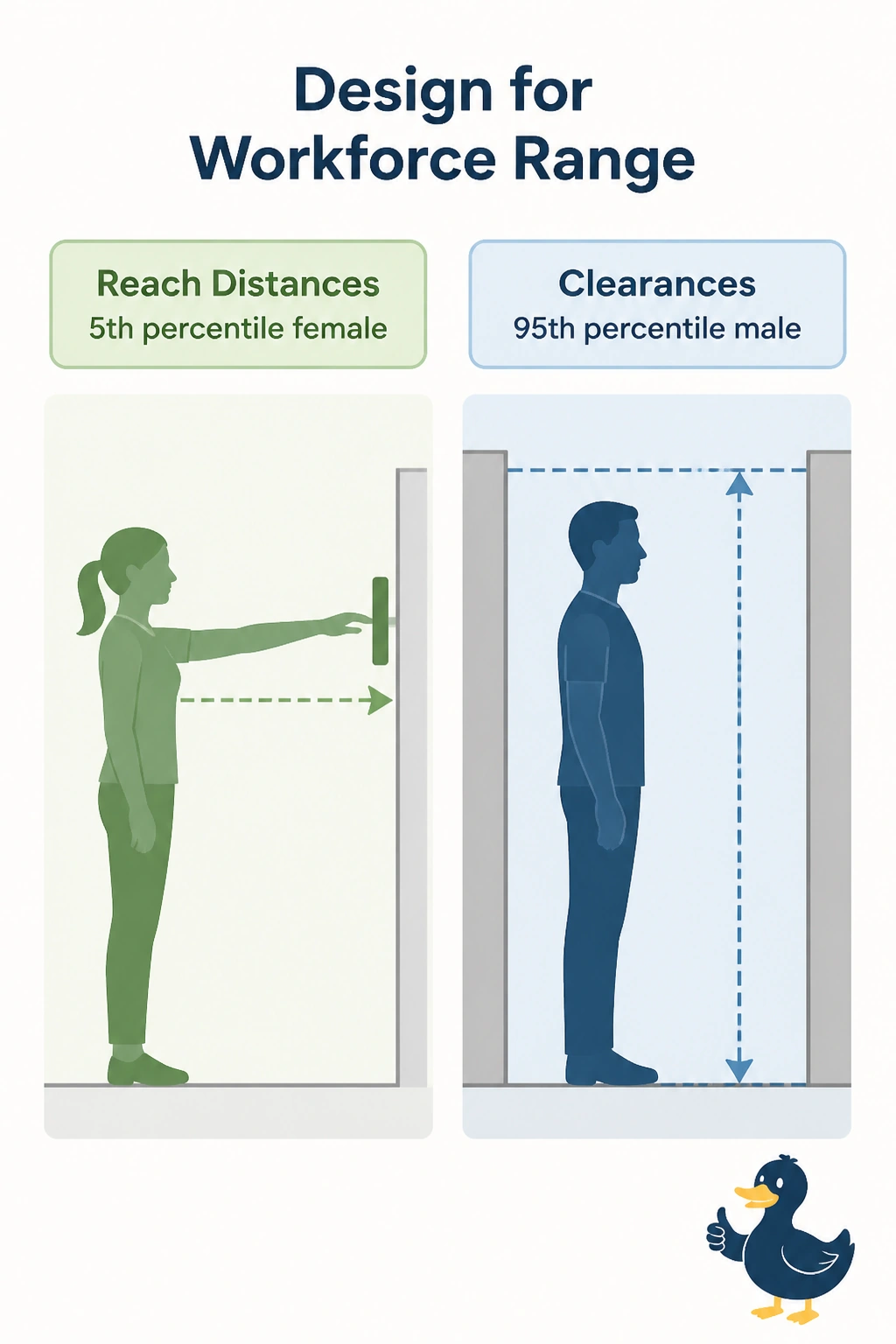
If you build a doorway for an average-height person, half your crew will duck—and if you put controls out at a tall worker's reach, shorter teammates will strain every shift. Designing reach for smaller bodies and clearance for larger bodies keeps everyone comfortable. The trap is designing for the mythical average worker.
Full Explanation
Effective ergonomic workspace design relies on anthropometric data to accommodate the broadest practical range of human body sizes, typically from the 5th percentile female to the 95th percentile male. Design reach distances for the 5th percentile female and clearances for the 95th percentile male is correct because placing controls, bins, and tools within a smaller worker's reach ensures virtually all operators avoid overreaching, while sizing knee wells, walkways, and overhead openings for larger workers prevents bumping and cramped postures. Design both reach distances and clearances around the 50th percentile average worker fails because an average-only layout leaves roughly half the workforce either unable to reach comfortably or lacking adequate body clearance. Design reach distances for the 95th percentile male and leg clearances for the 5th percentile female reverses the rule, creating excessive reach strain for smaller workers and cramped legroom for larger workers. Design all fixed workstation dimensions to match the tallest operator on the current shift ignores workforce turnover and forces shorter operators into chronic shoulder flexion. As a caveat, fixed extremes cannot solve every task, so adjustable chairs and work surfaces remain essential. For an operational check, verify with a tape measure that primary tools sit within the short-reach zone and knee clearances accommodate tall operators.
Prefer to study offline? Printable PDF study book + test engine ($7.50, unofficial). These questions stay free here.