
Assembly line workers frequently experience wrist soreness because they must bend their wrists sharply downward to drive vertical screws with straight-handled power screwdrivers. Which ergonomic intervention best addresses the root physical risk factor?
Select an answer to reveal the explanation.
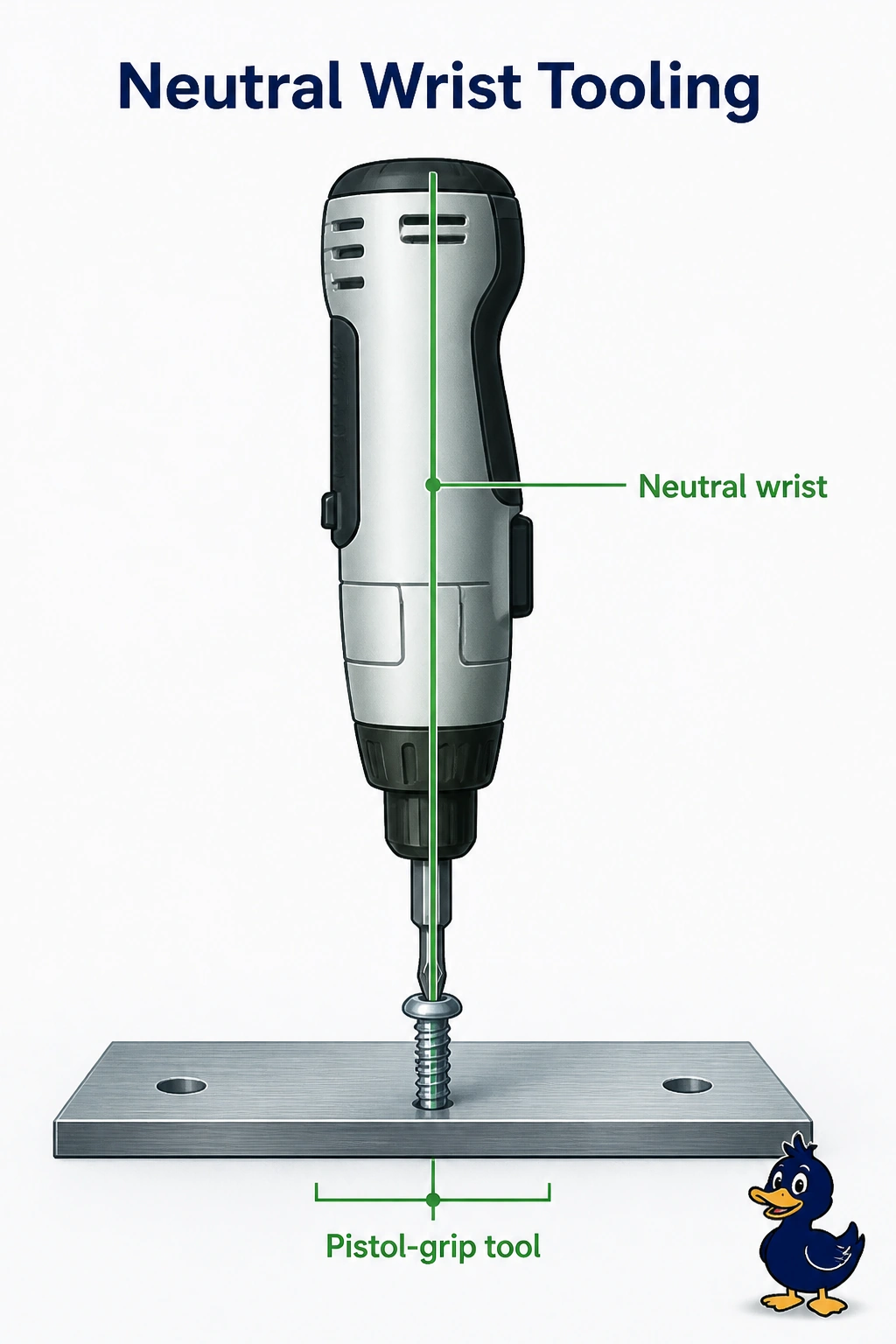
Short Explanation
Matching the tool handle to the task is like tilting a steering wheel to fit your reach—you fix the machine instead of forcing your body to bend. The trap is handing out wrist splints or rotating workers while leaving the awkward tool unchanged.
Full Explanation
Choosing to Provide pistol-grip power screwdrivers so workers keep their wrists in a neutral posture is an engineering control that eliminates ulnar or palmar deviation at the source. Keeping the wrist straight reduces tendon friction and median nerve compression within the carpal tunnel while allowing stronger grip force. Choosing to Issue elastic wrist splints to all assembly workers during their shifts can worsen strain if workers fight against the splint's stiffness to reach the same angled fastener, and splints do not alter the tool geometry. Choosing to Post reminder signs instructing workers to relax their hands between cycles relies on memory and does not remove the awkward posture required by a straight handle on a vertical surface. Choosing to Rotate workers to a different station that uses the same straight-handled tool merely spreads the identical biomechanical stressor across more employees without reducing peak wrist deviation. Caveat: pistol-grip tools work well for vertical surfaces at waist-to-chest height, whereas inline tools suit horizontal work surfaces below elbow level. Operational check: observe workers at the workstation and confirm elbows stay near the torso and wrists remain straight during fastening.
Prefer to study offline? Printable PDF study book + test engine ($7.50, unofficial). These questions stay free here.