
A chemical manufacturing plant generates hydrogen chloride gas emissions from a batch reactor vent and needs an air pollution control device to neutralize the acidic vapor before discharge. Which air pollution control technology is specifically designed to remove acid gases from an exhaust stream?
Select an answer to reveal the explanation.
Short Explanation
Picking the right air pollution control device comes down to matching the technology to the physical state of your contaminant. The classic trap is choosing a particulate collector for a gas-phase acid vapor, which lets hydrogen chloride pass straight through to the stack.
Full Explanation
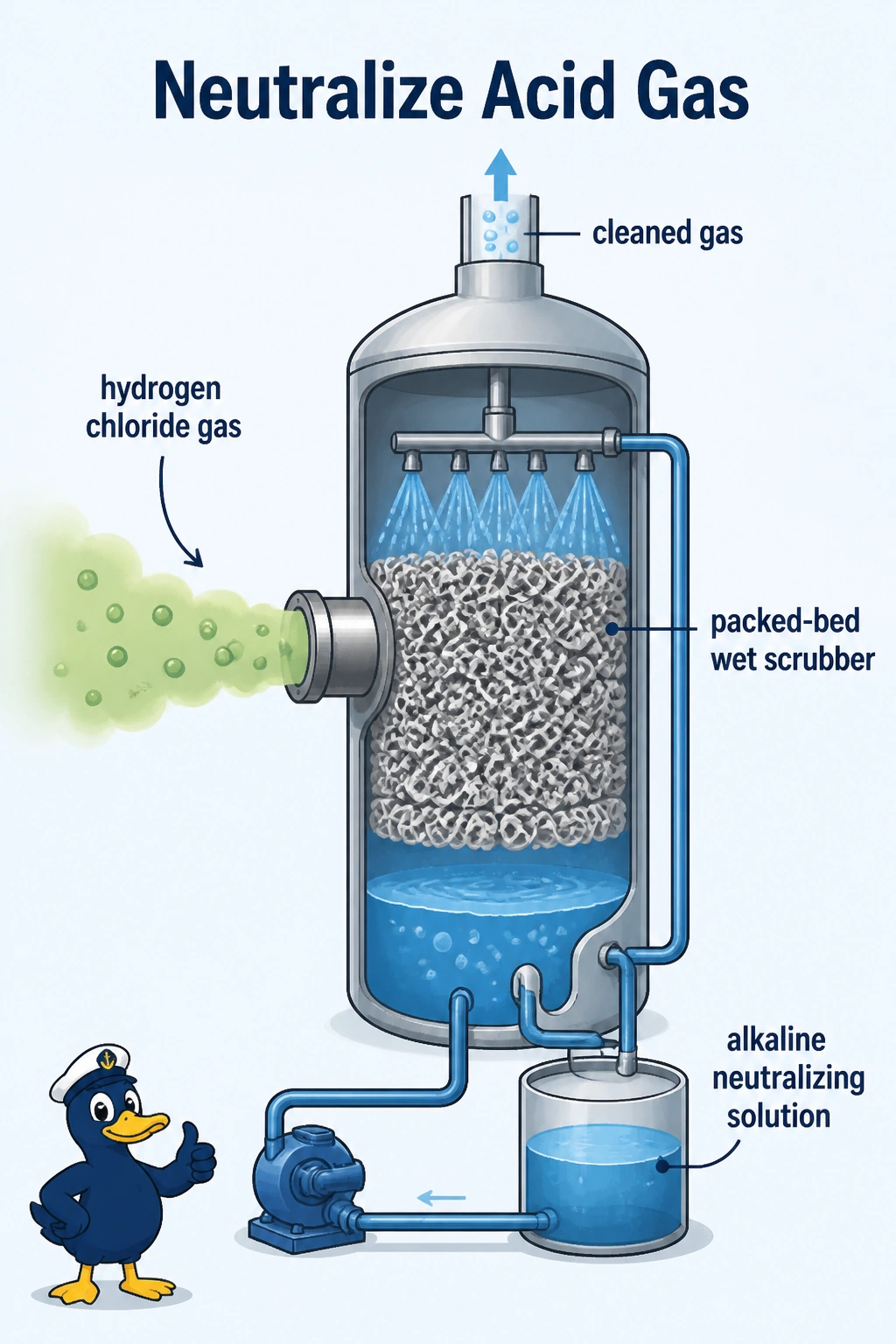
Acid gases such as hydrogen chloride exist in the vapor phase and must be absorbed into a liquid and chemically neutralized rather than mechanically filtered as solids. "A packed-bed wet scrubber using an alkaline neutralizing solution" forces the upward-flowing gas stream through high-surface-area packing wetted with a caustic or alkaline scrubbing liquor, transferring the acid gas into the liquid phase and neutralizing it into benign salts. By contrast, "A cyclone separator using centrifugal force" relies on inertia to spin out relatively large solid particles and cannot capture gaseous molecules. Similarly, "A fabric baghouse filter with pulse-jet cleaning" traps dry particulate matter on woven or felted filter media, allowing acid vapors to pass through while potentially corroding the bags. "An electrostatic precipitator charging particles" ionizes and collects suspended dust or mist droplets on charged plates, which is ineffective against uncondensed acid gases. As a caveat, wet scrubbers generate spent liquid effluent and salt buildup that require wastewater treatment and pH control to avoid creating a secondary water-discharge violation. For an operational check, monitor the scrubber's recirculation pH, pressure drop across the packing, and liquid flow rate daily to confirm continuous neutralization efficiency.
Prefer to study offline? Printable PDF study book + test engine ($7.50, unofficial). These questions stay free here.