
A finance director asks how cloud helps the city know an app will meet uptime expectations. Which benefit theme fits at fundamentals depth?
Select an answer to reveal the explanation.
Short Explanation
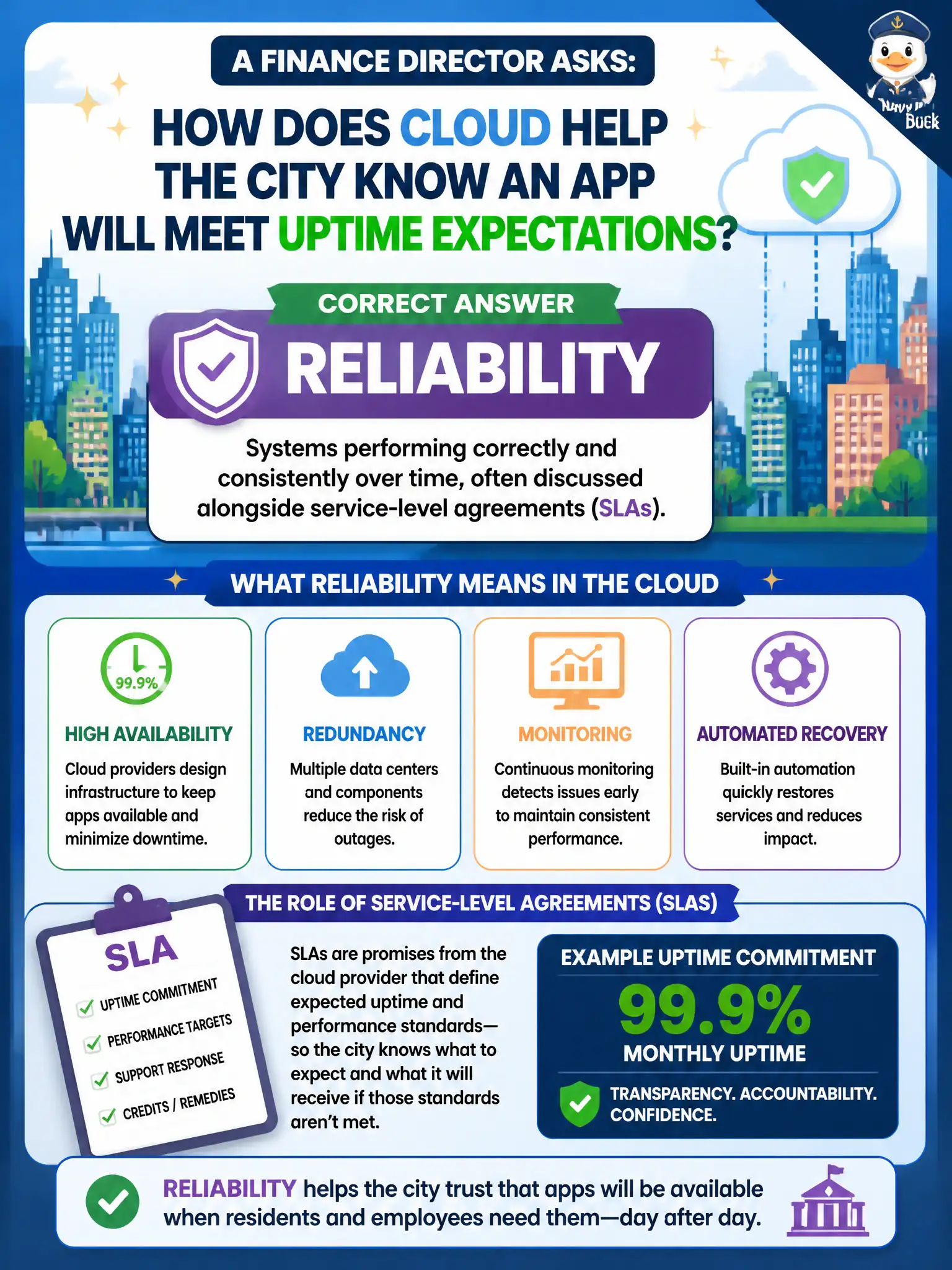
Finance wants a promise the lights stay on, not a vibes-based guess. Reliability is that “it keeps working as expected” story, and SLAs are the written uptime targets providers publish so everyone can talk about expectations in the same language.
Full Explanation
Knowing an app will meet uptime expectations ties to reliability: systems performing correctly and consistently over time, often discussed alongside service-level agreements (SLAs) that publish uptime targets. At fundamentals depth, that theme—not vibes—is how finance should frame cloud uptime conversations. Reliability is the “it keeps working as expected” pillar finance can quote.
Saying reliability is irrelevant because providers never publish service expectations ignores SLAs. Banning all cloud services citywide to meet uptime is not a reliability benefit. Requiring the finance director to personally restart every VM hourly is operations theater, not the reliability concept.
Exam caveat: an SLA is a contractual or published target, not a magical guarantee of zero outages; credits and terms vary, and customer misconfiguration can still cause downtime outside what the provider’s platform SLA covers. Read what the SLA includes and excludes before promising the board.
Operational check: for each critical city app, note the relevant service SLA percentage, map it to allowed downtime hours per month, and confirm monitoring alerts fire before citizens notice—so finance’s uptime expectation has both a published target and an operational detection path.