
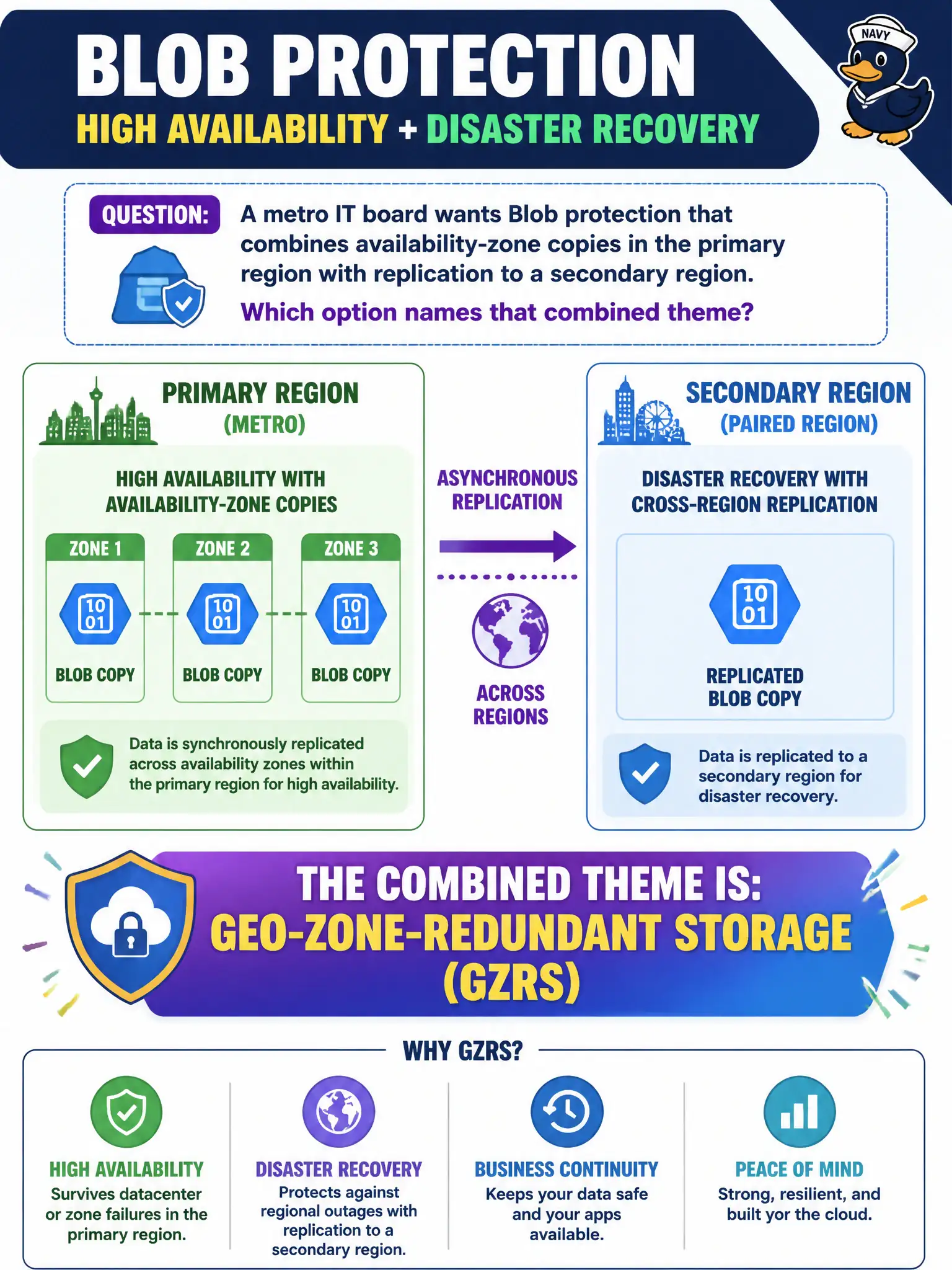
A metro IT board wants Blob protection that combines availability-zone copies in the primary region with replication to a secondary region. Which option names that combined theme?
Select an answer to reveal the explanation.
Short Explanation
GZRS is the “belt and suspenders” combo—zones in the home region plus a geo copy elsewhere. When the board asks for both themes together, that is the label to reach for. LRS alone does neither extra zone nor geo, and Bastion is remote access, not a redundancy SKU.
Full Explanation
Geo-zone-redundant storage (GZRS) names the combined theme of availability-zone copies in the primary region plus replication to a secondary region. GZRS gives metro IT boards zone-level protection at home and geo copies elsewhere—belt-and-suspenders durability for Blob data that must survive both a zone failure and a broader regional event. That zone-plus-geo story is the describe-level label when both themes are required together.
Locally redundant storage with no zone or geo copies provides neither part of the combined requirement. Cool tier paired with a single unmanaged disk mixes an access tier and classic disk concepts that do not implement GZRS-style redundancy. Azure Bastion is a secure remote-access jump service for VMs, not a storage redundancy SKU, and must not be treated as a durability option for Blob.
Exam caveat: GZRS and related geo-zone options cost more than LRS or ZRS alone; boards should fund the SKU that matches the written DR policy rather than assuming the name alone guarantees every restore workflow. Operational check: select GZRS on a pilot municipal storage account, confirm portal documentation shows both zone redundancy and secondary-region replication, and capture the setting in the metro architecture standard.