
A service SAS for lock photos was emailed with expiry baked into the URI; the contractor left and the URI still works. How should the security engineer make future service SAS revocable?
Select an answer to reveal the explanation.
Short Explanation
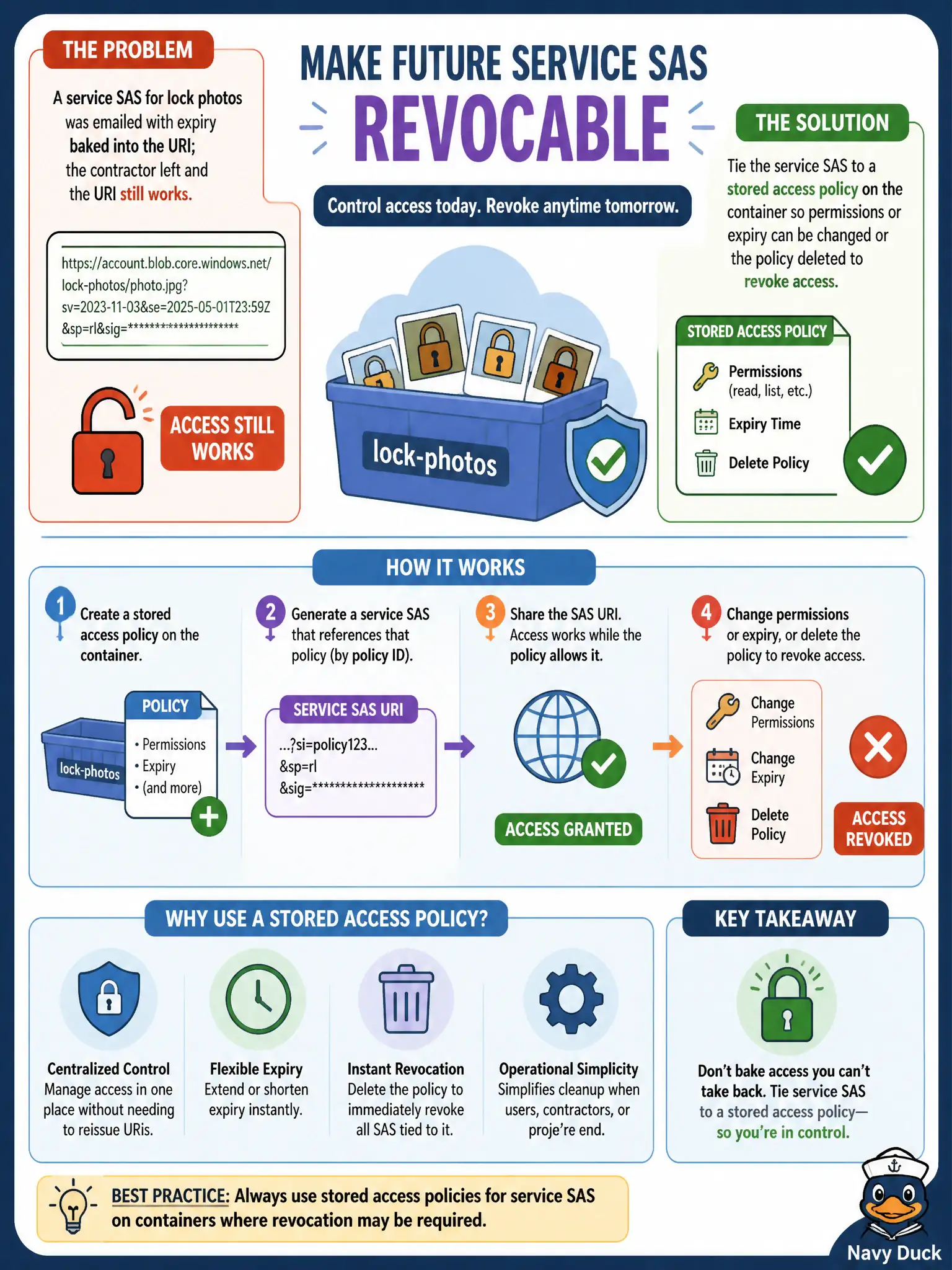
An emailed SAS with the expiry tattooed on it is a lost wristband you can’t void. Glue service SAS to a stored access policy—change or delete the policy and the wristband dies.
Full Explanation
When a service SAS for lock photos was emailed with expiry baked into the URI and still works after the contractor left, make future service SAS revocable by tying them to a stored access policy on the container. The policy centralizes start time, expiry, and permissions; changing or deleting the policy revokes outstanding signatures that reference it. Ad-hoc SAS with only URI-embedded expiry cannot be shortened without rotating signing keys—so civic operators inherit a lost wristband they cannot void until the clock runs out.
Preferring only ad-hoc service SAS URIs with long embedded expiries and never using stored access policies fails by concept: that design deliberately forgoes centralized revocation. Switching exclusively to user-delegation SAS because those are the only SAS type that support stored access policies fails because stored access policies apply to service SAS on containers or shares; user-delegation SAS use different lifetime and revocation models and are not the only type with stored access policies. Ignoring revocation and waiting for a multi-year embedded expiry fails by leaving an unnecessary access window open after personnel changes.
Exam caveat: service SAS plus a stored access policy enables revocation by policy change or delete; ad-hoc URI-only expiry does not. Operational check: create a container stored access policy for partner lock-photo reads, mint service SAS that reference the policy identifier, revoke the departed contractor by deleting or tightening the policy, confirm the old URI fails, and ban long ad-hoc emailed SAS from the municipal partner process.