
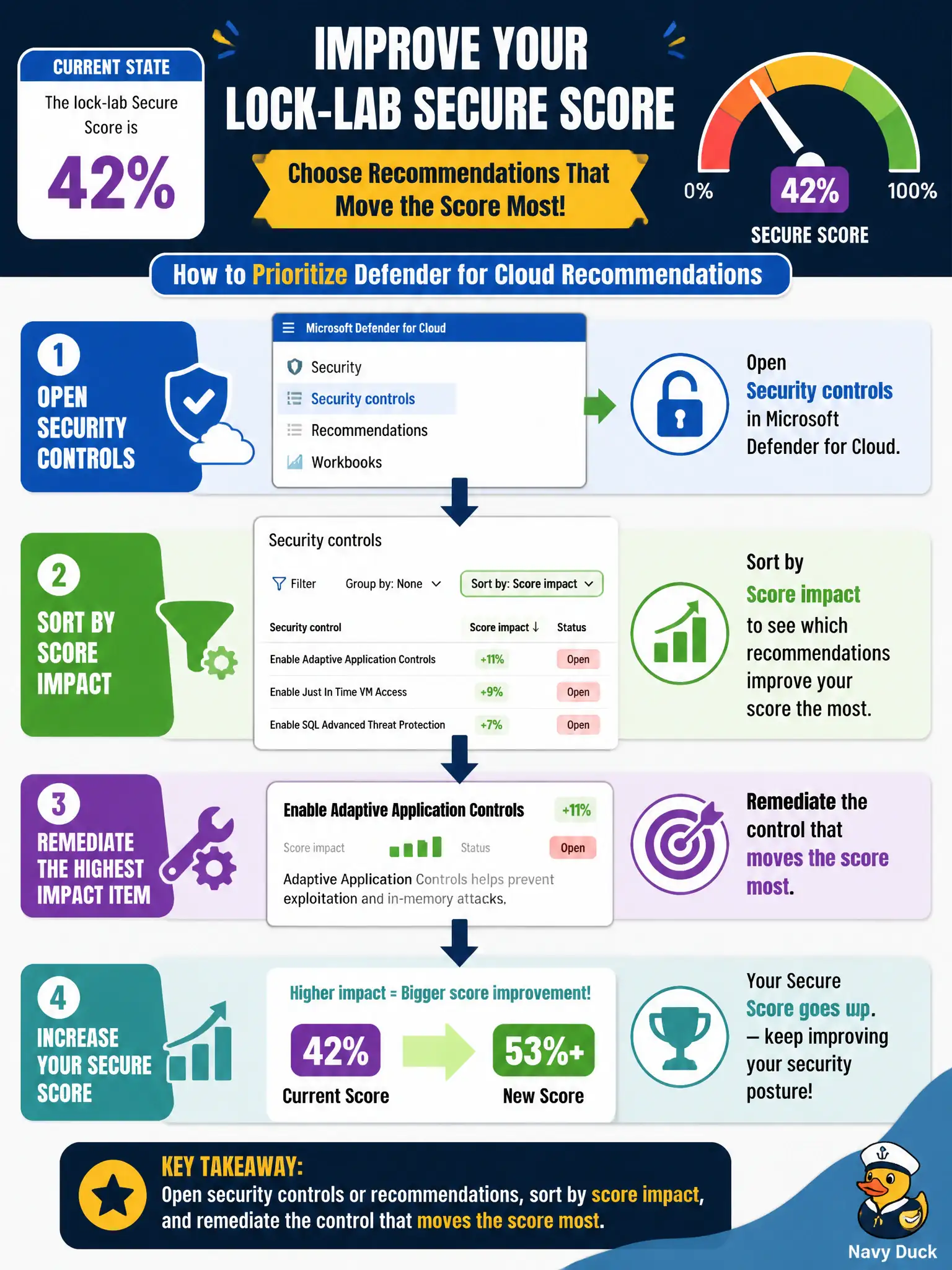
The lock-lab Secure Score is 42 percent. How should the security engineer choose which Defender for Cloud recommendations to remediate first?
Select an answer to reveal the explanation.
Short Explanation
Chasing a thousand Low findings feels busy and barely budges the dial. Sort by score impact—encrypt disks, require MFA, shut management ports—and fix the control that hauls Secure Score up the canal.
Full Explanation
When Secure Score sits at 42 percent on the lock-lab estate, prioritization should follow score impact: open security controls or recommendations, sort by how much each control moves the score, and remediate the control that yields the largest improvement. High-impact items (such as encryption, identity hardening, or exposed management ports) typically lift the score far more than bulk-closing low-severity noise.
Closing every Low-severity recommendation first because the list is longest optimizes for meeting optics, not risk or score movement, and can burn cycles while critical controls stay red. Ignoring Secure Score and only draining Microsoft Sentinel incidents conflates threat detections with posture debt; both matter, but this question is about recommendation prioritization. Submitting JIT access requests for every VM before touching any posture recommendation addresses just-in-time access workflows, not the order of Secure Score remediations, and creates unnecessary access churn.
Exam caveat: score impact is a prioritization aid, not a blind mandate—regulatory deadlines, active exploitation, or crown-jewel exposure can still outrank a slightly higher score-impact item when business risk demands it.
Operational check: in Defender for Cloud, sort recommendations or security controls by score impact for the lock-lab subscription, document the top three controls, remediate one end-to-end in a pilot resource group, and record the Secure Score change for the canal status report.