
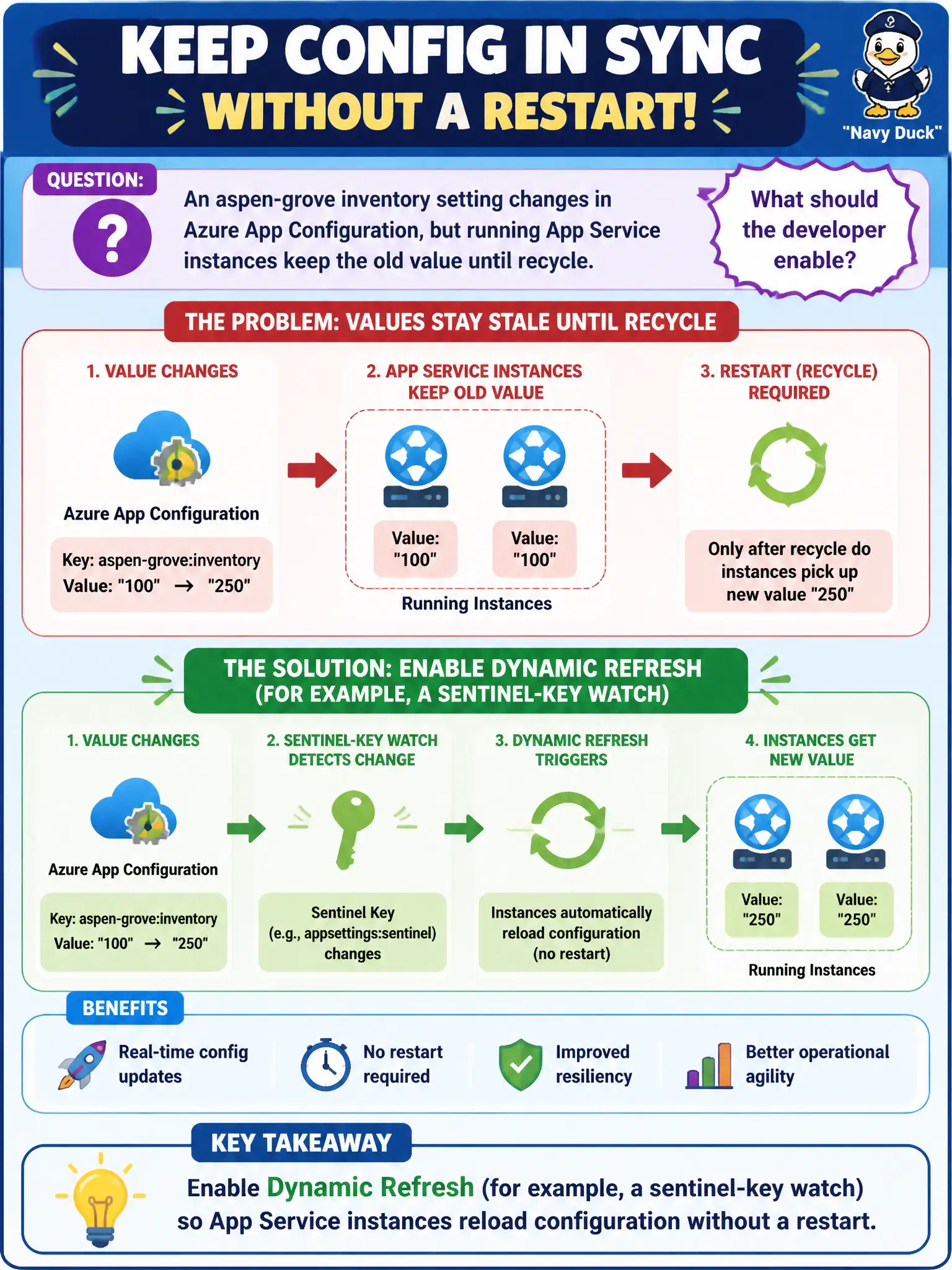
An aspen-grove inventory setting changes in Azure App Configuration, but running App Service instances keep the old value until recycle. What should the developer enable?
Select an answer to reveal the explanation.
Short Explanation
Config that sticks until recycle is stale sticky notes on the fridge. Wire dynamic refresh—often a sentinel key—so App Configuration changes land without bouncing the site. Live Metrics watch runtime health; they do not push your settings.
Full Explanation
By default, many hosts load App Configuration once at startup. When the aspen-grove inventory setting changes in the store, instances keep the old value until recycle unless dynamic refresh is enabled. Wire a refresh strategy—commonly watching a sentinel key—so the configuration provider reloads when that sentinel changes, applying new settings without bouncing the App Service plan. That is the municipal replace-the-sticky-note-without-restarting-the-office pattern.
Relying on Application Insights Live Metrics as the only way to push configuration fails because Live Metrics stream runtime telemetry for diagnosis; they do not write application settings into your process. Upgrading the App Service plan SKU whenever a setting changes fails as an operational model—SKU changes are capacity/pricing events, not config delivery, and they cause unnecessary disruption. Enabling static website hosting on the storage account that backs App Configuration fails because App Configuration is its own managed service API; static website hosting serves blobs to browsers and does not refresh your configuration middleware.
Exam caveat: refresh intervals and sentinel design matter—refreshing every key on a tight timer can amplify store throttling; sentinel-based refresh is the usual teaching pattern. Operational check: change a non-secret inventory setting and bump the sentinel in App Configuration, then confirm instances adopt the new value within the refresh window while App Service remains running and no slot swap was required.