
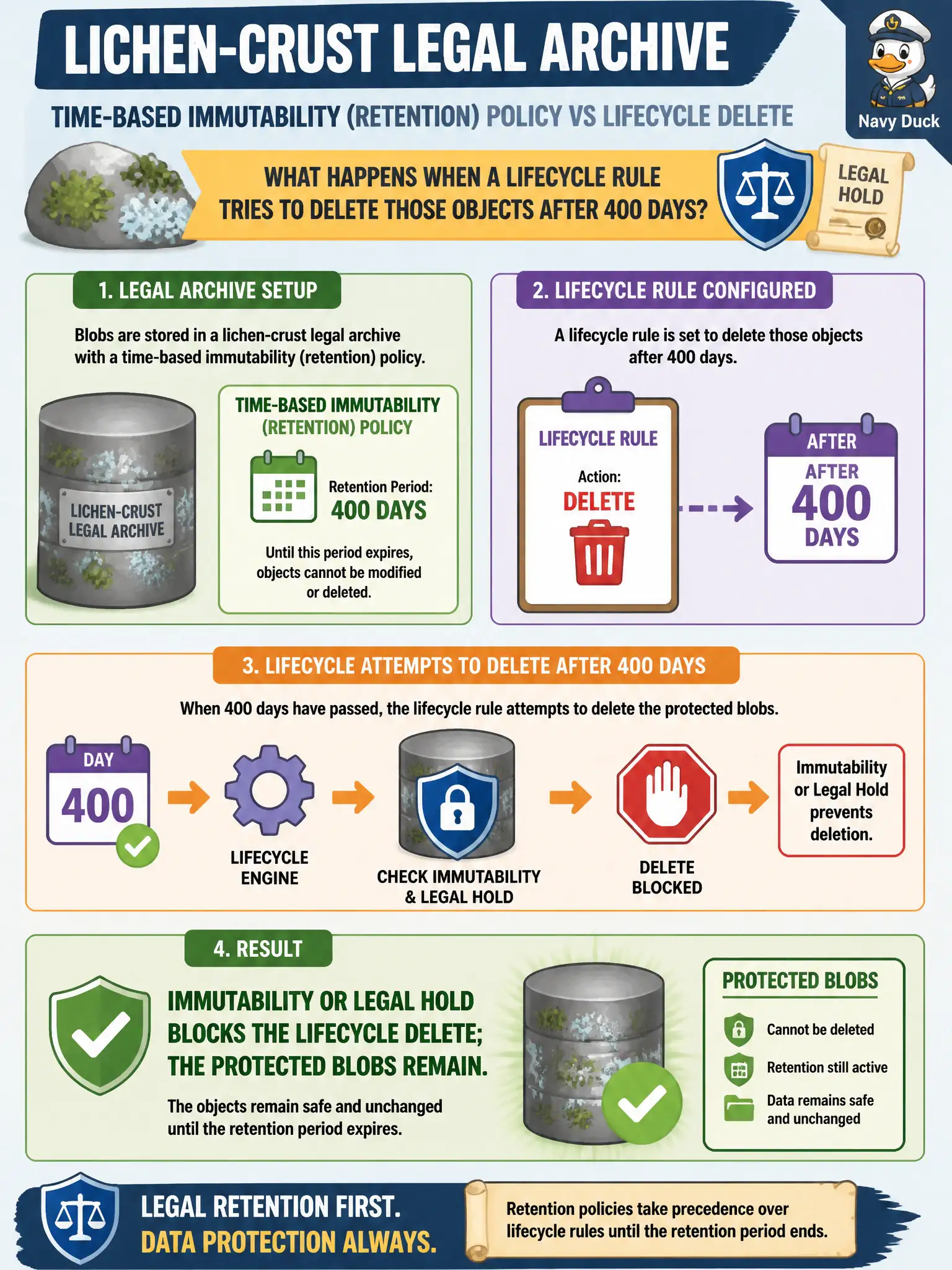
A lichen-crust legal archive has a time-based immutability (retention) policy on its blobs. A lifecycle rule tries to delete those objects after 400 days. What happens?
Select an answer to reveal the explanation.
Short Explanation
Immutability is the evidence locker seal—lifecycle’s delete broom cannot sweep sealed blobs away. Soft delete and Archive rehydrate do not cancel a retention policy or legal hold.
Full Explanation
Immutable storage (time-based retention policies and legal holds) prevents blob deletion—and often modification—until the retention period ends or the legal hold is cleared. When a lichen-crust legal archive is protected by a time-based immutability policy, a lifecycle rule that tries to delete those objects after 400 days cannot override the WORM seal. The lifecycle delete action is blocked for protected blobs; the objects remain. Compliance features take precedence over cost-optimization deletes so evidence cannot be swept away by an ordinary lifecycle policy.
Lifecycle delete always overriding immutability after 365 days fails because immutability is designed specifically to deny deletes during the locked period regardless of lifecycle schedules or “after one year” heuristics.
Soft delete converting immutability into Cool tier automatically fails: soft delete and immutability are different protections, and soft delete does not transmute retention policies into tier changes.
Archive tier rehydration clearing immutability fails because rehydration changes access tier availability; it does not remove legal retention or legal holds.
Exam caveat: immutability can be locked (non-clearable policies) versus unlocked during configuration—once locked policies are in force, even administrators follow the retention clock; test policy mode carefully before applying to production legal data. Operational check: apply a retention policy on a test container/blob, attempt a lifecycle delete that would otherwise match, and confirm the delete does not remove the protected object while the policy is active.