
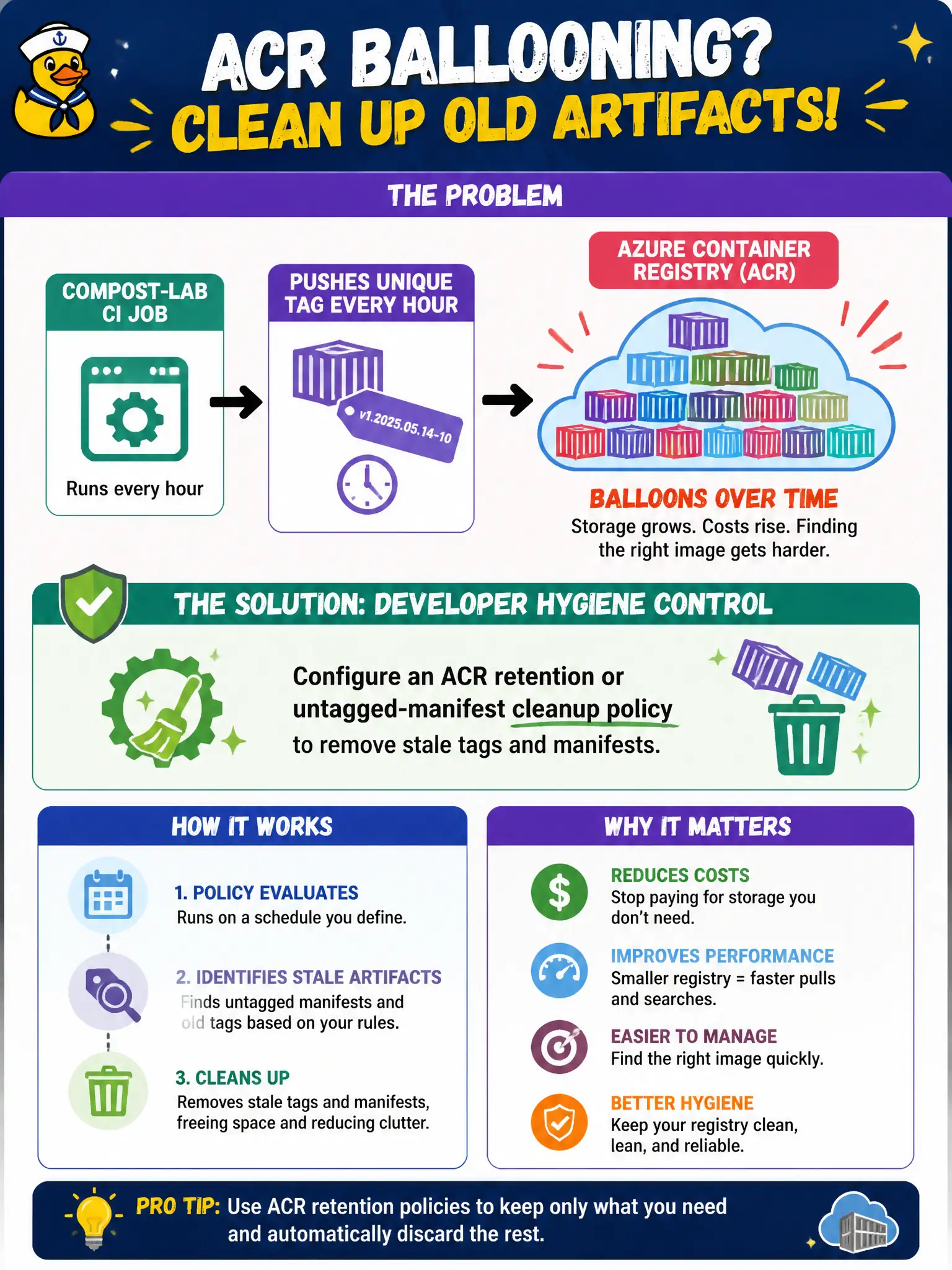
A compost-lab CI job pushes a unique tag every hour and the Azure Container Registry balloons. Which developer hygiene control cleans up old published artifacts inside ACR?
Select an answer to reveal the explanation.
Short Explanation
Hourly unique tags fill the pantry like never tossing leftovers. ACR retention and untagged-manifest cleanup policies are the fridge rules—toss stale jars without burning down the whole kitchen.
Full Explanation
Hourly unique tags from the compost-lab CI job will grow ACR storage without a cleanup policy. Configure ACR retention policies and untagged-manifest cleanup so stale tags and orphaned manifests are removed automatically while current tags the lab still pins remain available. That is the developer-facing hygiene control inside the registry product itself.
Deleting and recreating the entire registry weekly destroys credentials, webhooks, replication, and every shared repository—an operational outage disguised as cleanup. Lifecycle rules on an unrelated Blob Storage account do not purge ACR tags; registry storage is managed through ACR policies, not a random storage account. Disabling tagging so CI pushes anonymous layers removes the handles environments need and does not replace retention settings.
Exam caveat: retention windows must exceed your longest rollback and audit needs. Aggressive cleanup that removes digests still referenced by a Container Apps revision or ACI group will cause pull failures on next restart.
Operational check: enable untagged-manifest cleanup and a retention policy with a deliberate day count, push several disposable tags, wait for or trigger policy evaluation per current ACR behavior, then verify old tags disappear while the production pin remains listed and pullable.