
A nuthatch-grove third-party site exposes HTTPS and must be told when a municipal resource changes. How should Event Grid deliver that notice?
Select an answer to reveal the explanation.
Short Explanation
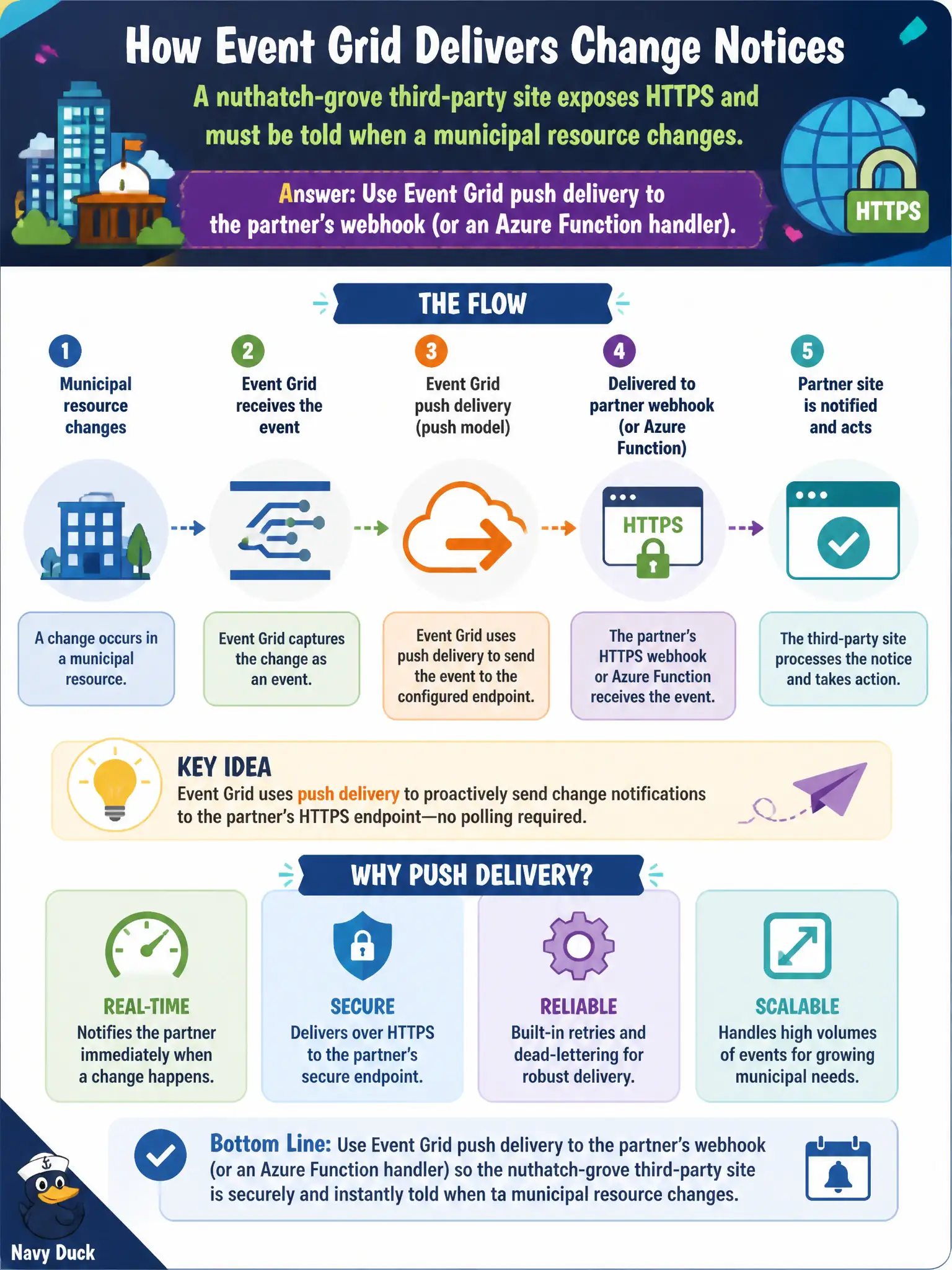
Push beats endless polling. Point Event Grid at their HTTPS webhook (or a Function) so the change shows up when it happens.
Full Explanation
When a nuthatch-grove third-party site exposes HTTPS and must learn that a municipal resource changed, Event Grid push delivery to the partner’s webhook (or to an Azure Function that then notifies them) is the fit. Push sends the event when it happens so the partner does not scrape storage, and the delivery contract stays on Event Grid subscriptions rather than shared keys.
Requiring the partner to poll Blob Storage with a shared account key forever fails security and timeliness: long-lived account keys are overly privileged for a third party, polling adds latency and list traffic, and the partner never receives a true change notification.
Emailing CSV dumps nightly through Microsoft Graph fails as an event fabric: batch email is not near-real-time Event Grid delivery to an HTTPS endpoint, and Graph mail is the wrong control plane for municipal resource-change notices.
Hosting the partner site inside ACR so containers replace webhooks fails the concept: Azure Container Registry stores container images; it does not replace webhook push delivery or authenticate partner notification endpoints.
Exam caveat: webhook endpoints must acknowledge with a timely success status or Event Grid will retry and may eventually dead-letter—design the partner handler for idempotent processing of duplicate deliveries. Operational check: subscribe the HTTPS webhook to the topic, publish a test change event, confirm the partner endpoint receives and acknowledges the payload, and verify no Blob listing with an account key is required.