
A sedge-flat weather API should stay intentionally public, while the paid forecast API requires a key. How should products be configured?
Select an answer to reveal the explanation.
Short Explanation
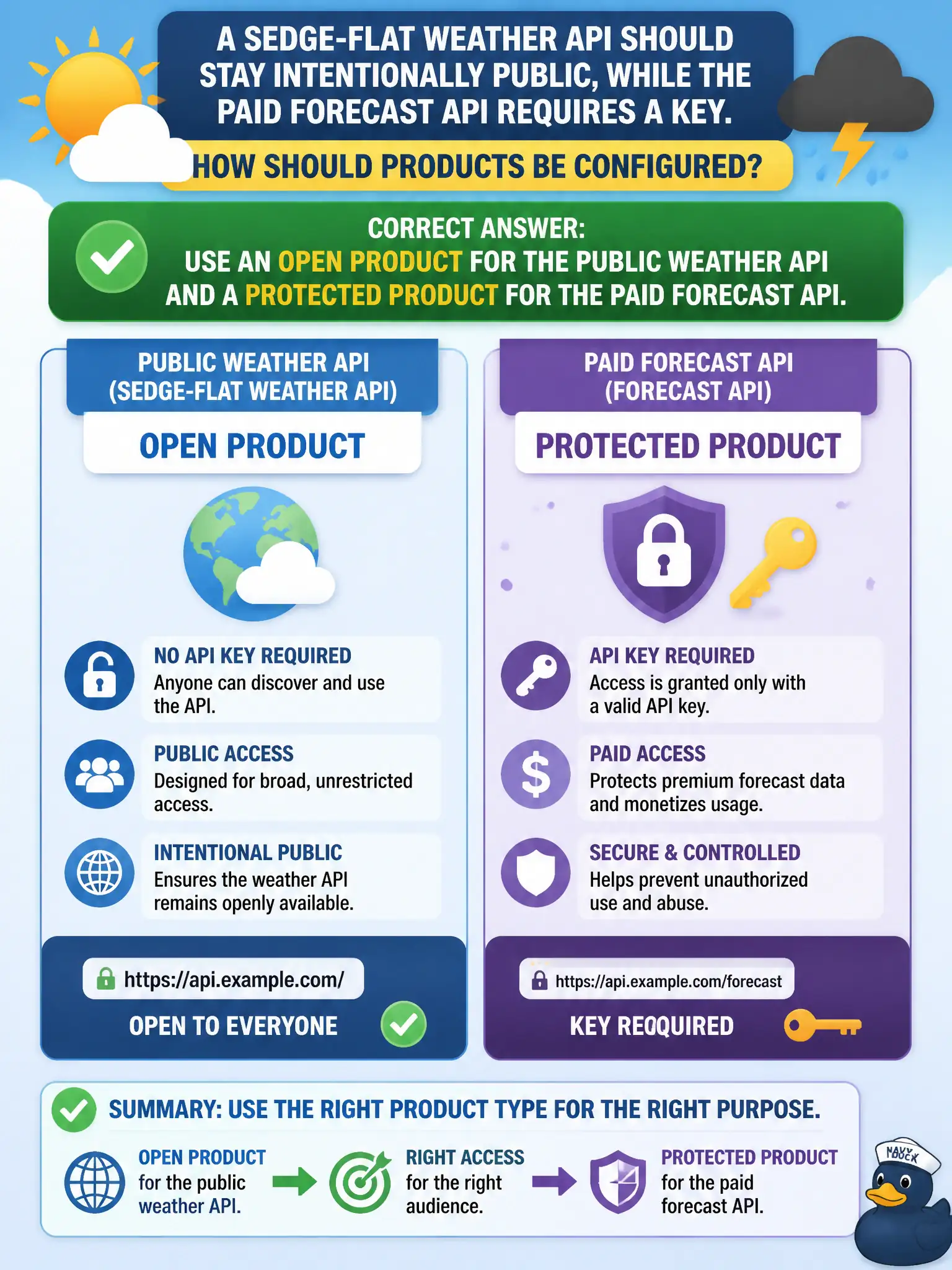
Public vs paid is open product vs protected product—don’t shut down the whole sedge-flat gateway to make that split.
Full Explanation
API Management products can be open (no subscription key required) or protected (subscription required). Configure an open product for the intentionally public sedge-flat weather API and a protected product for the paid forecast API so both can coexist on the same instance with different access rules, shared gateway policies where appropriate, and a single developer portal.
Disabling the entire gateway whenever any public API is published is an operational overreaction that takes down paid and public traffic alike and teaches the wrong lesson about product design. Requiring the same admin-only subscription for every API including the public weather feed contradicts the “intentionally public” requirement. Storing both APIs only in Blob Storage with anonymous container access abandons APIM’s product packaging, throttling, and analytics.
Exam caveat: open versus protected is a product setting—do not confuse “public API” with “no APIM”; use an open product when the gateway should still front a keyless feed under municipal control.
Operational check: attach the weather API to an open product and the forecast API to a protected product, verify weather calls succeed without a key while forecast calls require a subscription key, and confirm both remain listed appropriately on the developer portal for sedge-flat consumers.