
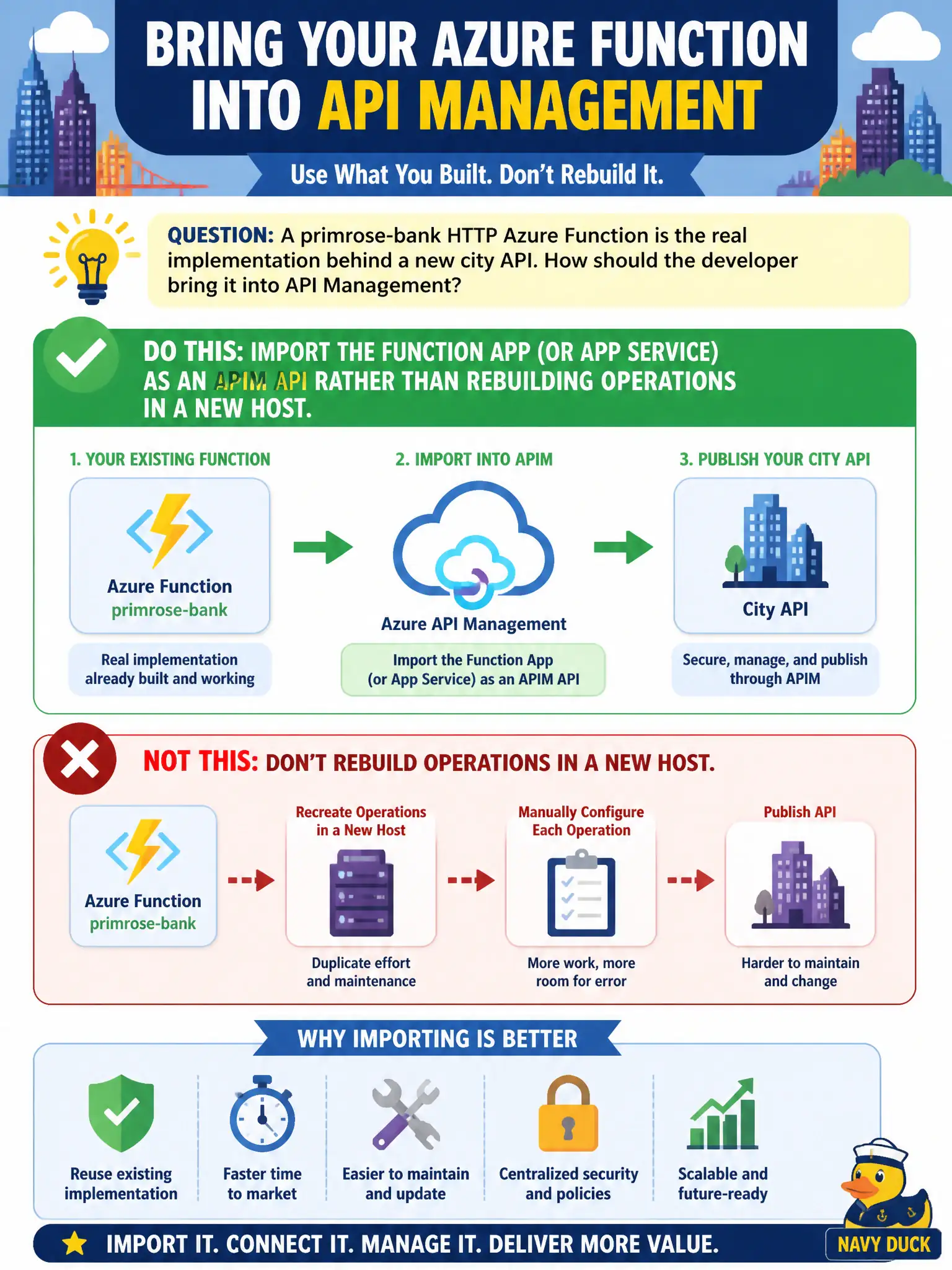
A primrose-bank HTTP Azure Function is the real implementation behind a new city API. How should the developer bring it into API Management?
Select an answer to reveal the explanation.
Short Explanation
Function already works? Import it as the APIM backend—don’t rebuild the primrose-bank API on a new host just to get a gateway.
Full Explanation
When a primrose-bank HTTP Azure Function already implements the city API, import the Function app (or App Service) into API Management as a backend API rather than rebuilding operations on a new host. APIM can discover and front existing HTTP-triggered Functions so the gateway adds products, policies, subscriptions, and portal access without rewriting the compute that already works.
Rewriting every Function operation as a new App Service site before APIM can front it adds needless migration risk and duplicate hosting cost. Exporting Function code into a PDF for the developer portal documents source for humans but gives the gateway nothing to route. Claiming APIM cannot use Functions as backends is false—Functions and App Service are standard import and backend paths in the APIM create experience.
Exam caveat: import Function or Web App when the HTTP surface already exists; blank API mapping is the fallback when import is not available, not a mandate to rehost compute just to obtain a facade.
Operational check: use APIM’s Function App import (or add an API with the Function’s HTTP trigger URL), confirm operations match the triggers, place the API in a product, call through the gateway, and verify the primrose-bank Function executes under APIM policies and subscription checks.