
A foxglove-lane legacy SOAP service should not be reachable on the public internet. How should callers reach it through Azure API Management?
Select an answer to reveal the explanation.
Short Explanation
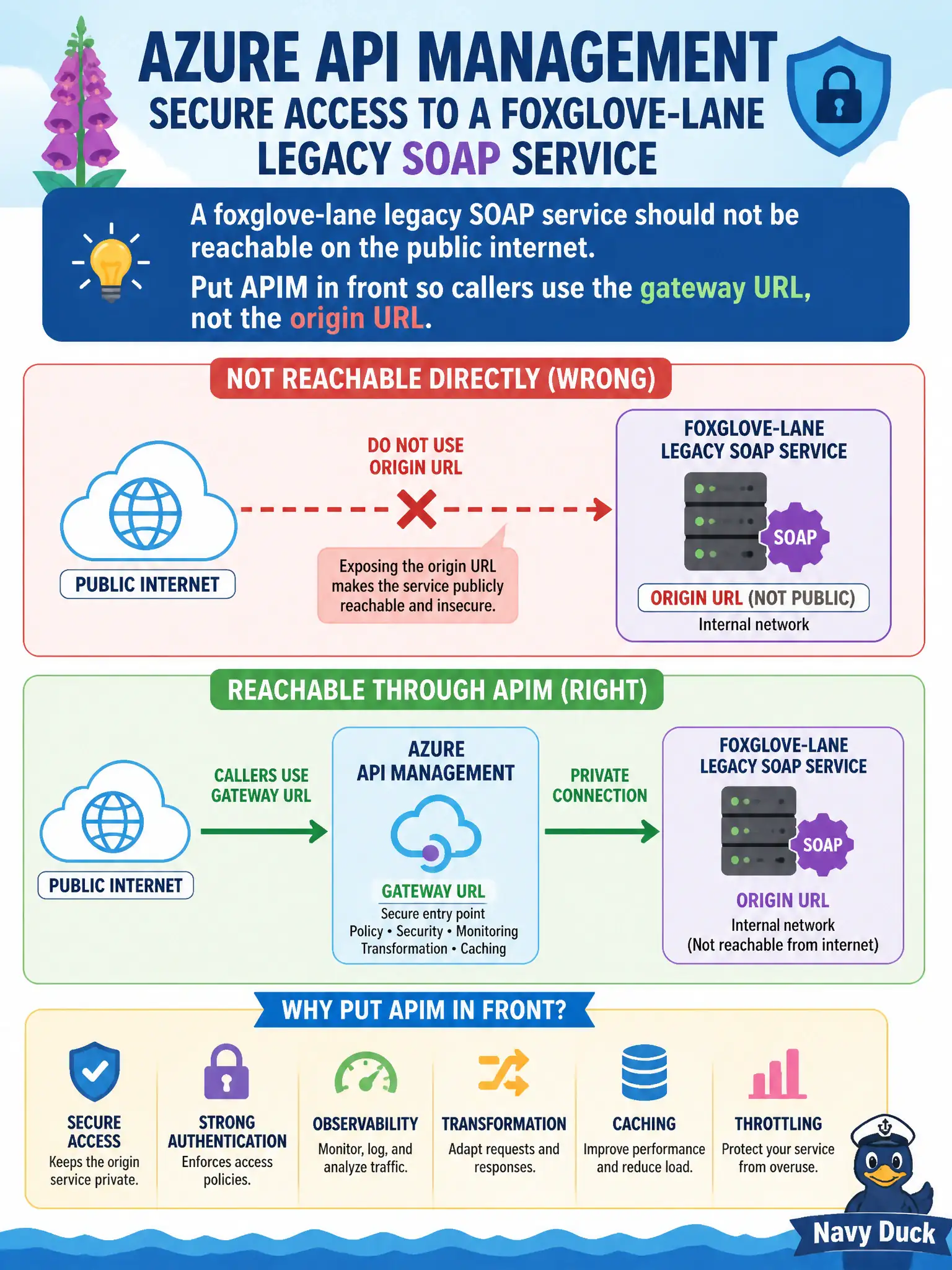
APIM is the facade—callers hit the gateway, not the foxglove-lane origin. Keep the legacy backend off the open internet.
Full Explanation
API Management is the facade: foxglove-lane callers should use the APIM gateway URL while the legacy SOAP origin stays off the open internet (private network, restricted access, or otherwise not directly published). APIM can front third-party and on-premises HTTP/SOAP backends so the city controls auth, policies, throttling, and visibility at the edge.
Publishing the SOAP endpoint as a public DNS A record and skipping the gateway exposes the origin directly and defeats the “not reachable on the public internet” goal. Duplicating the SOAP service into every mobile app binary embeds a brittle client-side dependency and still leaves the real service’s exposure unresolved. Replacing the service with Redis and dropping HTTP abandons the SOAP/HTTP API contract the city already has.
Exam caveat: APIM backends are not limited to Azure PaaS—HTTP and SOAP origins, including legacy municipal systems, are valid behind the gateway when the facade pattern is the requirement.
Operational check: import or define the SOAP API in APIM, point the backend at the restricted origin, block direct public access to that origin, and confirm successful calls only through the gateway hostname with policies enforced.