
A DBA tested Multi-AZ failover by rebooting the RDS primary from the console without failover selected. The same instance returned as the primary and the standby never took over. Which action tests the standby path?
Select an answer to reveal the explanation.
Short Explanation
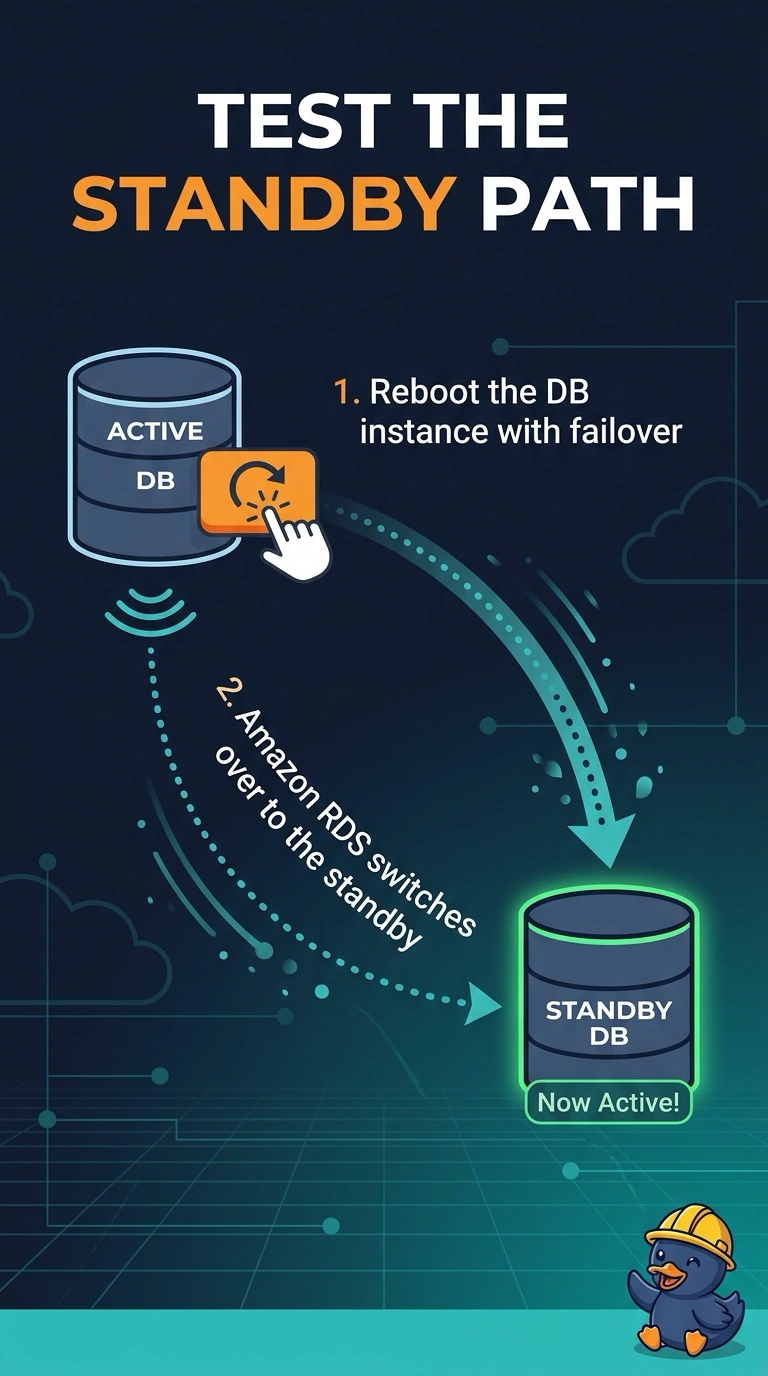
A reboot without failover is a fire drill that never leaves the building. You test the standby by rebooting the RDS instance with failover, which is the action that switches to it. Stopping and starting the instance brings the same primary back.
Full Explanation
On a Multi-AZ RDS instance, a reboot leaves the primary in place unless you reboot with failover. The console reboot in this test had failover unselected, so RDS restarted the primary and the standby stayed on standby. Reboot with failover is the documented test of that path: RDS switches to the standby in the other Availability Zone. Stopping and starting the instance brings the database back along the primary path. It does not promote the standby. Rebooting only the standby does not cause that standby to promote itself. Promotion happens when RDS fails the primary over. A storage consistency check can show that the volume looks healthy. It does not switch the active database to the other zone. Caveat: reboot with failover interrupts the database, so finish or stop open transactions first, and expect current connections to drop and reconnect to the same endpoint after the switch. The console can lag the Availability Zone change. Operational check: read the RDS events for the instance and confirm a failover event, then confirm the instance is running in the other Availability Zone.