
A logistics Network Load Balancer has cross-zone load balancing turned off. One Availability Zone has no healthy targets, and requests that reach the node in that zone fail while other zones are healthy. What lets that node send work to healthy targets in other zones?
Select an answer to reveal the explanation.
Short Explanation
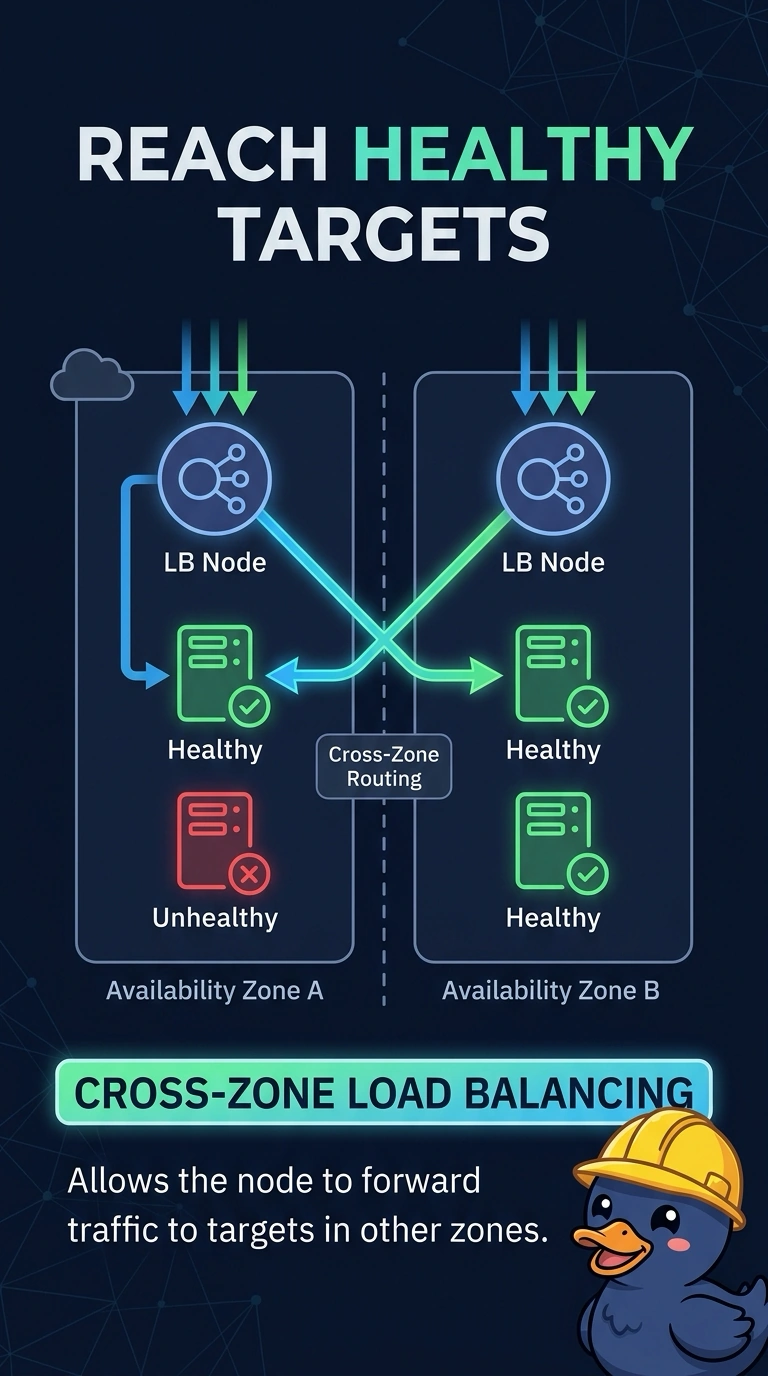
You can think of each zone’s load balancer node as serving its own line: when that line has no healthy targets, requests fail. Turn on cross-zone load balancing so the node can send work to healthy targets in other zones; changing timeouts won’t solve the empty line.
Full Explanation
With cross-zone load balancing turned off, a Network Load Balancer node distributes requests only to targets in its own Availability Zone. If that zone has no healthy targets, clients whose requests reach its node fail even when targets in other zones are healthy. Enabling cross-zone load balancing lets the node forward requests to healthy targets in those other zones, addressing the empty zone’s lack of local targets. A shorter deregistration delay changes how long a target drains during deregistration; it does not let the node select targets in another zone. A lower idle timeout closes idle connections sooner, but it does not give the node a healthy destination for new work. Deletion protection prevents the load balancer from being deleted; it does not affect target selection or forwarding. One caveat is that cross-zone forwarding can incur inter-zone data transfer charges. As a practical check, after enabling it, send a new connection through the previously empty zone’s node and confirm that the request succeeds on a target in a healthy zone.