
A university's web tier is busy every weekday at 08:00 and quiet afterward. Last week, target tracking added instances ten minutes after students had already timed out. What should be in place before 08:00?
Select an answer to reveal the explanation.
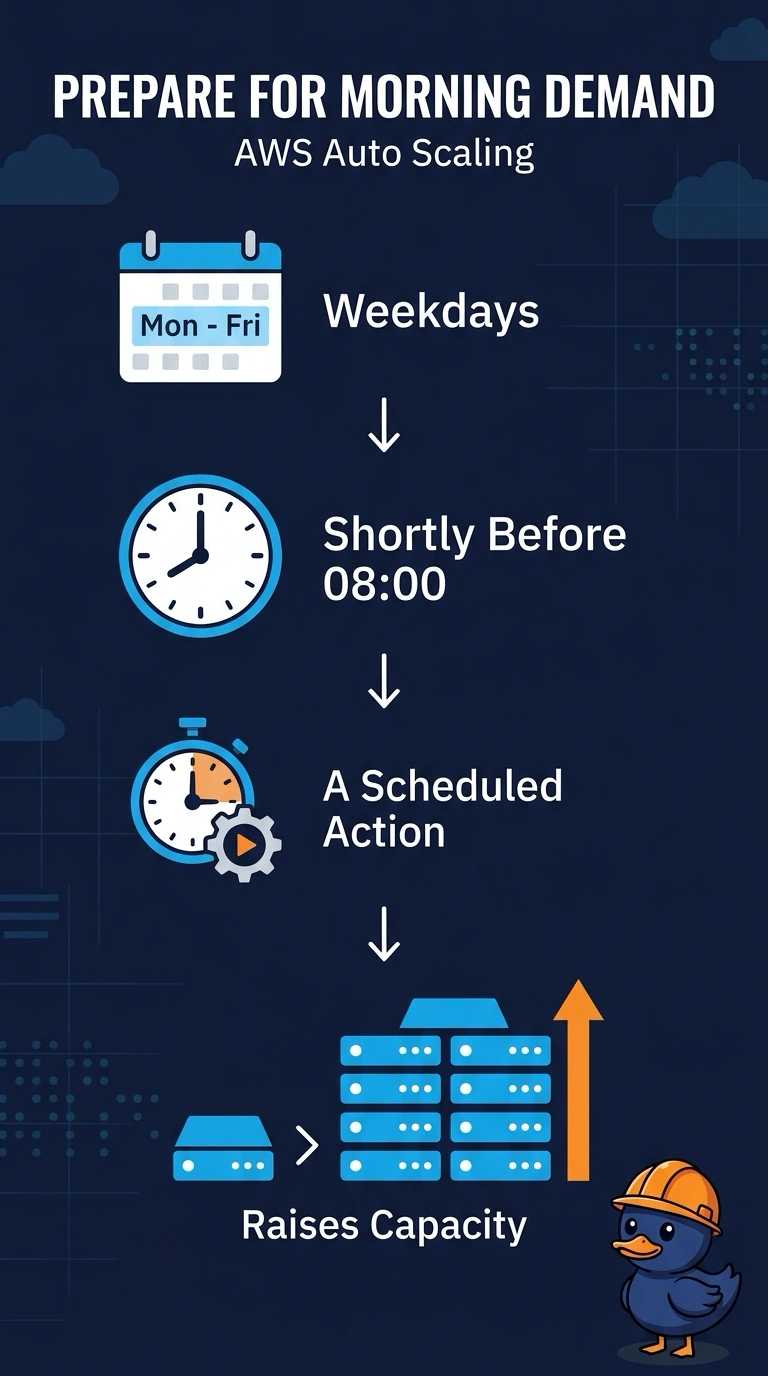
Short Explanation
You already know the crowd arrives at eight. You open capacity before eight with a scheduled action. Target tracking notices the pain after it starts, which is how the students waited last week.
Full Explanation
A scheduled scaling action changes capacity at a time you choose, so the weekday peak is already staffed. Target tracking reacts to the metric after load arrives, which was too late. A longer grace period does not add instances before 08:00. Editing desired capacity after complaints repeats the late response. CloudFront can cache some reads and does not add web-tier instances for the dynamic work that timed out. Caveat: schedule the action early enough for instances to pass health checks, and schedule the scale-in for after the day so the minimum does not stay high overnight. Operational check: the scheduled action should show weekdays before 08:00, and a drill should raise desired capacity with no one editing it. Use a cron expression for weekdays and a time a few minutes before 08:00. Raise the minimum or desired count high enough for the known load. Add a second action in the afternoon to lower it. Target tracking can stay for surprises in the middle of the day; it is a poor alarm clock for a start you already know. In a drill, watch desired capacity rise while the metric is still quiet.