
A streaming studio keeps a smaller but complete copy of its control plane in a second Region. That copy serves almost no traffic until failover, when the team scales it up. Which disaster recovery pattern is this?
Select an answer to reveal the explanation.
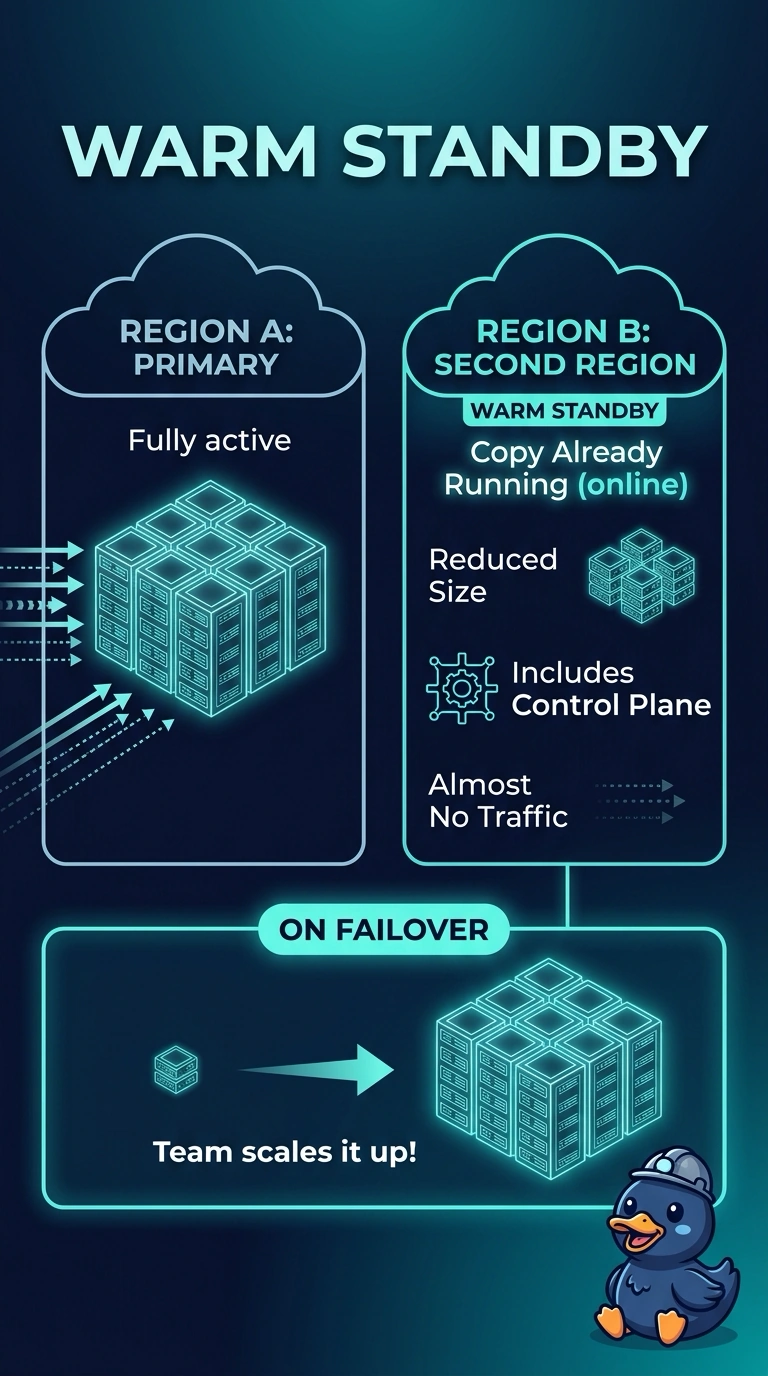
Short Explanation
Warm standby is the spare apartment you already pay to heat, just with less furniture. You can move in and then add rooms. If the application is not even installed in the second Region, you are looking at a dimmer pilot light, not this studio's setup.
Full Explanation
Warm standby means a functional copy of the stack is already deployed in the recovery Region at reduced capacity, and failover scales it up. The studio's control plane matches that description. Backup and restore starts from stored copies and has to rebuild the environment, which is not a stack that is already running. Pilot light keeps a small core, often data, running while the application tier is off and must be started; the stem says the copy is complete. A bigger single Availability Zone design has no second Region ready to take traffic. Caveat: warm standby still needs a tested traffic cutover, usually DNS or a global entry point, or the running copy sits idle during the incident. Operational check: run a failover exercise that shifts a test name to the second Region and scales the reduced services before you call the pattern done.